
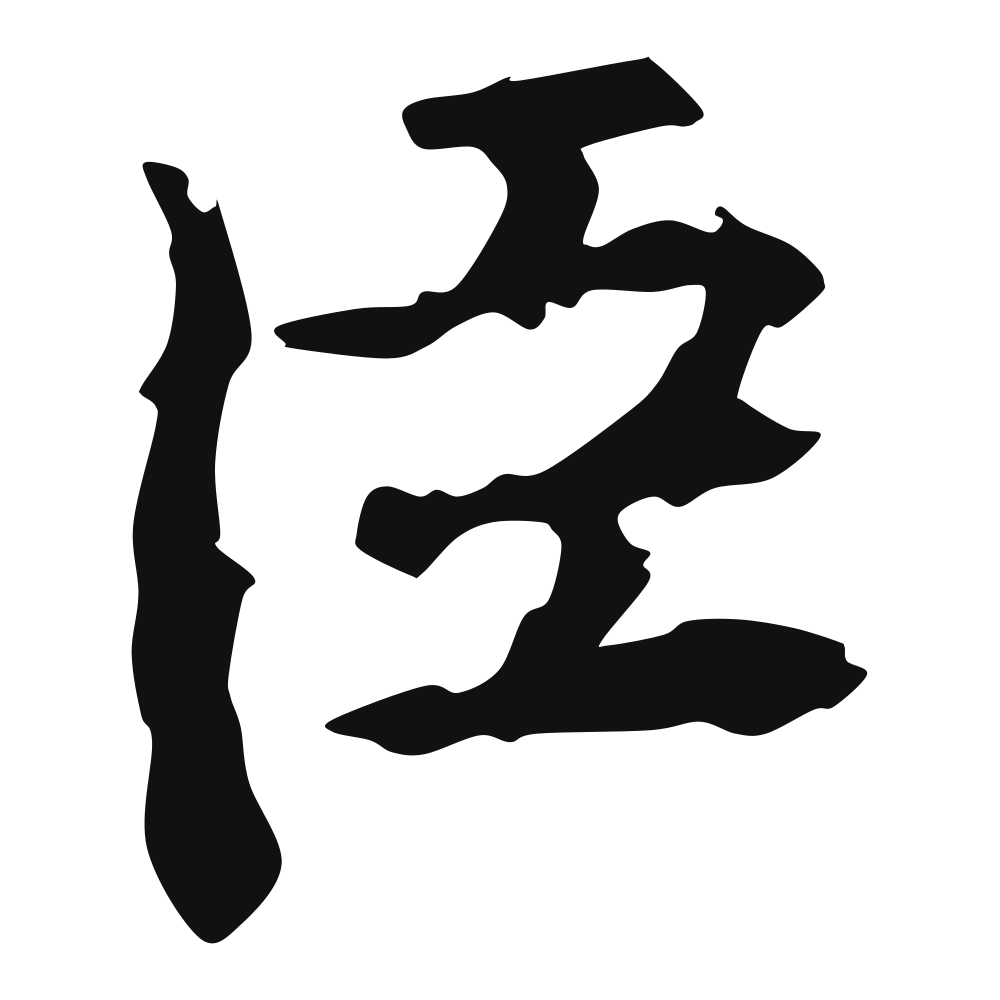
臣
surname Chen; state official or subject in dynastic China; I, your servant (used in addressing the sovereign); Kangxi radical 131
Closest English meanings
minister·official·subject
The Calligrapher — Wáng Xīzhī 王羲之
The 'Sage of Calligraphy'; his running script has set the standard for 1,700 years.
Eastern Jin calligrapher (303–361), master of running script/cursive script/regular script — the Sage of Calligraphy; his Orchid Pavilion Preface is the most celebrated work in the tradition, and nearly every later master traces lineage to his hand. Eastern Jin dynasty
Cultural Story
臣 is a minister or subject, and the character's oldest form, as the 说文解字 notes, is said to picture an eye turned vertical — a head bowed in obedience, watching from below. The 论语 sets the ideal compact: the ruler employs his ministers with ritual propriety, the minister serves his lord with loyalty. Histories contrast the 忠臣, loyal to the death, with the 权臣, powerful ministers who swallowed the throne from within.
Common words & phrases
- 大臣 minister · high official
- 忠臣 loyal minister · loyal subject
- 君臣 ruler and subject · monarch and minister
- 臣民 subjects · people
- 权臣 powerful minister
Read the story behind the character
In the historical drama the 大臣, the high ministers, kneel in rows while the emperor decides a war, and the 忠臣, the loyal one, risks death to speak plainly. You explain the 君臣, ruler-and-subject, relationship to your cousin watching with you, and he grins: the 权臣, powerful minister, in episode twelve is obviously the villain — his 臣民, his subjects, just don't know it yet.
Why this character belongs on skin
To serve is not to disappear. 臣 is the official who bends before the throne — in the oldest script, a man with one eye lowered in deference, the loyal minister who speaks truth to power without raising his face. It is also the humble I a courtier used of himself: your servant. The West fears submission; the East found in it a discipline, a way to be useful without needing to be first. To carry 臣 is to honor the dignity of service, the strength it takes to stand behind someone and make them greater. It is a mark for the quiet lieutenant, the one who holds the line so another can shine. On the skin it is a vow of loyalty worn without shame — a small, bowed figure that says: I chose to serve, and in the choosing, I was free.
Own this character
Purchase delivers the original SVG of this glyph, brushed by Wáng Xīzhī 王羲之, ready to place on skin, paper, or screen.