
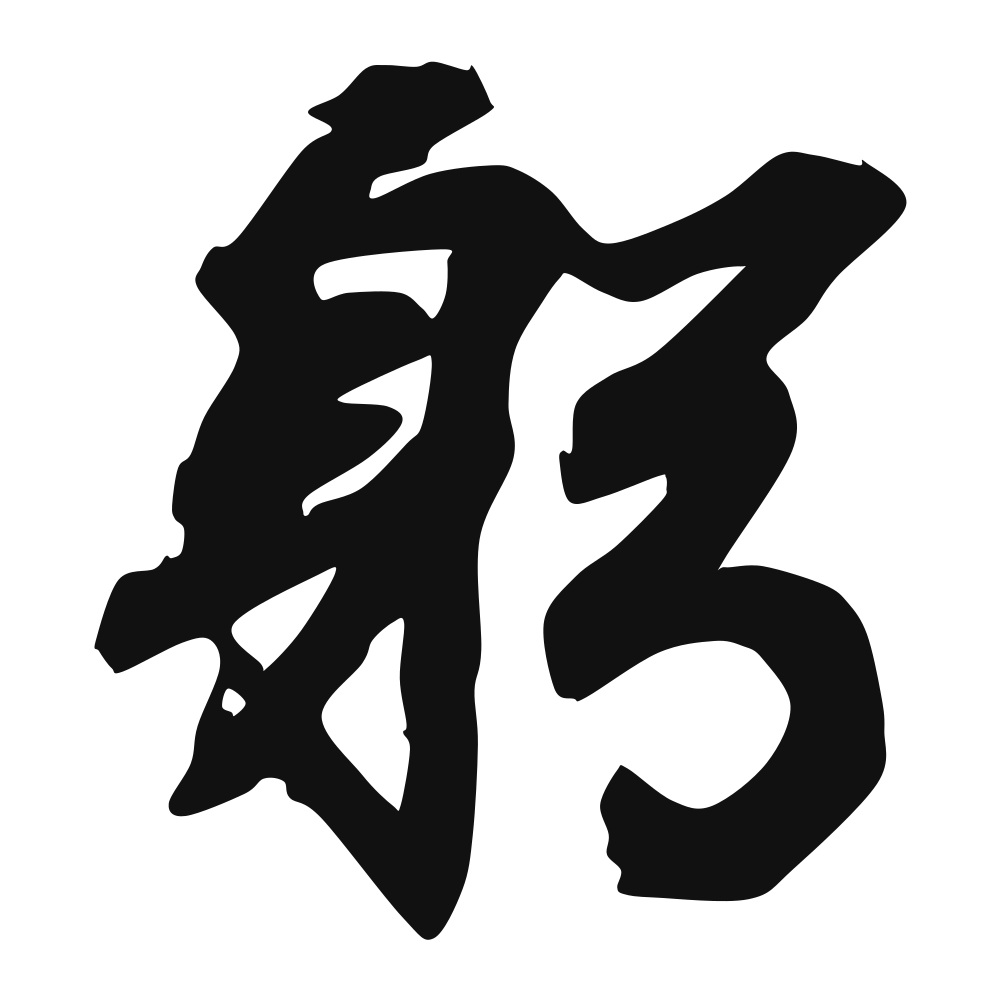
躬
(literary) body (of a human, esp. the torso); (bound form) to bow; (literary) oneself; personally
Closest English meanings
body·self·bow·personally
The Calligrapher — Wáng Xīzhī 王羲之
The 'Sage of Calligraphy'; his running script has set the standard for 1,700 years.
Eastern Jin calligrapher (303–361), master of running script/cursive script/regular script — the Sage of Calligraphy; his Orchid Pavilion Preface is the most celebrated work in the tradition, and nearly every later master traces lineage to his hand. Eastern Jin dynasty
Cultural Story
In the Memorial on Sending Out the Troops, Zhuge Liang writes of his youth: 'I was a commoner who 躬耕 in Nanyang.' The character 躬 joins body and a bowing shape, meaning to bend the self, to do a thing in person. From it come 鞠躬, the bow of respect, and 躬行, to practice what one preaches rather than delegate it to another hand and walk away.
Common words & phrases
- 鞠躬 bow · make a bow · curtsy
- 躬身 bend · stoop · bow the body
- 躬行 practice personally · act
- 躬亲 personally attend to · do oneself
- 反躬 examine oneself · self-reflect
Read the story behind the character
A teacher 鞠躬 to her class at the bell, the same bend Zhuge Liang gave his king. The foreman 躬身 to inspect a weld he will not let an apprentice sign off, and a volunteer 躬亲 the distribution because he trusts no one else with the count. 反躬, turning the gaze back on oneself, is what a tired parent does at midnight, asking whether the day was rightly spent.
Why this character belongs on skin
The word is the body itself, bent in labor or in reverence — not the abstract self but the actual flesh that ploughs, that bows, that shows up where the talking stops. The ancients said 躬行, to practice with your own body, to do the thing rather than describe it; the sage who points is worth less than the fool who sweats. Christ washed feet in the flesh; the farmer bows to the row he himself planted. To live 躬 is to refuse the distance between the word and the hand, to be the man present at the cost he preaches. We are experts at the delegated life, at paying others to do our bearing. Wear this as a reclaiming of the body's authority — that you will be the one who bends, who carries, who performs the mercy yourself. Let it rest along the spine, the part that bends and bears, a quiet inscription that the life you teach you are also willing to live, in person, to the end.
Own this character
Purchase delivers the original SVG of this glyph, brushed by Wáng Xīzhī 王羲之, ready to place on skin, paper, or screen.