
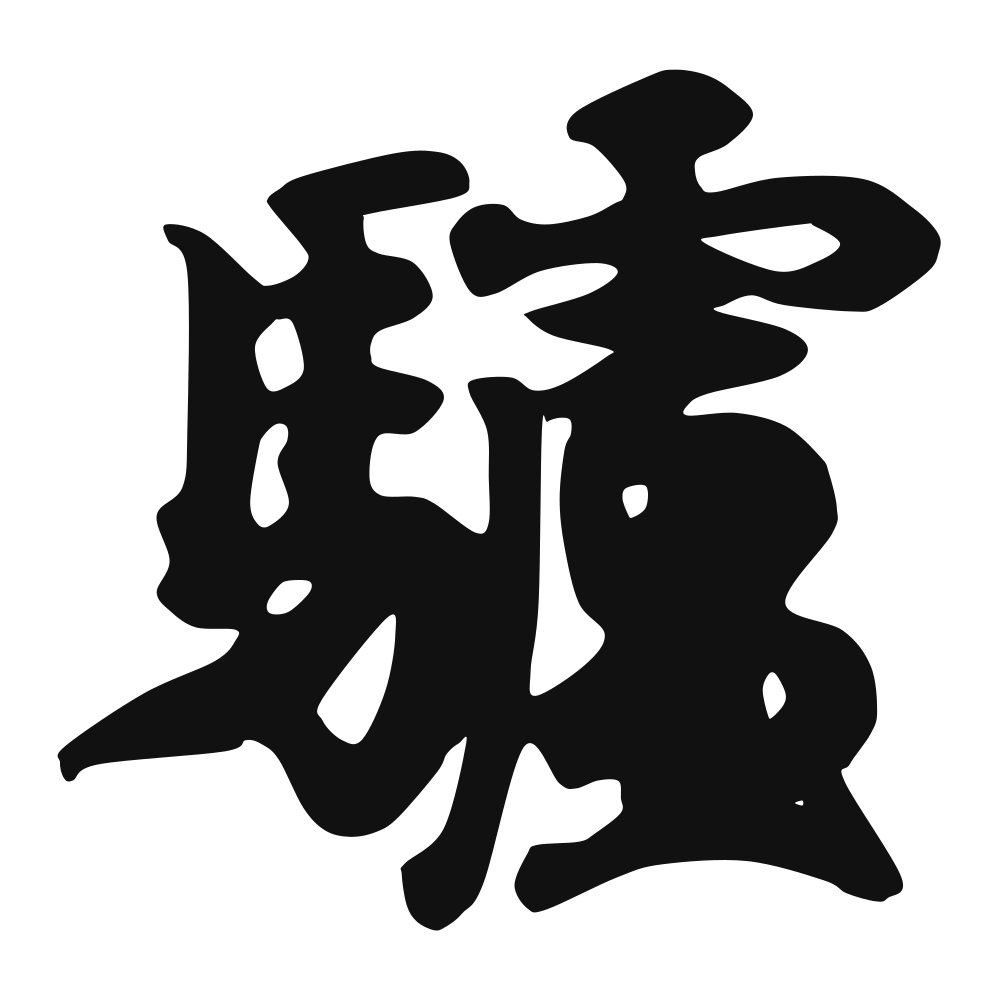
The Calligrapher — Wáng Xīzhī 王羲之
The 'Sage of Calligraphy'; his running script has set the standard for 1,700 years.
Eastern Jin calligrapher (303–361), master of running script/cursive script/regular script — the Sage of Calligraphy; his Orchid Pavilion Preface is the most celebrated work in the tradition, and nearly every later master traces lineage to his hand. Eastern Jin dynasty
Cultural Story
驴 (lǘ) sets 馬 beside the phonetic 盧, naming the donkey, a smaller beast of burden known in China since Han times through Central Asian trade. It carried water, grain, and travelers on narrow village lanes.
Common words & phrases
- 毛驴 donkey
- 驴子 donkey
- 驴车 donkey cart
- 蠢驴 stupid donkey · blockhead
- 驴友 travel buddy · trekker
- 驴打滚 donkey roll · a sweet snack
Read the story behind the character
驴 is the humble donkey. Farmers keep a 毛驴 (donkey), children ride a 驴子 (donkey), a 驴车 (donkey cart) hauls loads, we joke 蠢驴 (stupid donkey) at folly, call hikers 驴友 (trekkers), and eat 驴打滚 (a sweet snack).
Why this character belongs on skin
The donkey is the peasant's philosopher — sure-footed on the worst road, unmoved by flattery, stubborn in exactly the way that keeps it alive. It carries what the horse would refuse and asks for almost nothing. In the old tales it is the beast of burdens and of quiet comedy, the one the wise man rides when he has given up on glory. To choose 驴 is to make peace with being underestimated, to find in steadiness a dignity the swift never earn. The Dao loves the useless tree that outlives the straight one; the donkey is that tree with ears. Wear it if you have learned that endurance is its own kind of triumph, that the long load borne without drama is a form of freedom. It is a humble mark, almost a joke between you and the world. But the joke is on haste. You are still standing, and the road is finished.
Own this character
Purchase delivers the original SVG of this glyph, brushed by Wáng Xīzhī 王羲之, ready to place on skin, paper, or screen.