
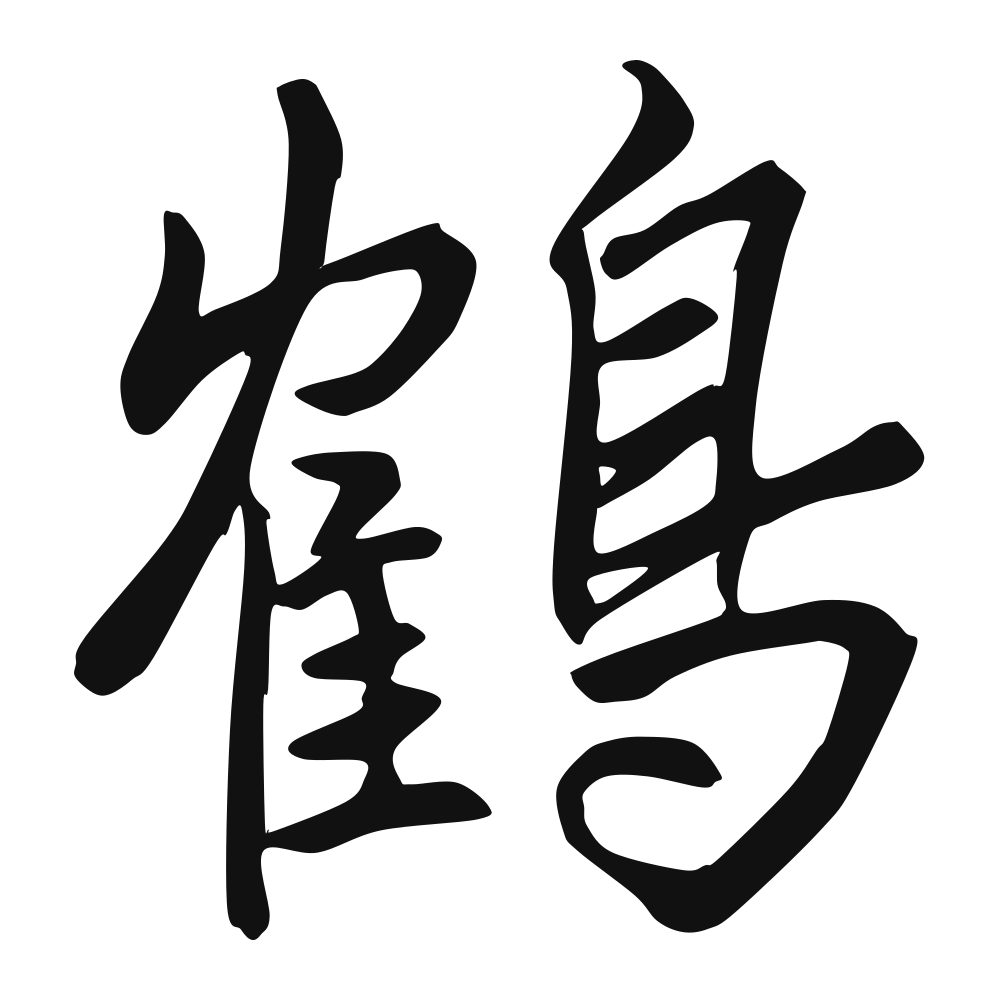
The Calligrapher — Wáng Xīzhī 王羲之
The 'Sage of Calligraphy'; his running script has set the standard for 1,700 years.
Eastern Jin calligrapher (303–361), master of running script/cursive script/regular script — the Sage of Calligraphy; his Orchid Pavilion Preface is the most celebrated work in the tradition, and nearly every later master traces lineage to his hand. Eastern Jin dynasty
Cultural Story
《説文解字》gives 鹤 as “鶴鳥也,” the crane, a phono-semantic compound from the bird radical with the sound 隺. The red-crowned crane, stately and white, symbolized longevity and noble detachment in Daoist lore. Its slow dance and lone standing made it the gentleman's bird, carved on screens and praised by poets.
Common words & phrases
- 仙鹤 red-crowned crane
- 白鹤 white crane
- 鹤发 white hair
- 鹤立 crane standing
- 灰鹤 grey crane
Read the story behind the character
The 仙鹤 (red-crowned crane) graces New Year prints as a longevity wish, the 白鹤 (white crane) and 灰鹤 (grey crane) fill wetlands, and 鹤发 (white hair) honors the aged. A 鹤立 (crane standing) figure stands out in a crowd—one elegant bird linking age, grace, and distinction today.
Why this character belongs on skin
The crane stands on one leg in the shallows, perfectly still, and then unfolds into flight so clean it looks like a thought leaving the body. 鹤 is the Daoist's messenger — the creature that carries the soul up to the immortals, white as the moon, older than empires. To wear this character is to keep a little of that ascension against your skin: the idea that you are not only the heavy, earthbound thing but also the winged one, bound for somewhere the gravity doesn't reach. Cranes mate for life and live, in legend, a thousand years. Grace, fidelity, and the long horizon — all in one bird. Carry 鹤 and you are quietly claiming it: I was made for more than the ground. One day I will lift.
Own this character
Purchase delivers the original SVG of this glyph, brushed by Wáng Xīzhī 王羲之, ready to place on skin, paper, or screen.