
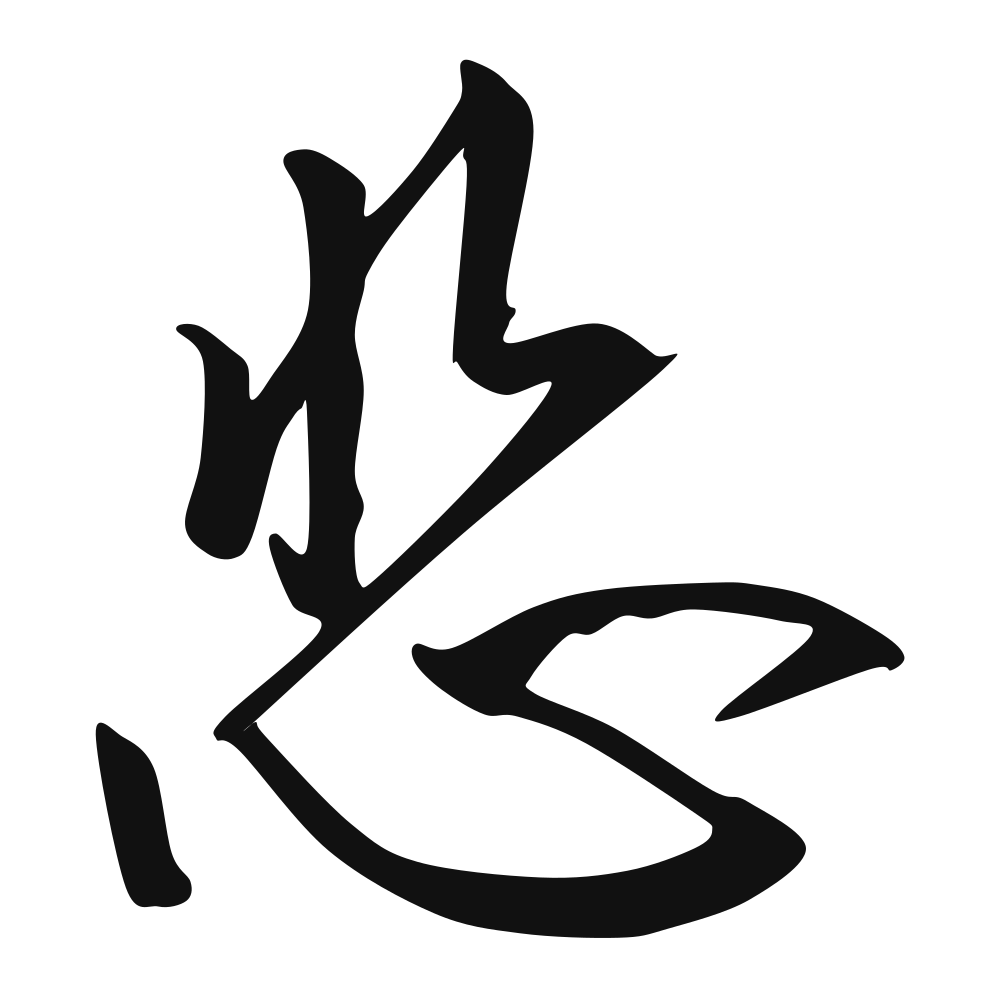
悲
sad; sadness; sorrow; grief
Closest English meanings
sad·sorrowful·grief
The Calligrapher — Wáng Yì 王廙
Jin calligrapher, uncle and teacher of Wang Xizhi; master of running and cursive script
Jin calligrapher (), master of running script/cursive script/regular script — known for 王羲之叔父. Jin dynasty
Etymology & Meaning · 字义溯源
2 · The Character: 悲 悲 (bēi, 1st tone) is glossed by the Shuowen Jiezi as 痛也。从心非聲 — 'grief, pain; from 心 (heart) and 非 as sound.' Kangxi files it at 12 strokes. As a word 悲 means sorrow, mournful grief. 《楚辭·九歌·少司命》 gives the archetypal line: 悲莫悲兮生別離 — 'nothing is sadder than parting while alive.' The same root appears in 慈悲, the Buddhist compound for 'compassion' (the sorrow that moves one to save), and in 悲欣交集 ('sorrow and joy mingled,' 弘一法師's last words). Honest, critical note: standing alone, 悲 is plain grief — a clear 'no' for tattoo ink, since it broadcasts mourning or pain. It is only defensible inside 慈悲 (compassion) or paired with 欣 (bittersweet). Presenting it to Western viewers as 'deep feeling' is a mistranslation of a sorrow-word.
Cultural Story
悲 is the great public sorrow. Su Shi wrote that humans have 悲欢离合 and the moon its cloudy and clear — joy and parting are simply the weather. The heart with 非, wrong or not, is grief that says this was not how it should have been. The word carries the weight of a whole theatrical tradition.
Where a Western reader can stand: Where a Western reader can stand: 'sorrow / grief / mourning' — the Latin luctus, the Greek penthos. Honest caveat: 悲 reads sorrowful and is funerary-adjacent (悲悼); apt only as a memorial or conscious sorrow — pair 慈悲 for compassion — and rate Get-well / hospital = 1 (hard no), avoiding casual, romantic, or gift-to-living use. Wang Yi's role as Xizhi's teacher is a real, documented transmission.
Common words & phrases
- 悲伤 sad · sorrowful · grief
- 悲哀 sorrowful · grieved · mournful
- 悲剧 tragedy
- 慈悲 mercy · compassion · benevolence
- 悲观 pessimistic · pessimism
- 悲欢 joy and sorrow · vicissitudes
Read the story behind the character
悲 is everywhere grief is packaged: 悲剧 the weepie, 悲观 the friend who expects the worst, 慈悲 the mercy a temple asks of you. 悲欢 is the arc of any biography. It is the register of the funeral and the breakup album alike, sorrow given a size large enough to be shared.
Why this character belongs on skin
The character for sorrow is honest about its anatomy: 非, two backs turned away, above 心, the heart. 悲 is what the heart does when it watches something recede—the beloved walking to the train, the season folding into winter, your own younger self waving from a photograph. Buddhism did not flinch from this word; it built compassion on top of it. 慈悲—mercy—is sorrow that refuses to look away, grief grown wide enough to hold other people. The Bodhisattva's vow is a sorrowing heart, still standing. This is not weakness; it is the price of having loved without reservation. Rilke said beauty and terror are neighbors; the Chinese put them in a single radical. To wear 悲 is not to court despair but to claim your depth—the places you have ached as proof that you were there, fully, for what mattered. Let it rest over the pulse and remember: only the feeling heart knows this character.
Own this character
Purchase delivers the original SVG of this glyph, brushed by Wáng Yì 王廙, ready to place on skin, paper, or screen.