
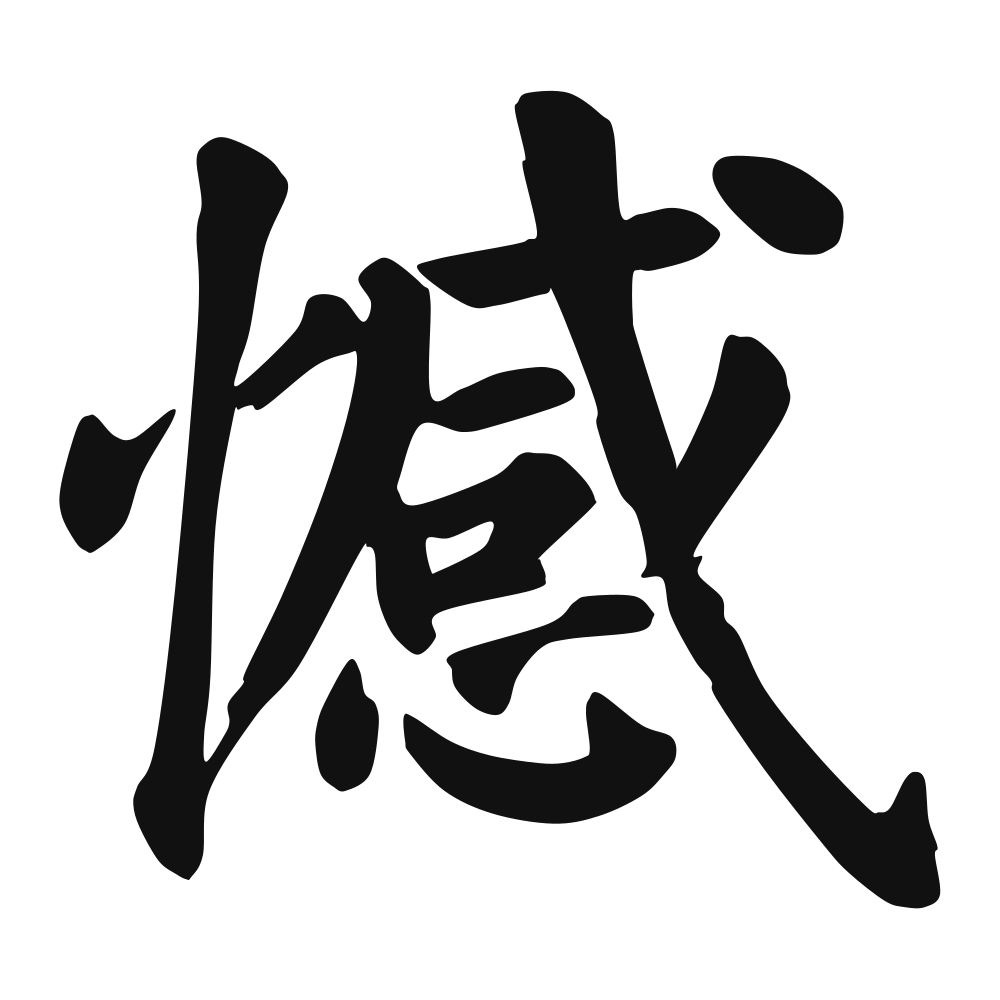
憾
regret (sense of loss or dissatisfaction)
Closest English meanings
regret
The Calligrapher — Wáng Yì 王廙
Jin calligrapher, uncle and teacher of Wang Xizhi; master of running and cursive script
Jin calligrapher (), master of running script/cursive script/regular script — known for 王羲之叔父. Jin dynasty
Cultural Story
憾 is the lack you feel as a wound. The 論語 has a man confess a 憾 — a thing he wanted and did not get — and the word always implies a standard unmet. The heart with 感, to feel, is disappointment made specific. It is the regret that points at the missing piece.
Common words & phrases
- 遗憾 regret · pity
- 憾事 matter of regret
- 缺憾 regret · defect
Read the story behind the character
憾 is the polite regret: 遗憾 the apology, the almost, 憾事 the wedding the grandfather missed, 缺憾 the flaw the critic notes. It names the gap between what was and what should have been, the softer cousin of 悔 that blames circumstance more than self.
Why this character belongs on skin
The heart radical anchors 憾, and beside it 感, feeling struck—regret is feeling struck twice, once by the deed and forever after by its echo. 憾 is the heavier word for it: 遗憾, a lingering regret, the thing left over that time will not metabolize. Japanese made one regret into a national aesthetic—mono no aware, the ache of beautiful things passing—and the Chinese put theirs in a single devastating idiom: 死不瞑目, dying with eyes that will not close, the unfinished business that outlasts the body. Everyone carries a room of these: the call not made, the apology not spoken, the love declared too late. But 憾 is also a compass—the sting points at what mattered. To ink it is to keep the wound where you can read it, and so be steered by it: toward the phone call, the forgiveness, the trip. The heart radical says it plainly: regret lives in the same organ as love. Wear it near yours, and let it hurry you.
Own this character
Purchase delivers the original SVG of this glyph, brushed by Wáng Yì 王廙, ready to place on skin, paper, or screen.