
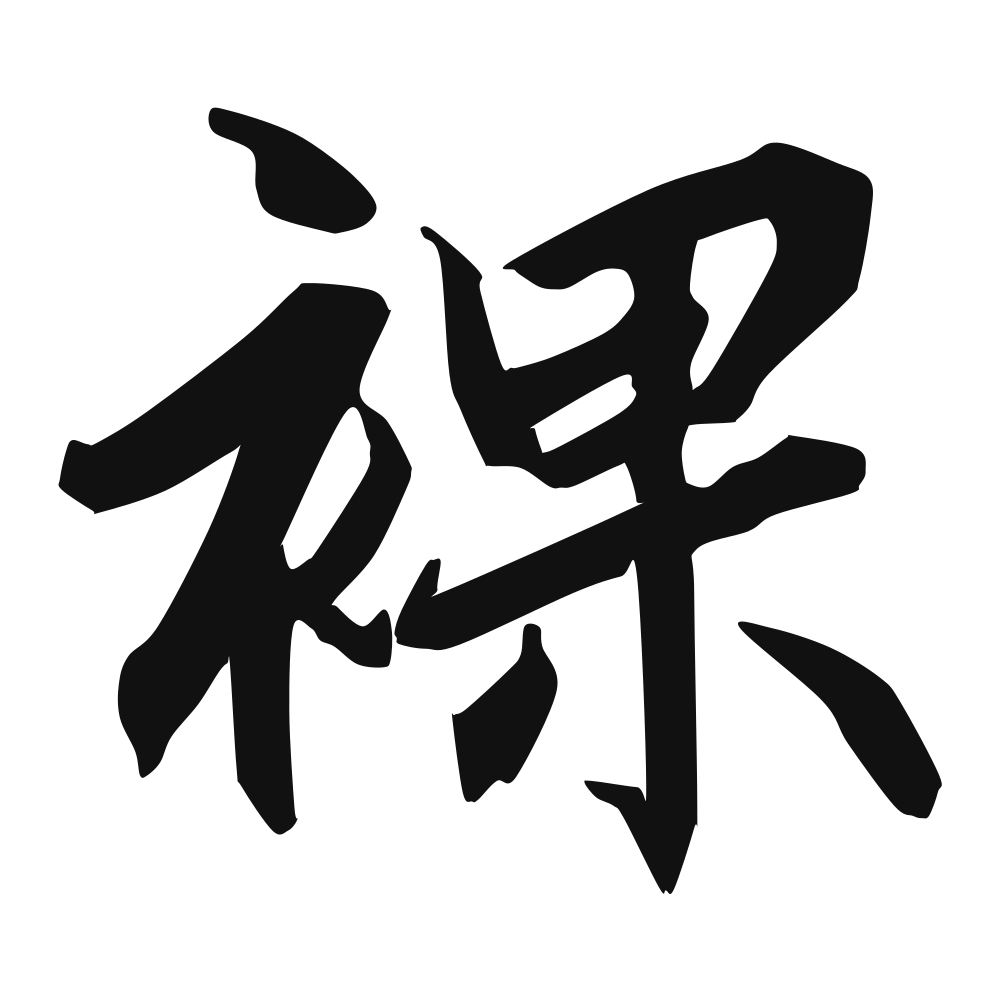
The Calligrapher — Wáng Zhì 王志
Southern Qi calligrapher of running script, author of the Throat-Pain Letter (Houtong tie).
南朝齐 calligrapher (), master of running script — known for 《喉痛帖》. Southern Qi dynasty (Southern Dynasties)
Cultural Story
The Han shu records Yang Wangsun, who on his deathbed demanded a luo zang, a naked burial, that his body return to the earth without a stitch, scandalising his kin to make a point about vain ceremony. The luo was the refusal of the shroud, the starkest argument against expenditure on the dead.
Common words & phrases
- 裸露 exposed · bare
- 裸体 naked
- 赤裸 bare · naked
- 裸婚 naked marriage
- 半裸 half-naked
Read the story behind the character
A renovator finds luo lu, exposed, wires behind a removed panel and calls the electrician, while a swimmer lies luo ti, naked, on the beach and a couple chooses a luo hun, naked marriage, with no property. The word ban luo, half-naked, names the state between. The character is the uncovered, literal or social.
Why this character belongs on skin
Bareness has always been a spiritual condition. 裸 is the character for naked—body, truth, a hillside stripped of trees—and every tradition that took honesty seriously arrived, eventually, at the same image. Adam and Eve did not learn shame in the garden; they learned cover, which is different. The Daoist hermits wore homespun so coarse the word for it became the word for plainness itself. To go 裸 is to be without the layers that answer for you—titles, fabrics, the small upholsteries of self. The body is the one document you cannot forge. Notice how the language leans on the image when it means candor: the naked truth, 赤裸裸, utterly bare—nothing left to negotiate with, nothing between you and what is. There is terror in that and there is freedom, and they are the same door. To wear 裸 is a quiet vow of undress: one pocket of my life, at least, unupholstered. What you meet there is the original, before the tailoring. Ink knows how to be that bare.
Own this character
Purchase delivers the original SVG of this glyph, brushed by Wáng Zhì 王志, ready to place on skin, paper, or screen.