
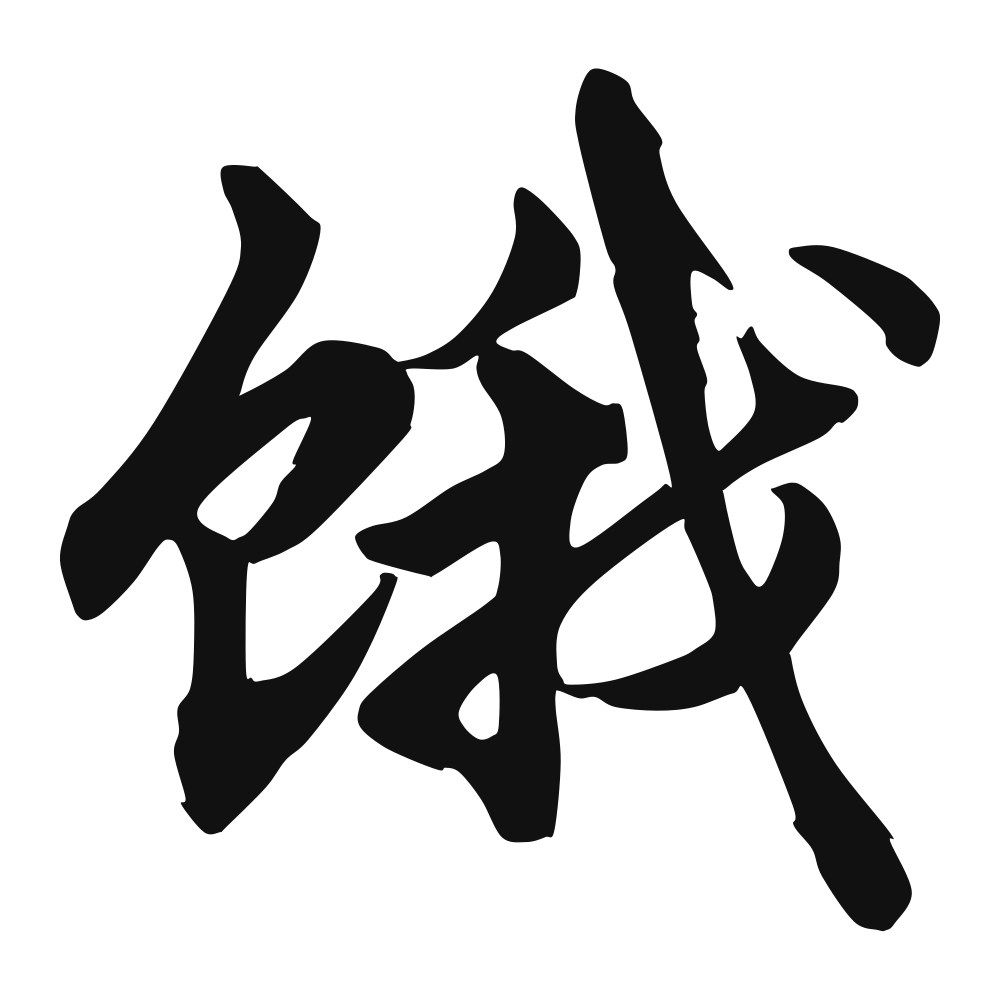
The Calligrapher — Wáng Zhì 王志
Southern Qi calligrapher of running script, author of the Throat-Pain Letter (Houtong tie).
南朝齐 calligrapher (), master of running script — known for 《喉痛帖》. Southern Qi dynasty (Southern Dynasties)
Cultural Story
饿 (è) sets 食 beside the phonetic 我. 《説文解字》 glosses it 飢也, yet classical usage drew a line: 飢 is mild hunger, while 餓 is the dire starvation that threatens life itself.
Common words & phrases
- 饥饿 hungry · starvation
- 饿死 starve to death
- 挨饿 go hungry
Read the story behind the character
饿 is the sharper word for hunger. People face 饥饿 (starvation), may 饿死 (starve to death) in famine, and must 挨饿 (go hungry) when food runs out. It marks want far beyond a rumbling stomach.
Why this character belongs on skin
The belly hollows and the mind sharpens; the Chinese call that hollow 饿. Hunger is older than language, the first signal that the body intends to survive. To wear 饿 is to honor the ache, not flee it. The desert fathers of the Christian tradition fasted until hunger became prayer; the warrior fights on an empty stomach and calls it clarity. There is a clean truth in wanting, desire unmasked, the animal in you refusing to pretend it is satisfied with less than it needs. You have known this edge, the night it sharpened you, the way want can become a kind of freedom when you stop apologizing for it. Let the character mark you as one who feels his appetites and does not shame them. It says you are hungry still, for touch, for meaning, for the next impossible thing. The ink is a vow to keep wanting, to stay ravenous in a world that rewards the comfortably numb.
Own this character
Purchase delivers the original SVG of this glyph, brushed by Wáng Zhì 王志, ready to place on skin, paper, or screen.