
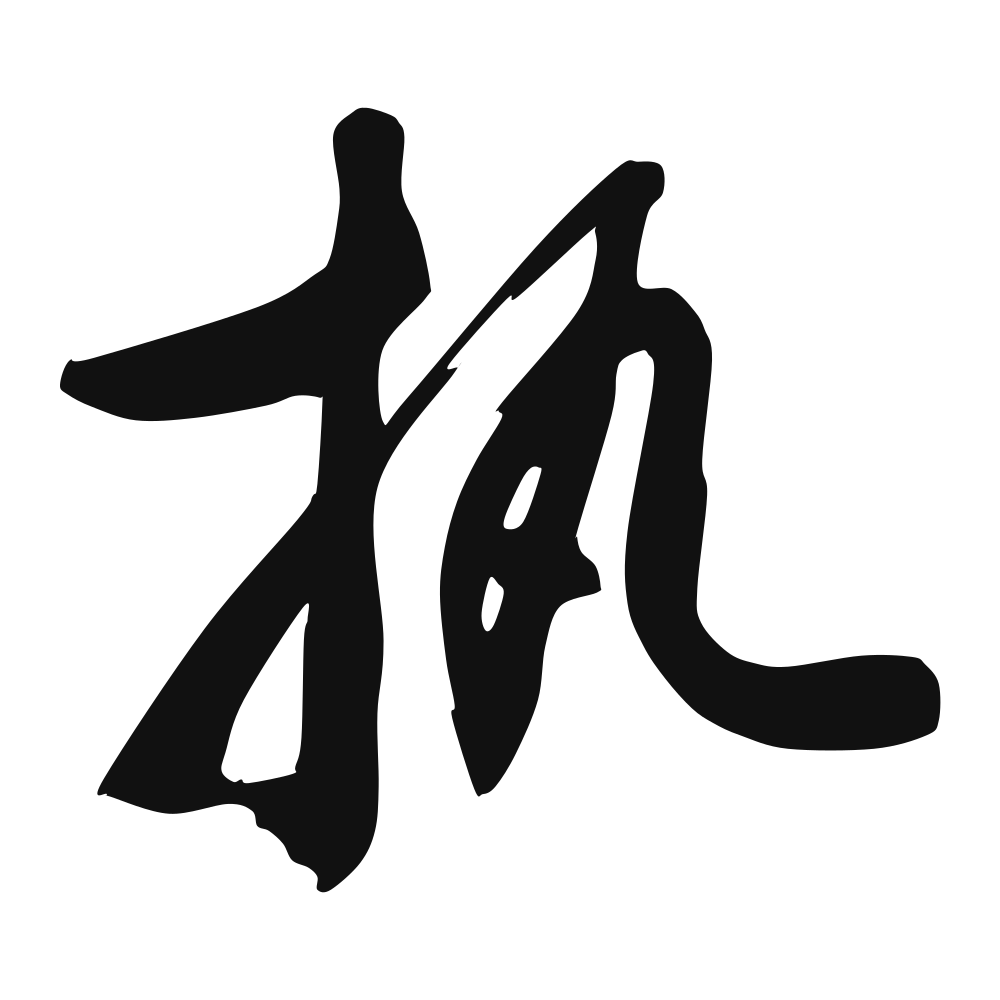
执
to execute (a plan); to grasp
Closest English meanings
hold·execute·stubborn
The Calligrapher — Wáng Zhìdēng 王稚登
Ming literatus and running-script calligrapher in the Wen Zhengming line.
Ming calligrapher (), master of running script — known for 《义兴杂诗》. Ming dynasty
Cultural Story
执 is to hold, and the 詩經's 击鼓 swears 执子之手,与子偕老 — take your hand, grow old with you. The character shows a hand gripping a thing, the grasp that commits. It is the hold that becomes a vow, the grip that will not loosen.
Common words & phrases
- 执行 execute · carry out
- 执着 persistent · fixated
- 执法 enforce law
- 执照 license
- 执政 govern · in power
- 争执 dispute · quarrel
Read the story behind the character
执 is the grip and the grind: 执行 the order carried out, 执着 the fixation people worry about, 执法 the officer who applies the law. 执照 is the license in your wallet, 执政 the party in power, 争执 the argument that won't end. It names the hold, literal and institutional.
Why this character belongs on skin
The hand closes on the thing and will not open — zhí is to grasp, to hold fast, to persist in what you have seized. The old character shows a hand around a branch, the grip that does not loosen. We are told to let go, and often rightly; but there is a different holiness in the grip that held through the night, the conviction that refused to be talked out of itself. To carry zhí is to honor your stubbornness, the part of you that clutched the true thing and weathered the pleas to release it. It is a mark of fidelity. Let this character rest where you have held on — not the clinging of fear, but the grasp of one who knew, and knows still, exactly what was worth keeping.
Own this character
Purchase delivers the original SVG of this glyph, brushed by Wáng Zhìdēng 王稚登, ready to place on skin, paper, or screen.