
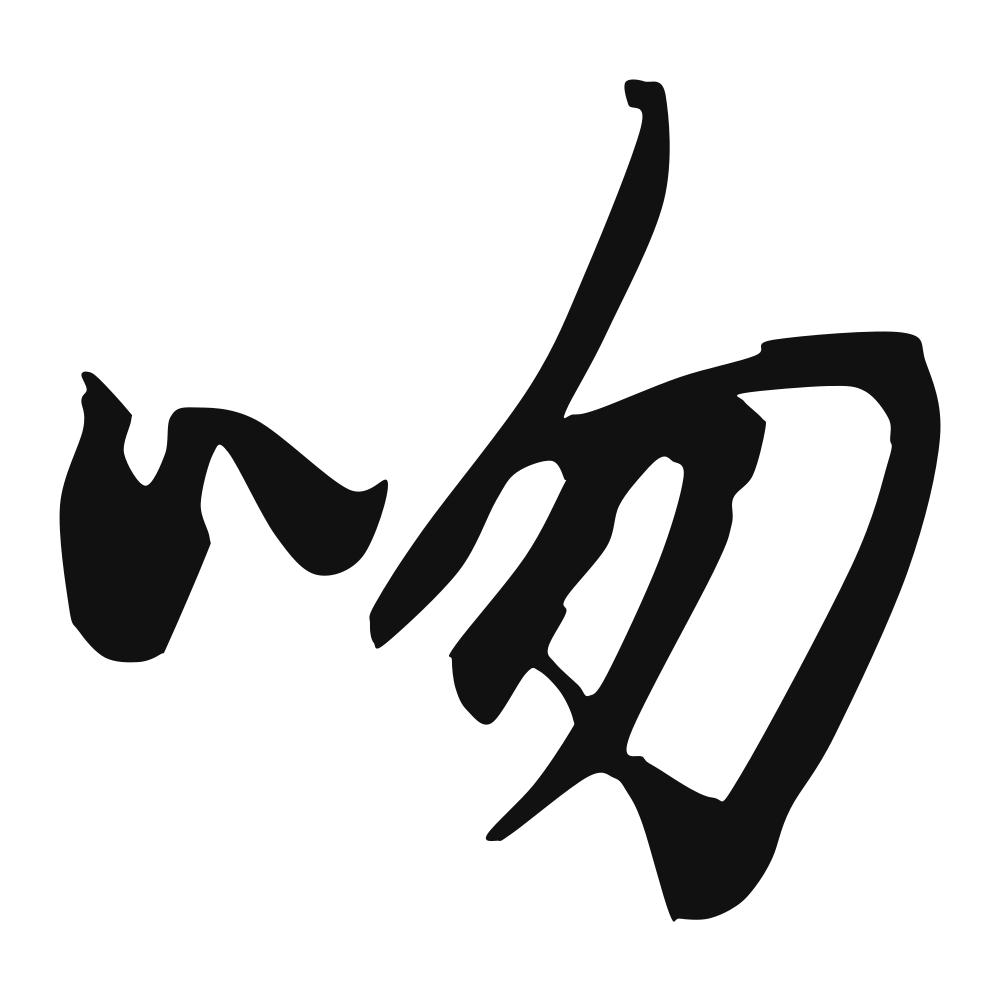
The Calligrapher — Wèi Héng 卫恒
Jin calligrapher and theorist; author of the Four Script Forms and Their Force (Siti Shushi).
Jin calligrapher (), master of seal script/clerical script — known for 《四体书势》. Jin dynasty
Cultural Story
吻 shows 口 (mouth) with 勿 (do not, a phonetic), the lips or their touch. In old usage 吻 meant the mouth's edge, the lip itself, not romance—classics spoke of 吻合 (coinciding, lips meeting in agreement) in the sense of things fitting seamlessly. Tang poets could use a 吻 for the rim of a cup. The tender kiss is a modern coloring of an older word for the mouth's meeting edge in silence.
Common words & phrases
- 接吻 kiss
- 亲吻 kiss
- 吻合 coincide · tally · accord
Read the story behind the character
Couples 接吻 (kiss) at the movies, and a parent 亲吻 (kisses) a child goodnight. Doctors say the scan and the symptoms 吻合 (coincide/tally), and a deal's terms 吻合 the contract. The character moves from clinic to cinema—measuring both affection and agreement. Whether a forehead kiss or two datasets that line up perfectly, 吻 names the meeting of surfaces, intimate or exact, in modern life.
Why this character belongs on skin
The kiss is the smallest country two people can found, and 吻 is its only law. A mouth pressed to a mouth, or a forehead, or the back of a hand that has been through things — it is the body's plainest sentence: I am here, and I am not leaving yet. For those of us who were told our wanting was a problem to be solved, the kiss is a quiet treason, performed daily, and it is also just dinner. 吻 does not explain itself. It is the first soft thing after a hard week, the punctuation of a love the paperwork doesn't recognize. Somewhere a boy kisses who he is told not to, and somewhere a woman kisses her wife in the car before the family dinner, and both are whole. Ink it near the lips, or near the pulse, and let it mean permission.
Own this character
Purchase delivers the original SVG of this glyph, brushed by Wèi Héng 卫恒, ready to place on skin, paper, or screen.