
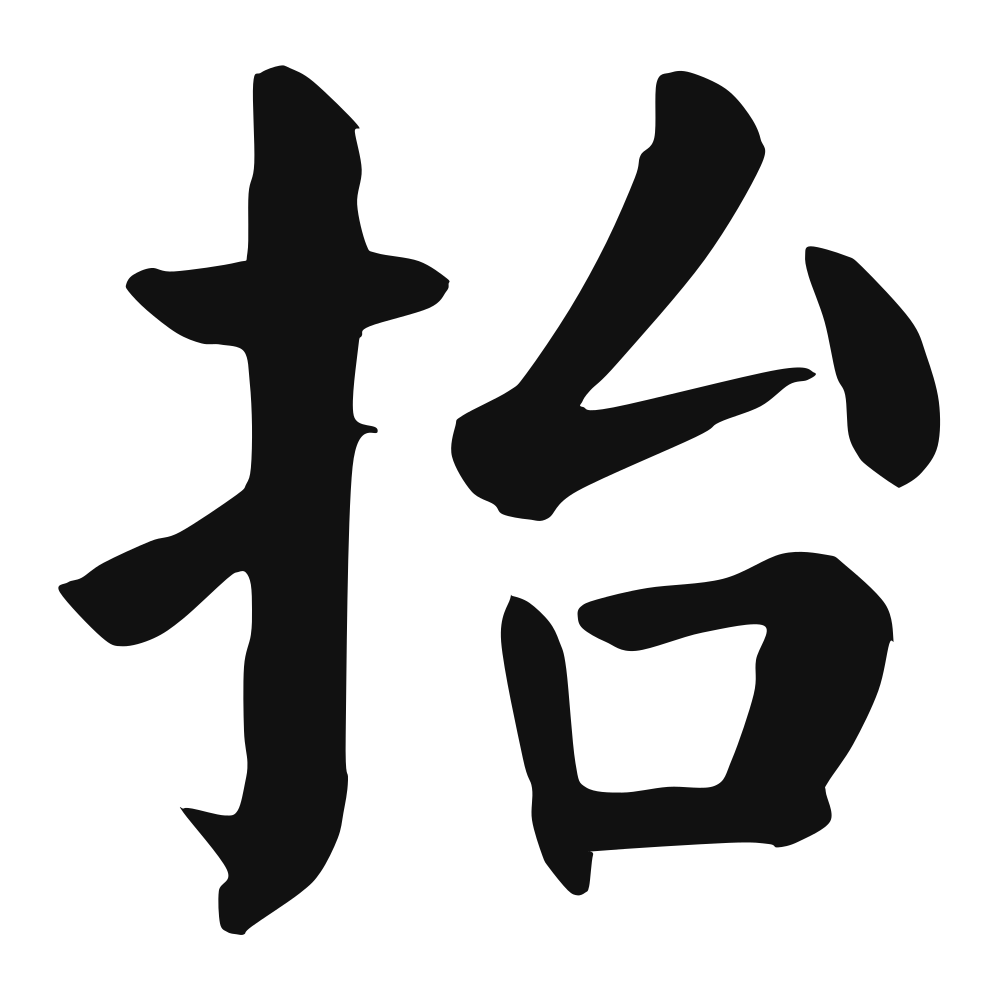
抬
to lift; to raise; (of two or more persons) to carry
Closest English meanings
lift·raise
The Calligrapher — Wèi Héng 卫恒
Jin calligrapher and theorist; author of the Four Script Forms and Their Force (Siti Shushi).
Jin calligrapher (), master of seal script/clerical script — known for 《四体书势》. Jin dynasty
Cultural Story
抬 is a late word for the lift done by two — the sedan, the beam, the body. The classics used 举 and 擎; 抬 came up from the bearers' chant, the heave in time. The hand with 台, a platform, is the raising onto a stage. It is the lift that needs more than one pair of arms.
Common words & phrases
- 抬头 raise head · look up
- 抬举 praise · promote
- 抬手 raise hand
- 抬价 raise price
- 抬杠 bicker
Read the story behind the character
抬 is the raise and the wrangle: 抬头 the face that looks up, 抬举 the praise that promotes, 抬手 the gesture that spares, 抬价 the marked-up fare. 抬杠 is the argument nobody wins. It names the lift shared and the dispute shared, the carrying and the bickering.
Why this character belongs on skin
Two men take the poles and the sedan rises—tái is the lift done together, the weight made bearable by shared hands. But it is also the solitary act: the head lifted from shame, the eyes raised to meet a fate you will not flinch from. The character is a hand under something heavy, the verb of refusal to stay lowered. We tái the fallen, tái our chins when the news is bad, tái our voices when silence would be a lie. There is a muscular grace in it, the body deciding it will hold more than it thought. Place this along the throat or the arm—a mark that you have been lifted and have lifted, that your limits were only rumors, and that the next weight is welcome. Rise. You were built to.
Own this character
Purchase delivers the original SVG of this glyph, brushed by Wèi Héng 卫恒, ready to place on skin, paper, or screen.