
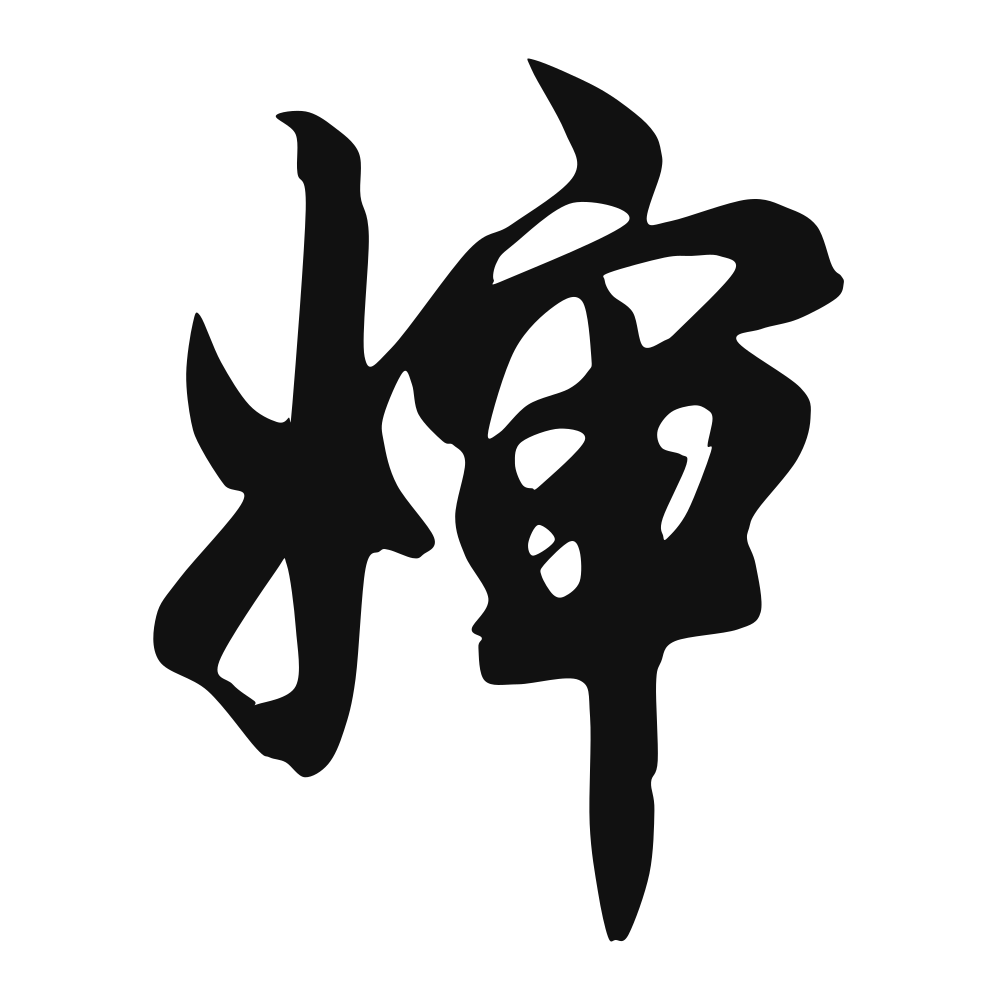
婶
wife of father's younger brother
Closest English meanings
aunt·wife of father's younger brother
The Calligrapher — Wèi Qīwú 魏栖梧
Tang calligrapher of regular script, follower of the Chu Suiliang style.
Tang calligrapher (), master of regular script — known for 《善才寺碑》. Tang dynasty
Cultural Story
In the classical tradition 婶 is a later, colloquial kin term for the wife of a father's younger brother, sitting below the senior 叔 in household rank. Family books list her among the 婶娘 who shared the courtyard, a modest but real place in the clan's daily life.
Common words & phrases
- 婶婶 aunt · wife of father's younger brother
- 大婶 aunt (familiar)
- 婶娘 aunt
Read the story behind the character
In the modern world 婶 is warm and familiar. A child runs to 婶婶 for snacks; a neighborly 大婶 watches the building's kids, and a 婶娘 joins the festival table. The word scales from blood aunt to the kindly woman next door, carrying the easy intimacy of extended family and close neighbors.
Why this character belongs on skin
She was not your mother and so she was free to love you without the weight of blood's obligation — the aunt, the father's younger brother's wife, who slipped you the extra dumpling and the unrequested blessing. The character is built on the woman radical, the one who stands just outside the immediate fire yet warms it anyway. In every family there is this figure, the soft authority, the keeper of the small kindnesses the parents are too tired to give. The Bible's widow gave her last coin; the aunt gives her last patience. You were shaped by such a woman, or you are such a woman to someone else's child. To ink this word is to honor the love that chooses no reward. Let it rest on your skin like a warm hand on a child's head: I remember who fed me when no one was watching, and I carry her generosity forward, unpaid and unashamed.
Own this character
Purchase delivers the original SVG of this glyph, brushed by Wèi Qīwú 魏栖梧, ready to place on skin, paper, or screen.