
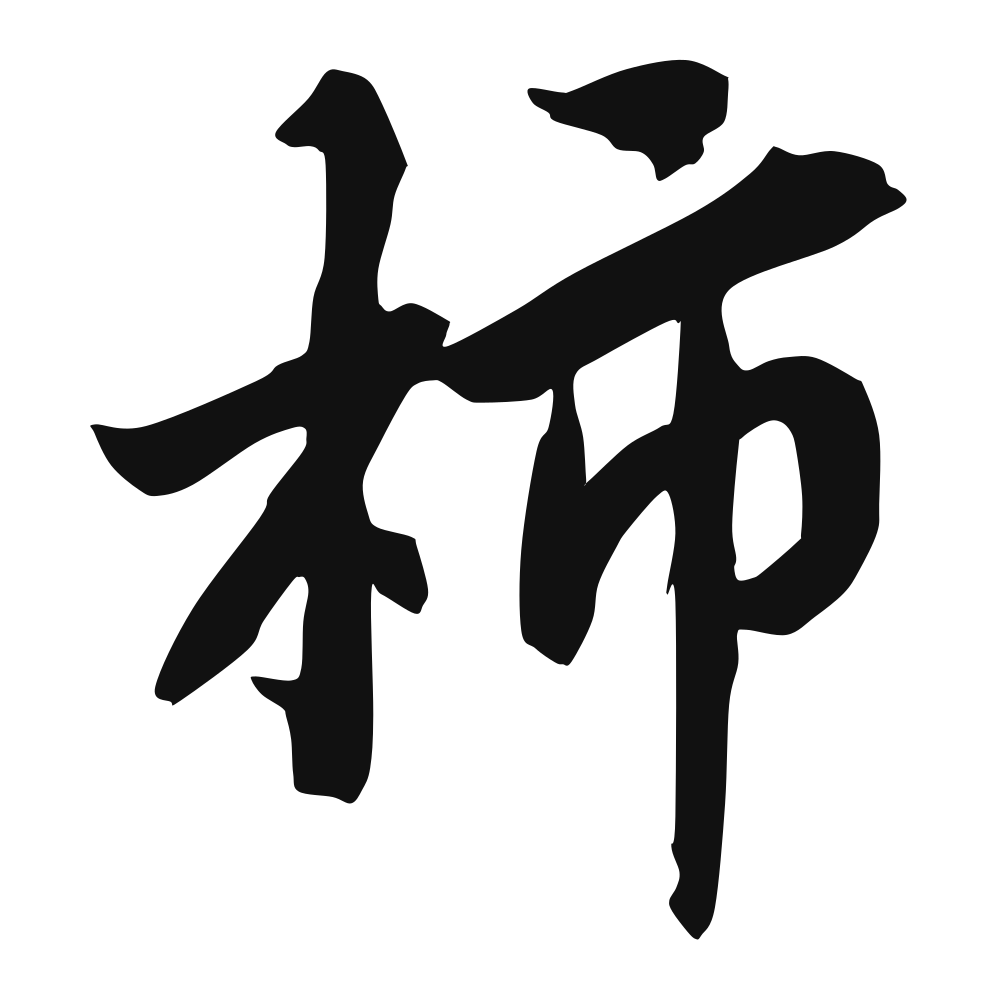
The Calligrapher — Wèi Qīwú 魏栖梧
Tang calligrapher of regular script, follower of the Chu Suiliang style.
Tang calligrapher (), master of regular script — known for 《善才寺碑》. Tang dynasty
Cultural Story
柿 is the persimmon, the orange fruit that hangs on the bare tree after frost, sweetening as the cold comes — a tree the north treasures. The 柿饼, dried and sugar-frosted, was a winter sweet. The character is the orchard's last offering, the glow against a gray sky when little else is left to pick.
Common words & phrases
- 柿子 persimmon
- 柿饼 dried persimmon
- 西红柿 tomato
Read the story behind the character
柿 is the autumn fruit: 柿子 the astringent orb you eat after frost, 柿饼 the chewy dried cakes from Shaanxi. 西红柿 is the tomato — a name that borrowed 柿 for its round redness, though it is no kin. The character is the real persimmon and the misnamed tomato, both red, both common on a table.
Why this character belongs on skin
The persimmon hangs like a small orange lantern after the first frost, soft, surrendered, sweet only when the cold has done its work. There is a lesson the East has always understood: that some ripenings require the ache. In the classical orchards of China, the persimmon was the fruit of patience, left to blush on bare branches while everything else went to sleep. To carry this character is to carry the truth that sweetness is earned by waiting, that the tree does not hurry and neither should you. The Daoists saw the whole world in a single fruit—stillness, then sudden gold. A Western man might wear it as a vow against the rush, a quiet wager that the best of him is still coming. Let this mark rest on your skin like late autumn light, a small warm oracle reminding you that what endures the frost becomes the sweetest thing.
Own this character
Purchase delivers the original SVG of this glyph, brushed by Wèi Qīwú 魏栖梧, ready to place on skin, paper, or screen.