
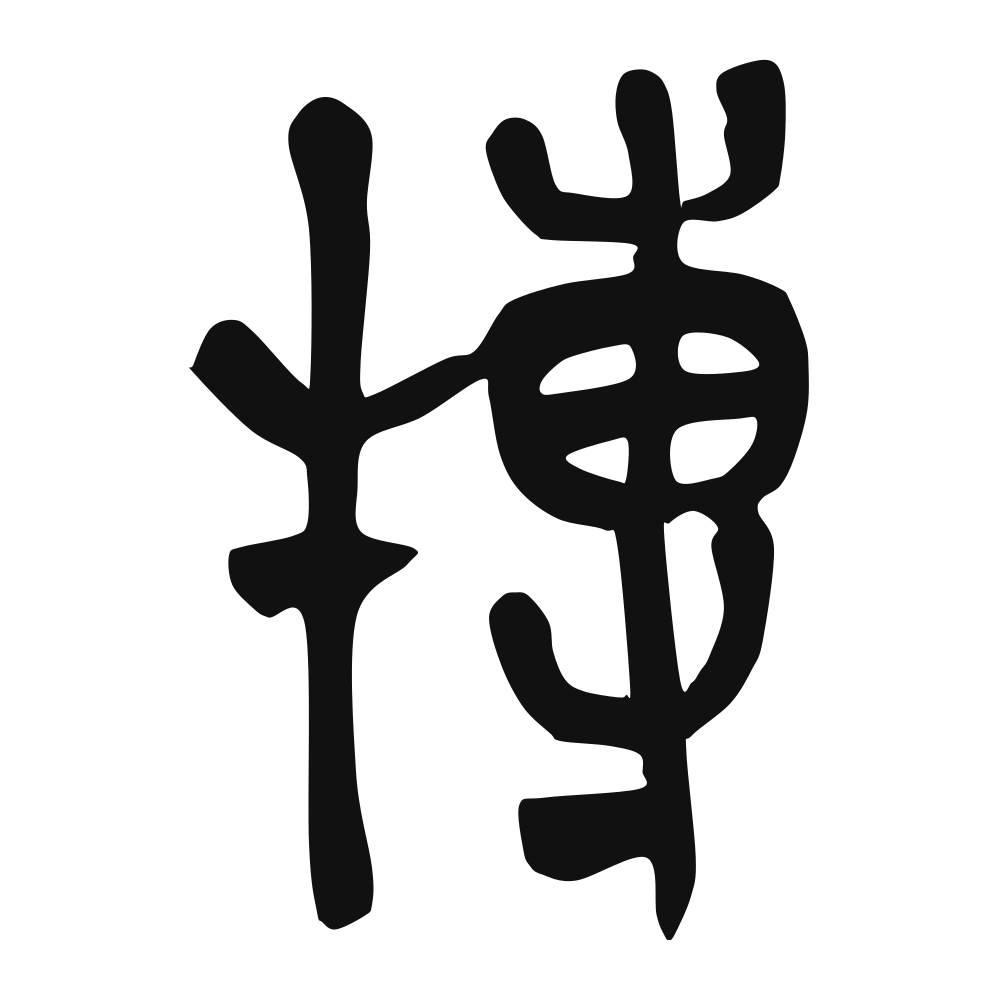
搏
to fight; to combat; to seize; (of heart) to beat
Closest English meanings
fight·wrestle·beat
The Calligrapher — Wú Chāngshuò 吴昌硕
Qing master blending seal-script strength into bold brushwork.
Qing calligrapher (), master of seal script — late-Qing Shanghai master whose seal-script energy drives every stroke. Qing dynasty
Etymology & Meaning · 字义溯源
2 · The Character: 搏 Bó (2nd tone). 《说文》: 「搏,索持也。一曰至也。从手尃聲」 — 'to seize by groping; one gloss says to reach.' 索持 is the grip found by searching, which is why 搏 came to mean close-quarters grappling rather than a struck blow. 《左传·僖公二十八年》, on the eve of the battle of Chengpu, records Duke Wen of Jin dreaming 「與楚子搏」 — grappling with the Viscount of Chu, who pins him and sucks his brain; the diviner reads the nightmare as victory. 《广雅·释诂》 flattens the word to 「搏,擊也」, to strike. Modern compounds keep both halves: 拼搏 (to strive with everything), 搏擊 (combat sport), 肉搏 (hand-to-hand). Yijing parallel: Dà Zhuàng 大壯 (34), Great Power, with its restraint clause 「君子以非禮弗履」 — strength that ignores ritual is not strength. Honest disclosure: 搏 is routinely confused with 摶 (tuán) in 《庄子·逍遥游》 「摶扶搖而上者九萬里」 — that character is not this one. Kangxi: 13 strokes. Wuxing: Water (水).
Cultural Story
To 搏 is to grapple, the bare-handed fight, the strong man 搏 the tiger in the old tales before the bow was invented. The character is the close contest, flesh against flesh, the pulse 搏ing in the wrist as the proof of life, and the man who grappled the tiger was really proving only that his pulse, unlike the tiger's, was in a hurry to be felt.
Where a Western reader can stand: Where a Western reader can stand: 搏 is the grapple — the searching grip of close combat, from the Shuowen's 索持 to Duke Wen's wrestling dream on the eve of Chengpu, where the pinned duke still wins the war; its heroic reading lives in the restraint clause of the Great Power hexagram, strength that obeys ritual. Wu Changshuo is the ideal carrier: the last great seal-script master who wrestled the archaic Stone Drum inscriptions into monumental modern art — 拼搏 given a biography. Honest caveat: bare 搏 reads as violence — 搏斗, 肉搏, hand-to-hand killing — so the honest tattoo is the pair 拼搏; and the Zhuangzi line 摶扶搖而上者九萬里 is written with 摶 (tuán), not 搏, a confusion that must never be carried onto a client's skin.
Common words & phrases
- 搏斗 fight · struggle
- 拼搏 strive · fight hard
- 脉搏 pulse
- 搏动 beat · pulsate
- 肉搏 hand-to-hand combat
- 搏击 combat · box
Read the story behind the character
Two men 搏鬥; a team 拼搏s for the cup; the 脈搏 is taken; a fighter 肉搏s. The tiger is a clock now. The close contest is the same, whether it wrestles a beast, wins a match, or merely ticks the small evidence that a body is still, against odds, alive, and the clock is only the tiger, caged and paid by the second.
Why this character belongs on skin
This character has a fist in it — the hand radical, gripping, exerting — and it means to wrestle, to grapple, to seize by force. But listen to where it lives now: in 脉搏, the pulse, the heartbeat. The fight and the beat are one word. Your heart is literally named a fighting-thing, the muscle that throws its punch seventy times a minute from before your birth until after your last argument, and never asks for rest. The warriors knew 搏: gladiators in the sand, samurai in the rain, boxers who learned that combat is mostly about breathing. So did the poets — Dylan Thomas raging against the dying of the light, the Buddhists wrestling not the world but their own minds. To wear 搏 is to side with effort, with the grapple, with the beautiful refusal to go down quietly. Put it where you can feel your own pulse beneath it. Let the two meanings beat together. They always have.
Own this character
Purchase delivers the original SVG of this glyph, brushed by Wú Chāngshuò 吴昌硕, ready to place on skin, paper, or screen.