
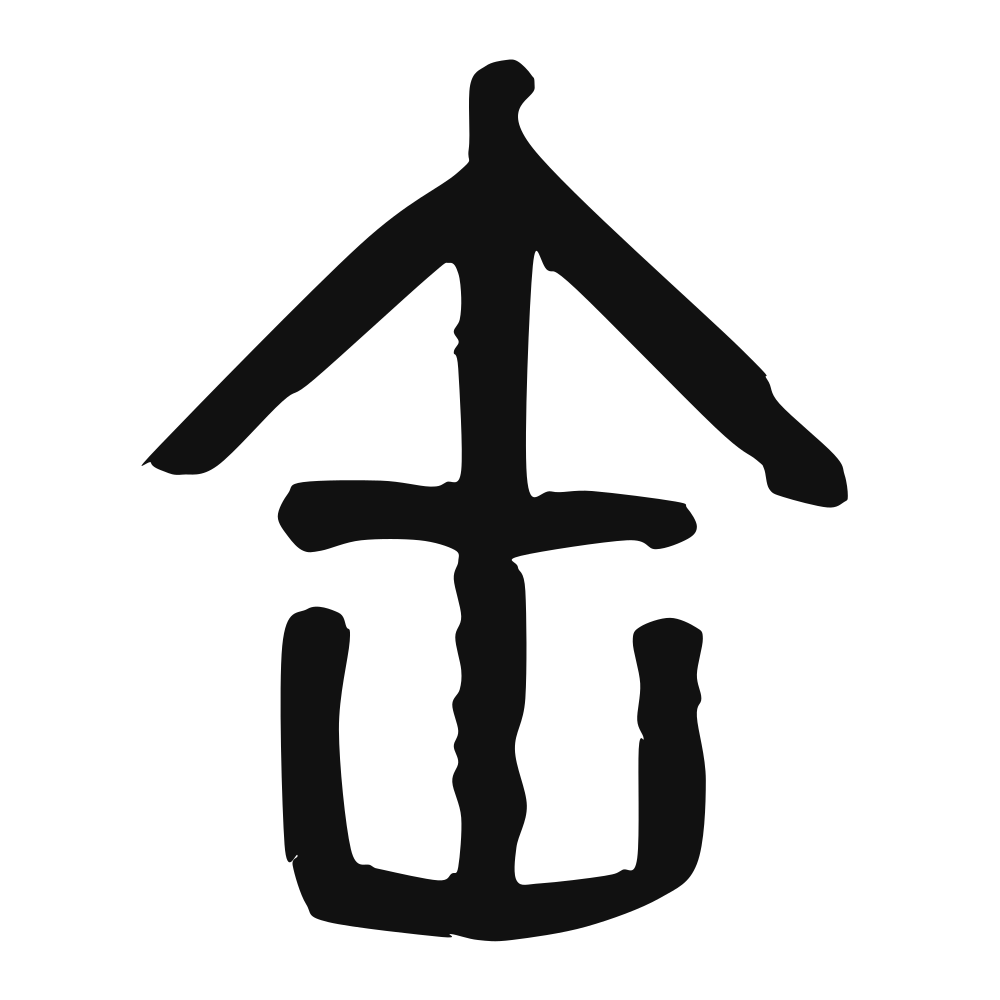
The Calligrapher — Wú Dàchéng 吴大澂
Qing scholar-official famed for refined seal script.
Qing calligrapher (), master of seal script — known for 金文书法家. Qing dynasty
Cultural Story
缶 was honest clay: the jar that held water, wine, and grain. Qin soldiers sang to its beat, 击缶而歌, percussion for people too plain for bronze bells. At 渑池, 蔺相如 forced the King of Qin to strike the jar as music for the King of Zhao — an insult turned into a diplomatic victory recorded by 史记.
Common words & phrases
- 击缶 strike the jar · play the earthenware
- 瓦缶 earthen jar
- 瓶缶 jars and pots
Read the story behind the character
The clay jar lives in museums and kitchens. Display cases label 瓦缶 (earthen jars) from Neolithic villages; tea shops sell pickle jars shaped like their 3,000-year-old ancestors; folk orchestras have revived 击缶 (striking the jar) as percussion, and the Beijing Olympics opening ceremony staged hundreds of glowing 缶 drums in perfect unison.
Why this character belongs on skin
Before porcelain bewitched the world, there was 缶: the unglazed clay jar, earthen and plain, holding water, wine, grain. The character is a potter's own anatomy—a 扌of the digging hand above 凵, the pit, because the first jars were shaped from the very earth they stood on. Poor men's pottery. And yet the Book of Songs records country folk beating their 缶 as drums at the year's festival, bare hands on clay, the oldest rhythm of celebration; the philosopher Zhuangzi sang and struck a basin at his wife's death, accepting the season's turning. A vessel that holds both the wine and the grief. There is something very moving about plainness that endures—every museum's pristine celadon began life as commoners' 凵-fired experiments. A 缶 tattoo is for someone unembarrassed by their origins: earth-formed, fire-hardened, unglazed, and somehow exactly the right shape for whatever life pours in.
Own this character
Purchase delivers the original SVG of this glyph, brushed by Wú Dàchéng 吴大澂, ready to place on skin, paper, or screen.