
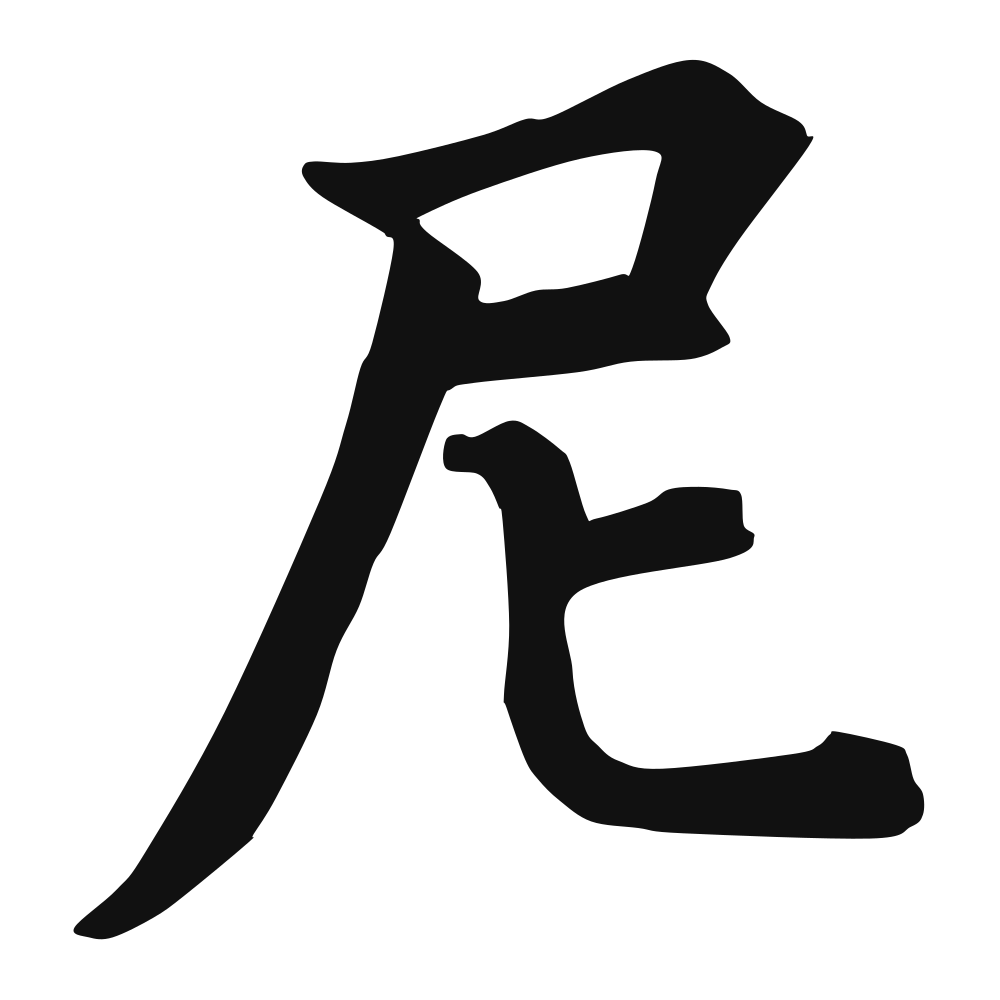
尼
Buddhist nun; (often used in phonetic spellings)
Closest English meanings
nun·Sanskrit·monastic·Buddhist
The Calligrapher — Wú Jū 吴琚
Song running-script master famed for closely emulating Mi Fu.
Song calligrapher (), master of running script — known for 学米芾. Song dynasty
Cultural Story
尼 derives from Sanskrit bhikṣuṇī, a Buddhist nun; the Shuowen notes it for the 尼姑 (nun). 僧尼 (monks and nuns) kept the monasteries, and 尼 temples offered women a religious life apart from the home. Later loanwords like 尼龙 (nylon) and 尼古丁 (nicotine) use 尼 purely for sound, not sense.
Common words & phrases
- 尼姑 Buddhist nun · nun
- 尼龙 nylon
- 尼古丁 nicotine
- 僧尼 monks and nuns
Read the story behind the character
A 尼姑 (Buddhist nun) tends a hillside temple, and 僧尼 (monks and nuns) chant at dawn. Your jacket is 尼龙 (nylon) and your patch a 尼古丁 (nicotine) patch to quit smoking. The character bridges sacred and secular — from a shaven-headed nun to a synthetic fiber — without losing its calm hush.
Why this character belongs on skin
Before it named the nun, 尼 meant to stop — to halt, to settle, to draw the rushing world to a standstill. The Buddhist sister took the name because she had stopped: stopped the chase, the grasping, the endless want. We pity stillness, call it retreat, mistake the quiet for a failure of nerve. But 尼 knows the stop is the achievement. To carry it is to honor the one who said enough — not from weakness, but from having arrived. It is a contemplative mark, almost countercultural against our gospel of more. On the skin it reads as a pause button worn permanently, a small rebellion against the speed that wants your soul. You do not have to enter a convent. You only have to know the value of the halt, the dignity of the woman who sat down and would not be hurried. 尼 remembers the stop for you.
Own this character
Purchase delivers the original SVG of this glyph, brushed by Wú Jū 吴琚, ready to place on skin, paper, or screen.