
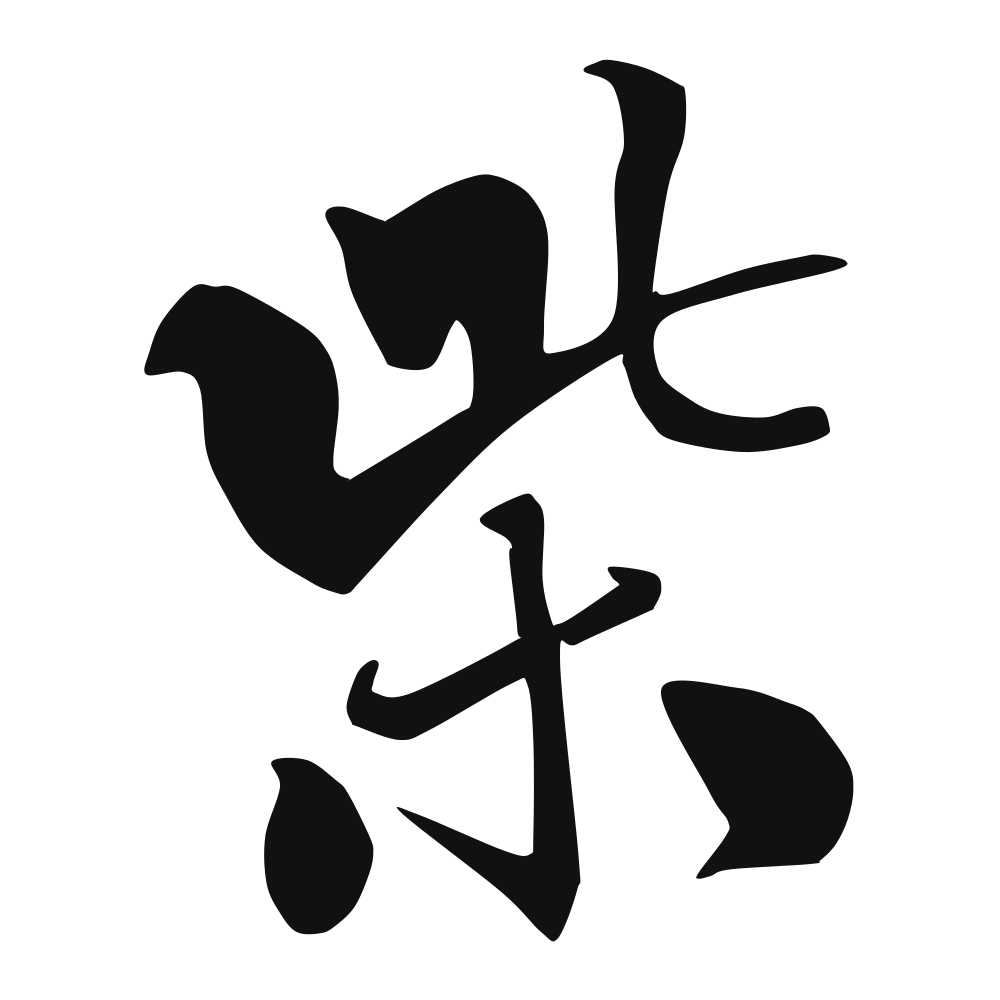
柴
surname Chai; firewood; lean (of meat); thin (of a person)
Closest English meanings
firewood·fuel
The Calligrapher — Wú Shuō 吴说
Song calligrapher famed for thread-cursive (yousi) script; his small regular script led the age.
Song calligrapher (), master of running script/游丝书 — known for 创游丝书. Song dynasty
Cultural Story
柴 is brushwood, the small stuff gathered to burn — and 柴門 is the brushwood gate of the poor man's hut in a thousand poems. The hermit's door is 柴, the emperor's is 朱. The character is the humble fuel and the humble threshold, the smell of smoke at dusk and the sound of a latch of sticks.
Common words & phrases
- 柴火 firewood
- 柴草 firewood and grass
- 劈柴 split firewood
- 柴胡 bupleurum (herb)
- 骨柴 thin as a stick
Read the story behind the character
柴 is the wood in the stove: 柴火 the pile behind a village kitchen, 劈柴 the winter chore, 柴草 what a bonfire wants. 柴胡 is the bitter root in a fever decoction. 骨柴 is the unkind word for a too-thin child. The character is fuel and poverty, the stick that heats and the gate that marks want.
Why this character belongs on skin
What burns was once a tree standing in the cold. The character is firewood, the gathered branches cut and stacked against the winter, the humble fuel that warms the house and then is gone. In the old villages a pile of it outside the door was a measure of the family's foresight; the Buddhists saw in it the lesson of impermanence, that even the wood we burn was borrowed from the forest. To tattoo this is to accept the role of fuel — that something in you exists to be spent, to feed a fire larger than your own warmth. It is ink for the givers, the ones whose worth shows up as someone else's heat. Let it rest near the heart, a quiet emblem of the willing burn, the understanding that to be used up kindly is not a small fate. The stack outside the door is not a tragedy; it is the reason anyone inside is still alive by morning.
Own this character
Purchase delivers the original SVG of this glyph, brushed by Wú Shuō 吴说, ready to place on skin, paper, or screen.