
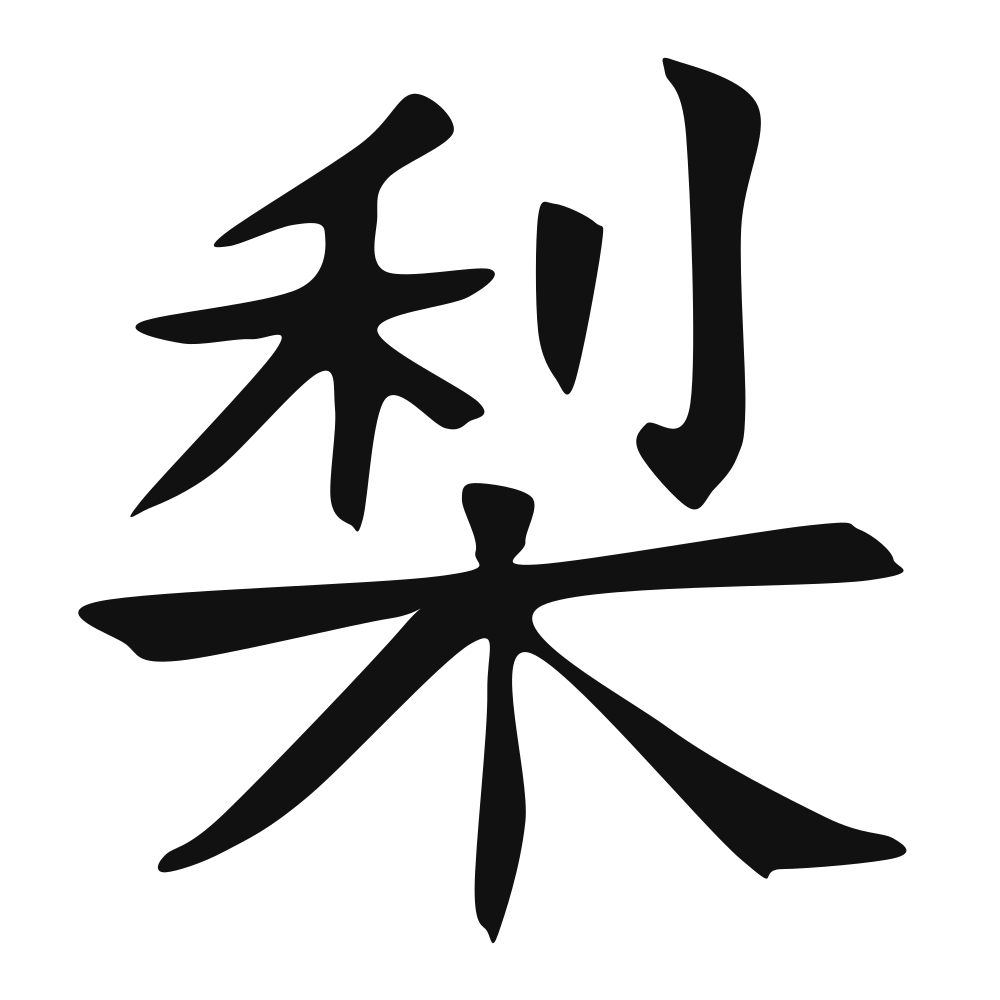
The Calligrapher — Wú Shuō 吴说
Song calligrapher famed for thread-cursive (yousi) script; his small regular script led the age.
Song calligrapher (), master of running script/游丝书 — known for 创游丝书. Song dynasty
Cultural Story
梨 is the pear, the crisp fruit the Tang court loved — but 梨园 is its strange fame: the pear orchard where Emperor Xuanzong trained his actors, so 梨园 became the word for the opera world and its people. The character is the fruit that named the stage and the troupe that performs on it still.
Common words & phrases
- 梨子 pear
- 梨树 pear tree
- 梨园 theater · opera circle
- 雪梨 snow pear
Read the story behind the character
梨 is the fruit and the profession: 梨子 the juice pear of autumn, 雪梨 the sweet one in a cough syrup, 梨树 the white-blossomed tree. 梨园 is still the term for Chinese opera and its troupes. The character is the crisp snack and the ancient name of the theatrical craft passed from master to apprentice.
Why this character belongs on skin
The pear hangs round and pale, cooler and more restrained than the peach, the fruit the Chinese poet offered to a friend at parting. It is the taste of autumn made gentle—crisp, watery, a little sorrowful, the flavor you reach for when sweetness alone will not do. In the old gardens it grew near the window so a scholar could smell it while he worked, a small consolation against the long night of study. Confucius might have approved: pleasure taken plainly, without excess. To wear this character is to claim the quieter appetite—not the feast but the single fruit, eaten slowly, remembered. You are the one who notices the pear, who finds the whole season in its cool flesh. Let it mark a taste refined past hunger into something like gratitude. The ink is your orchard, carried inward, blooming pale and certain against the skin.
Own this character
Purchase delivers the original SVG of this glyph, brushed by Wú Shuō 吴说, ready to place on skin, paper, or screen.