
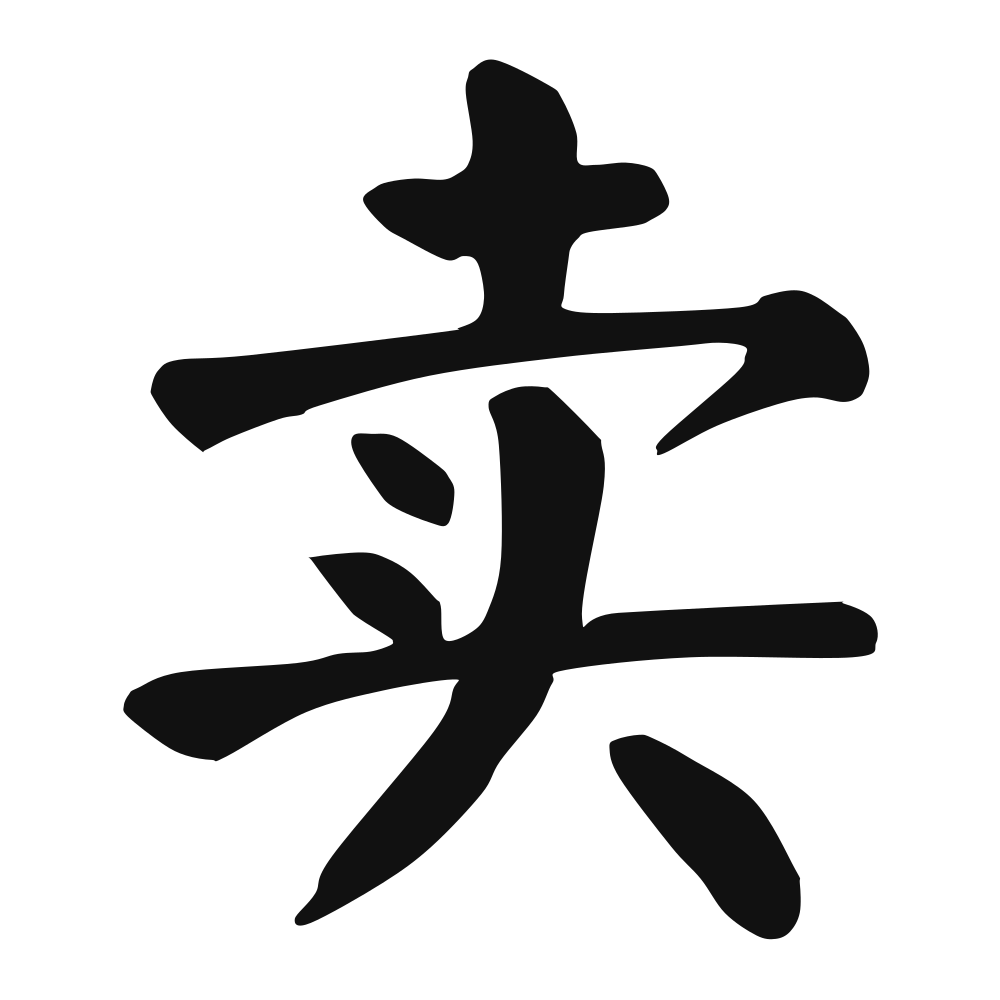
卖
to sell; to betray; to spare no effort; to show off or flaunt
Closest English meanings
sell
The Calligrapher — Xī Chāo 郗超
Eastern Jin statesman and calligrapher of cursive script, follower of the two Wangs.
Eastern Jin calligrapher (), master of cursive script — known for 郗愔之子. Eastern Jin dynasty
Cultural Story
The “Biographies of the Wealthy” in the Records weigh the merchant's art — 賣卖, buying to sell, the trade that fed the cities along the Silk Road. 賣力 was the hawker's whole cry; 賣弄 the flair a singer used to draw a crowd. The word is the oldest deal in the market, struck aloud.
Common words & phrases
- 买卖 business · trade
- 出售 sell
- 卖力 exert oneself
- 卖座 draw well at box office
- 卖弄 show off
Read the story behind the character
A stall 賣卖 in the morning; 出售 is the sign on a flat a couple can't quite afford. 賣力 is the pitch a livestream host shouts, 賣座 the number a film posts Friday, and 賣弄 the flex a friend mocks. The word now streams from a phone more than a stall, but the haggle is the same.
Why this character belongs on skin
There is a word for the moment you trade what is yours. 卖 is to sell — and in the older tongue, to betray, for the two were once kin. The character sets a number above a root of buying, as if every sale were a small accounting of the self. We live in a world that sells everything: our time, our faces, our silence. To carry 卖 is not to celebrate the market but to name it — to admit the deals you have made and the ones you refused. There is a strange freedom in the honest price. The warrior who knows his worth names it; the lover who gives without counting is the rarer merchant. Ink this and you mark the line between what is for sale and what is not. Some things you will never put a tag on. Let that boundary live on your skin, drawn in one plain stroke of refusal.
Own this character
Purchase delivers the original SVG of this glyph, brushed by Xī Chāo 郗超, ready to place on skin, paper, or screen.