
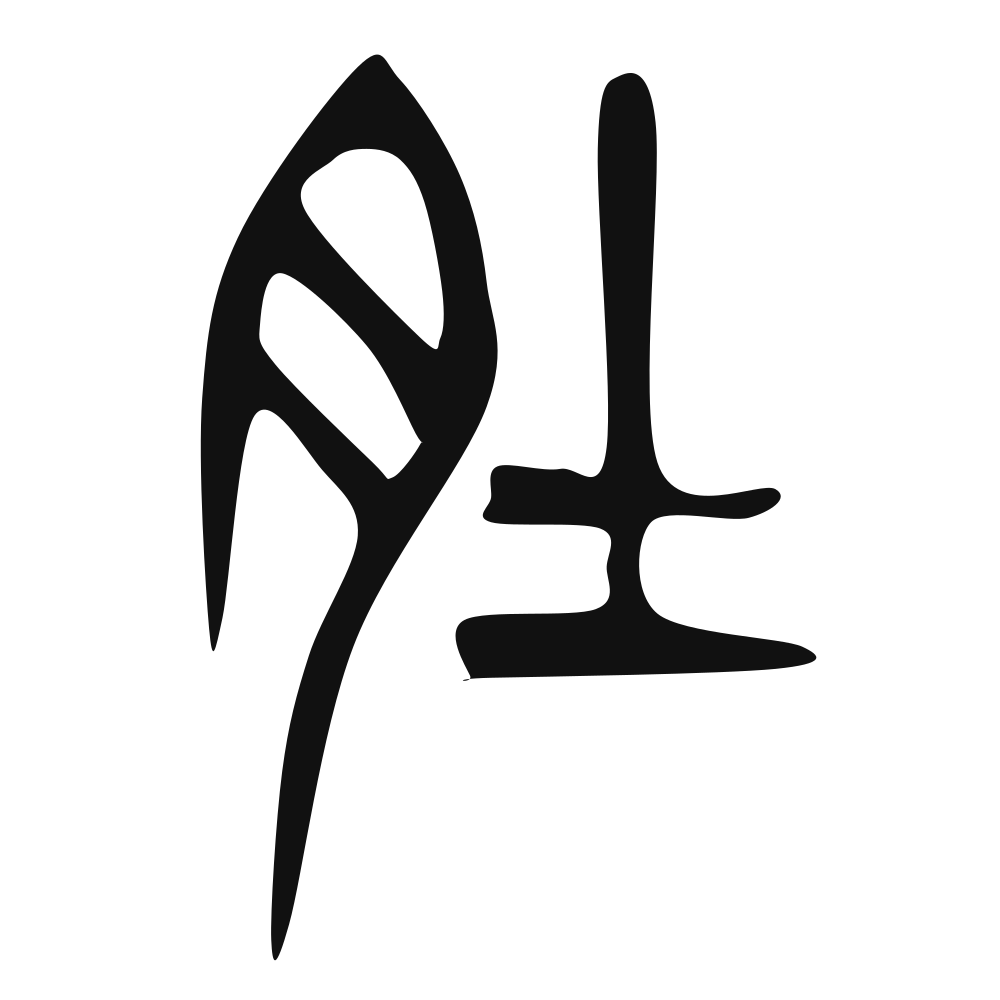
The Calligrapher — Xī Chāo 郗超
Eastern Jin statesman and calligrapher of cursive script, follower of the two Wangs.
Eastern Jin calligrapher (), master of cursive script — known for 郗愔之子. Eastern Jin dynasty
Cultural Story
肚 originally referred to the belly of animals, later the human abdomen. Classical texts speak of a broad 肚 as generosity: 宰相肚里能撑船, a chancellor's belly can float a boat. The 肚脐 navel, the scar of the severed cord, was called the hub of the qi in Daoist breathing arts.
Common words & phrases
- 肚子 belly · stomach
- 肚脐 navel · belly button
- 肚皮 belly · abdomen
- 肚量 tolerance · magnanimity
- 拉肚子 have diarrhea
Read the story behind the character
After too much street food you clutch your 肚子 belly and regret it; worse, 拉肚子 having diarrhea keeps you near the office restroom all afternoon. Grandma pats her 肚皮 while cooking, and when you overreact to a joke she says you need more 肚量 tolerance. The 肚脐 navel peeks out from a cropped shirt.
Why this character belongs on skin
Wisdom has always lived below the head. Dù is the belly—the round, warm vessel the Chinese trusted for intuition long before the brain got credit for it. To have a large belly was to have large mercy; the gut knew the truth the clever mind talked its way around. A mother's worry was tied in the belly; a warrior's calm sat there like a stone in still water. To carry this character is to honor the knowing that isn't spoken—the yes or no that arrives in the stomach and refuses to be argued down. Let it rest where breath pools and babies curl. You think too much. The ink is the part of you that already decided, and was right. Trust the gut. It has eaten worse and survived.
Own this character
Purchase delivers the original SVG of this glyph, brushed by Xī Chāo 郗超, ready to place on skin, paper, or screen.