
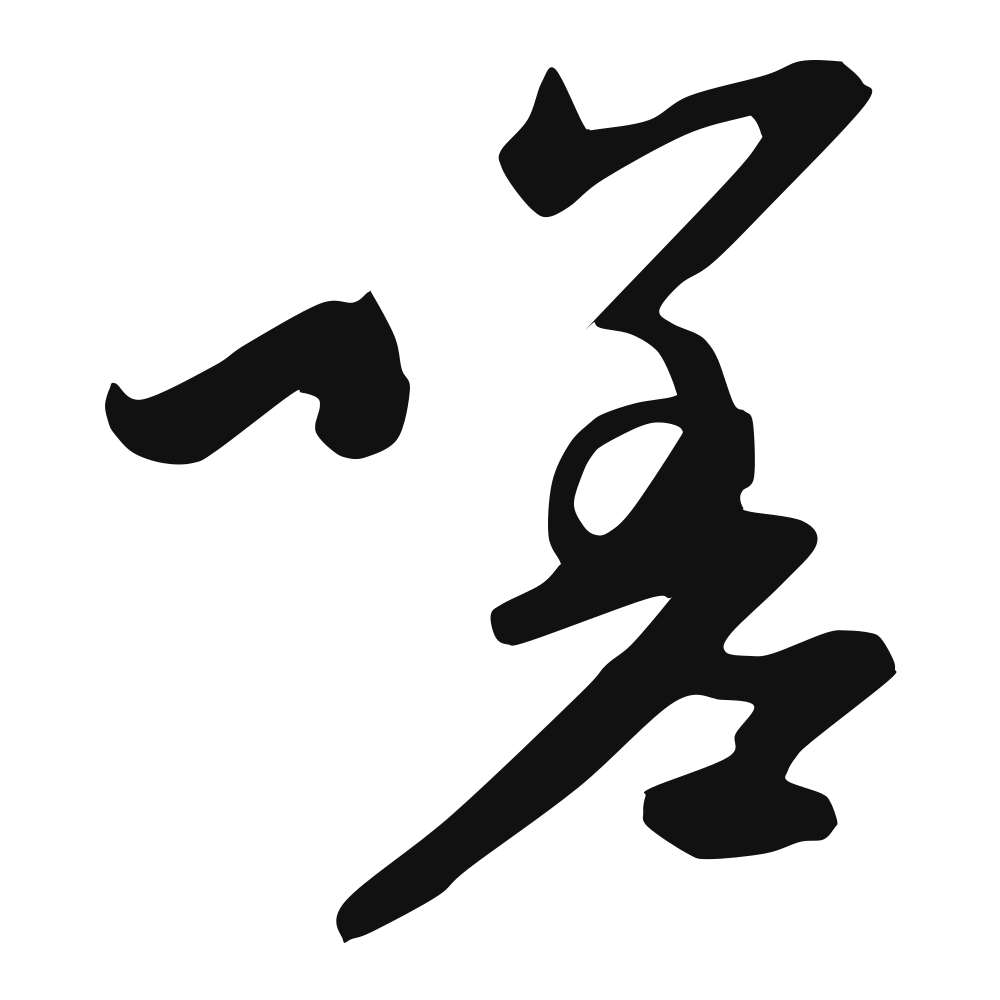
The Calligrapher — Xī Yīn 郗愔
Jin official famed for his mastery of clerical-cursive script.
Jin calligrapher (), master of clerical cursive — known for 郗鉴之子. Jin dynasty
Etymology & Meaning · 字义溯源
2 · The Character: 嗟 Jiē (1st tone). Note: 嗟 is not a headword in the Shuowen; the Kangxi dictionary enters it under the mouth (口) radical and glosses it 「咨也」 — a sigh, 'alas', reading it as a variant (重文) form related to 咨 and 差. The Songs open with it: 《诗经·周南·卷耳》 「嗟我怀人」 — 'alas, I long for my man.' The Chu Ci repeats the lament: 《楚辞·九歌·国殇》 is a war-song of 嗟叹, the soldier's cry that he goes out and does not return. So 嗟 is the character of the sigh — sorrow, longing, the cry of regret. This makes it a no for standalone tattoos: a lone 嗟 reads as 'alas / woe' and lands as a funerary or mournful mark. If a client insists, pair it with a turning word — never 嗟来之食 (food taken in humiliation, negative); better 嗟叹 framed by 知己 (one who knows you). Safer to choose 叹 or 吟. Element tables assign Fire (火).
Cultural Story
The Shuowen gives 嗟 as a sigh of lament, and the Book of Songs already breathes it: '嗟我婦子' — alas, my wife and children — as the farmer faces the turning year. The historian Sima Qian puts 嗟乎 on the lips of men facing fate, and the philosophers sigh 嗟 to mark a truth too heavy for plain speech. More than a sound, 嗟 was the ancient exclamation of shared sorrow and wonder, the breath a person lets out when words are not enough.
Where a Western reader can stand: Alas — a sigh, not a standalone mark: 嗟 is mourning made visible. Western readers must not wear it alone; if the sound of lament is the point, a paired phrase with a turning word is the only possible frame.
Common words & phrases
- 嗟叹 sigh · lament
- 嗟乎 alas
- 嗟怨 complain
- 嗟嗟 sighing
Read the story behind the character
An old man 嗟嘆 (sighs, laments) that the alley of his youth is gone; readers react to a tragic story with a weary 嗟乎 (alas). A tenant 嗟怨 (complains) about the rising rent, and a poet fills a line with 嗟嗟 (sighing) over lost time. 嗟 is the sound of resignation and sympathy in modern Chinese — the long breath we exhale at bad news, unfair prices, or a beautiful thing that will not last.
Why this character belongs on skin
Every literature has its syllable for standing at the edge of feeling with no better word — English says alas, and Chinese says this: 嗟, a sigh pushed out with the whole chest, half lament, half exclamation. The poets of the Book of Songs used it to begin their laments; used it to summon; used it when the king's injustice and the beauty of autumn arrived at once. It is the sound of being moved past composure. You have been disciplined about composure for a long time, and look where it got you — intact, unimpressed, unread. This character argues otherwise: that the sigh is where the true sentence starts. Ink it where the collarbone shadows it, and let it say what you almost always hold back.
Own this character
Purchase delivers the original SVG of this glyph, brushed by Xī Yīn 郗愔, ready to place on skin, paper, or screen.