
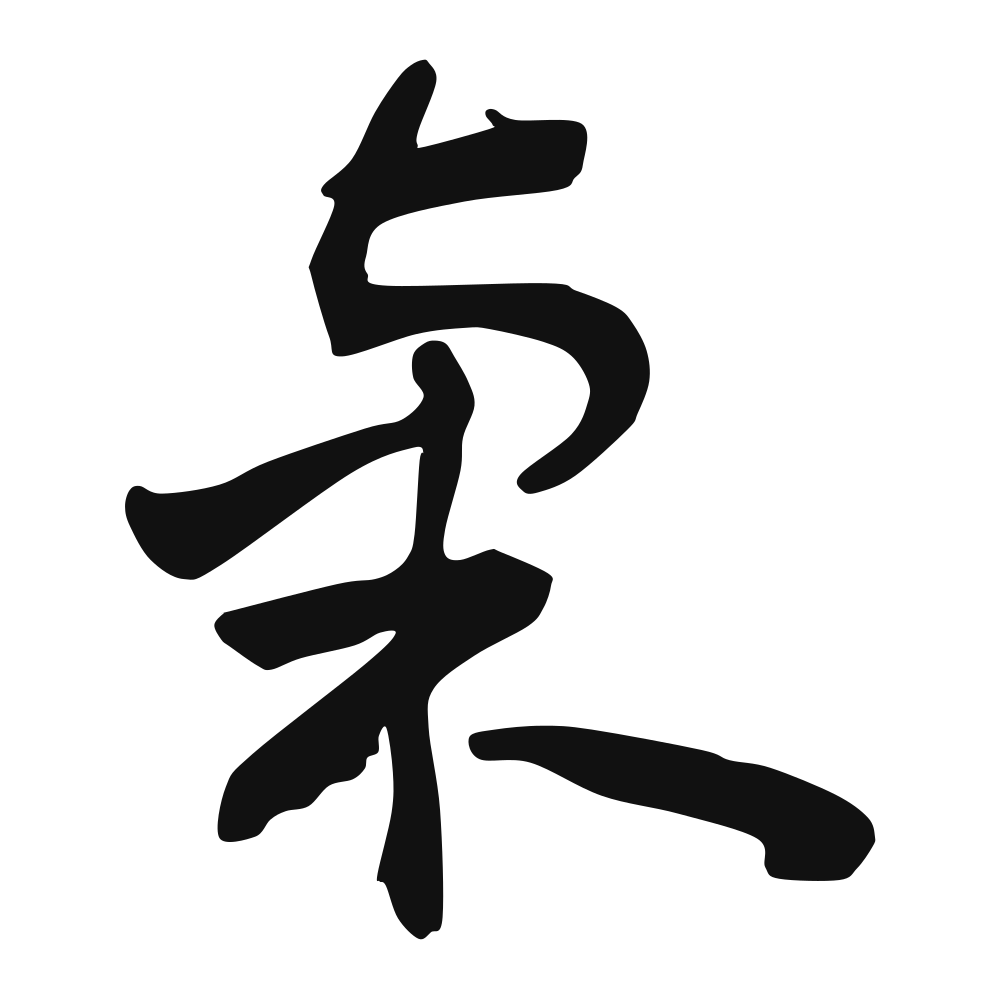
The Calligrapher — Xī Yīn 郗愔
Jin official famed for his mastery of clerical-cursive script.
Jin calligrapher (), master of clerical cursive — known for 郗鉴之子. Jin dynasty
Cultural Story
桌 is a raised 木 table on legs — a relatively late word; the ancients ate and wrote on low 案 instead. The character marks the shift from floor to chair, from the mat to the leg. It is furniture history in a single graph, the surface that lifted daily life off the ground and changed how a body sat.
Common words & phrases
- 桌子 table · desk
- 桌面 desktop · tabletop
- 书桌 desk
- 课桌 school desk
- 餐桌 dining table
Read the story behind the character
桌 is the surface of life: 桌子 the thing a meal sits on, 书桌 where homework happens, 课桌 the carved-up school desk, 餐桌 the family's nightly gathering. 桌面 is now also the computer screen you stare at. The character is the flat plane of work and food, real and virtual, that organizes a room.
Why this character belongs on skin
Around a table, strangers become a family and enemies sign peace. The character is the flat surface we set our lives upon — the meal, the bargain, the letter written by lamplight. In the scholar's study it held the brush and the scroll; in the peasant's hut it held the single bowl passed hand to hand. The Christians broke bread at one; the Confucians honored the proper seating that turned eating into order. To mark the skin with this word is to claim the ground of gathering, the flat plane where the separate are brought close. It is ink of hospitality, a vow that your life has a surface others are welcome to. Let it sit like an open hand on the body, a reminder that what we share upon a common table outlasts what we defend behind closed doors. The tattoo is an invitation, plain as wood, to pull up a chair.
Own this character
Purchase delivers the original SVG of this glyph, brushed by Xī Yīn 郗愔, ready to place on skin, paper, or screen.