
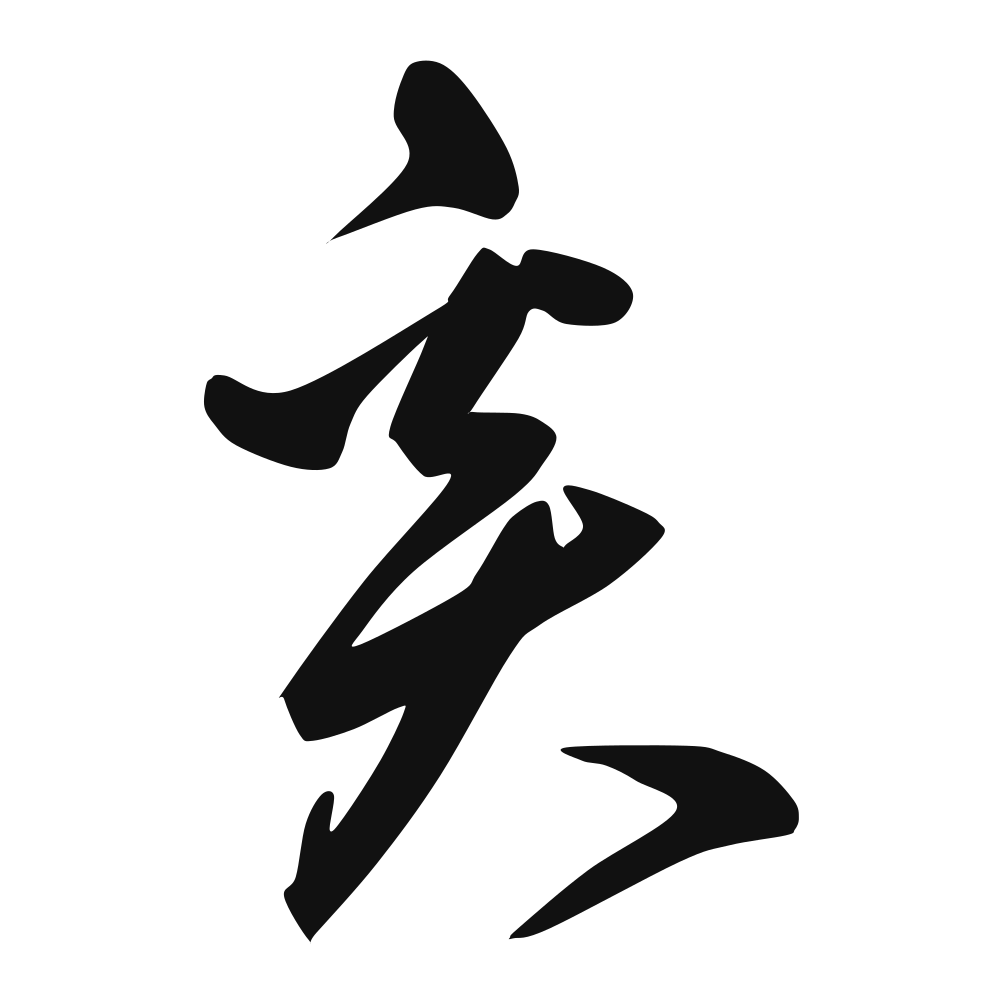
奚
surname Xi; (literary) what?; where?; why?
Closest English meanings
why·what·servant·surname
The Calligrapher — Xiānyú Shū 鲜于枢
Yuan master of fluent running and cursive script.
Yuan calligrapher (1246–1302), master of running script/cursive script — known for 《石鼓歌》. Yuan dynasty
Cultural Story
The Shuowen explains 奚 as a bondsman, and the Rites of Zhou list 奚 as the lowest household servants, often captives. Confucius uses 奚 as 'why' or 'what' — '奚取於三家之堂?' — turning the old word for a slave into a sharp question. Later men kept both senses: the 奚奴 who carried the brush on a poet's travels, and the 奚落 that mocked a fallen rival. A small graph, 奚 bridged the servant's lot and the philosopher's questioning 'why.'
Common words & phrases
- 奚落 mock · ridicule · taunt
- 奚奴 servant · slave boy
- 奚琴 a stringed instrument
Read the story behind the character
A bully 奚落 (mocks, ridicules, taunts) the new kid at school; a historical novel mentions the poet's 奚奴 (servant, slave boy) who carried his books. A musician plays the 奚琴 (a stringed instrument) at a folk festival, and a commentator 奚落 a politician's slip. 奚 now lives mostly in 奚落 — the modern verb for jeering at someone's weakness — and in a few learned words that recall the servants and songs of old China.
Own this character
Purchase delivers the original SVG of this glyph, brushed by Xiānyú Shū 鲜于枢, ready to place on skin, paper, or screen.