
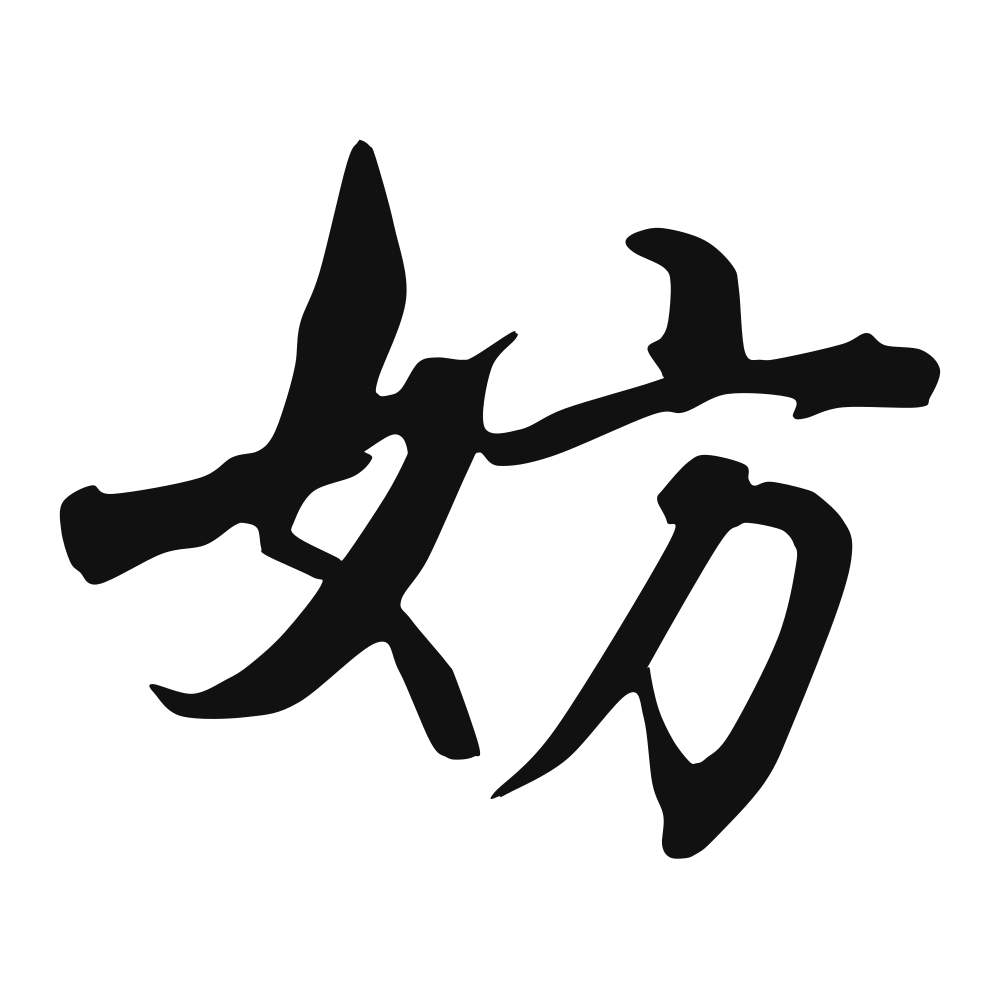
妨
to hinder; (in the negative or interrogative) (no) harm; (what) harm
Closest English meanings
hinder·impede
The Calligrapher — Xiāo Zǐyún 萧子云
Liang calligrapher who created small-seal flying-white (feibai); famed for cursive and clerical script
南朝梁 calligrapher (), master of 飞白/cursive script — known for 创飞白书. Liang dynasty (Southern Dynasties)
Cultural Story
In the classical tradition 妨 meant to obstruct or harm, often in the moral sphere. Texts warned that certain conduct could 妨 the good order of a household or 妨 the fortunes of others. The character carries no pictographic claim — simply "woman" plus a phonetic — yet its warning tone is consistent across centuries of advice literature and commentaries.
Common words & phrases
- 妨碍 hinder · impede · obstruct
- 不妨 might as well · there is no harm
- 妨害 impair · jeopardize · harm
Read the story behind the character
In the modern world 妨 shows up whenever something gets in the way. A parked bike 妨碍 the hallway and a neighbor complains; a loud phone call 妨害 concentration in the library. Yet the cheerful phrase 不妨 invites the opposite: "you 不妨 try the spicy noodles," meaning there is no harm in it, a small nudge toward spontaneity.
Why this character belongs on skin
Not everything that blocks you means you stop. 妨 is to hinder, to stand in the way of the light — but the tongue also shaped 不妨, the easy phrase that means why not, no harm in trying. The same character holds the wall and the shrug at the wall. The Daoist sees 妨 as the weed in the garden path: annoying, yes, but proof the earth is alive and resisting, and resistance is a kind of love. To be hindered is to be reminded you wanted something. Wear it and you name the forces — fear, others, your own old wounds — that get in the way, and you answer them with 不妨, go anyway. Let it mark your skin as the no you walked through. The ink is the path past the block.
Own this character
Purchase delivers the original SVG of this glyph, brushed by Xiāo Zǐyún 萧子云, ready to place on skin, paper, or screen.