
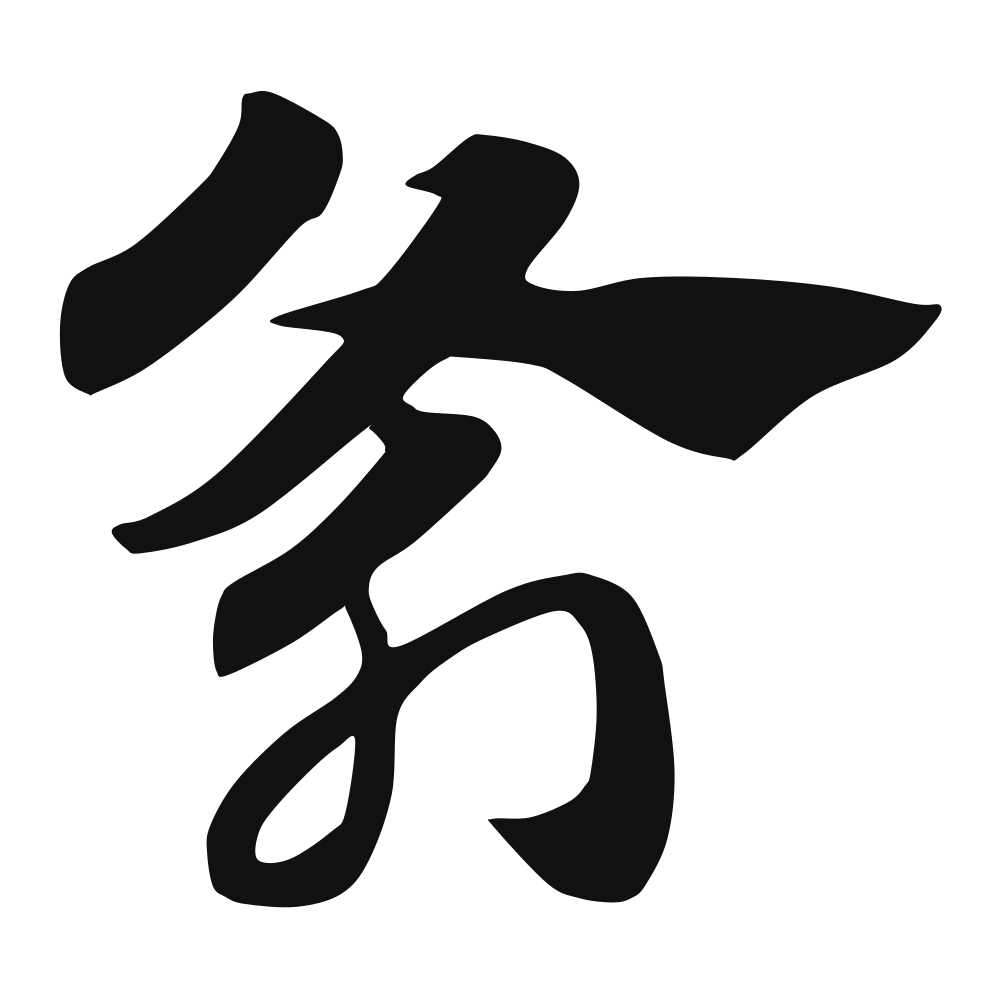
The Calligrapher — Xiāo Zǐyún 萧子云
Liang calligrapher who created small-seal flying-white (feibai); famed for cursive and clerical script
南朝梁 calligrapher (), master of 飞白/cursive script — known for 创飞白书. Liang dynasty (Southern Dynasties)
Cultural Story
斧 is the edge of authority. The executioner's 斧; the carpenter's 板斧 that fells the beam. 斧正 is the polite 'please revise my poor script' — as if the red pen were an axe tidying the branch. In the old tale the divine 斧 carved the mountain pass. The word is the cut that builds and the cut that ends, both clean.
Common words & phrases
- 斧头 axe
- 斧子 axe
- 斧正 please revise
- 板斧 broad axe
Read the story behind the character
斧头 is the camp tool; 板斧 the broad blade of the opera hero. 斧正 is the deferential line you write above the draft you 交. The word hangs in the garage and in the letter of submission, the literal chop and the literary one, the axe that splits the log and the axe that trims your prose into shape.
Why this character belongs on skin
Heft it once and you understand why empires were built and forests fell by the 斧. The axe is the oldest contract between human will and the stubborn world — the tool that separates what stands from what will be timber, the weapon that settled border and bloodline. Its edge names authority: to be 斧正 is to be corrected by one who wields the sharper truth. The warrior carries the 斧 not for cruelty but for the clean cut, the end to indecision. To mark yourself with this character is to claim the right to decide, to cut, to make the hard line where others hesitate. Let it sit on your skin like a blade folded into the flesh — a reminder that some things in your life deserved to be split cleanly, and that you were the one who swung.
Own this character
Purchase delivers the original SVG of this glyph, brushed by Xiāo Zǐyún 萧子云, ready to place on skin, paper, or screen.