
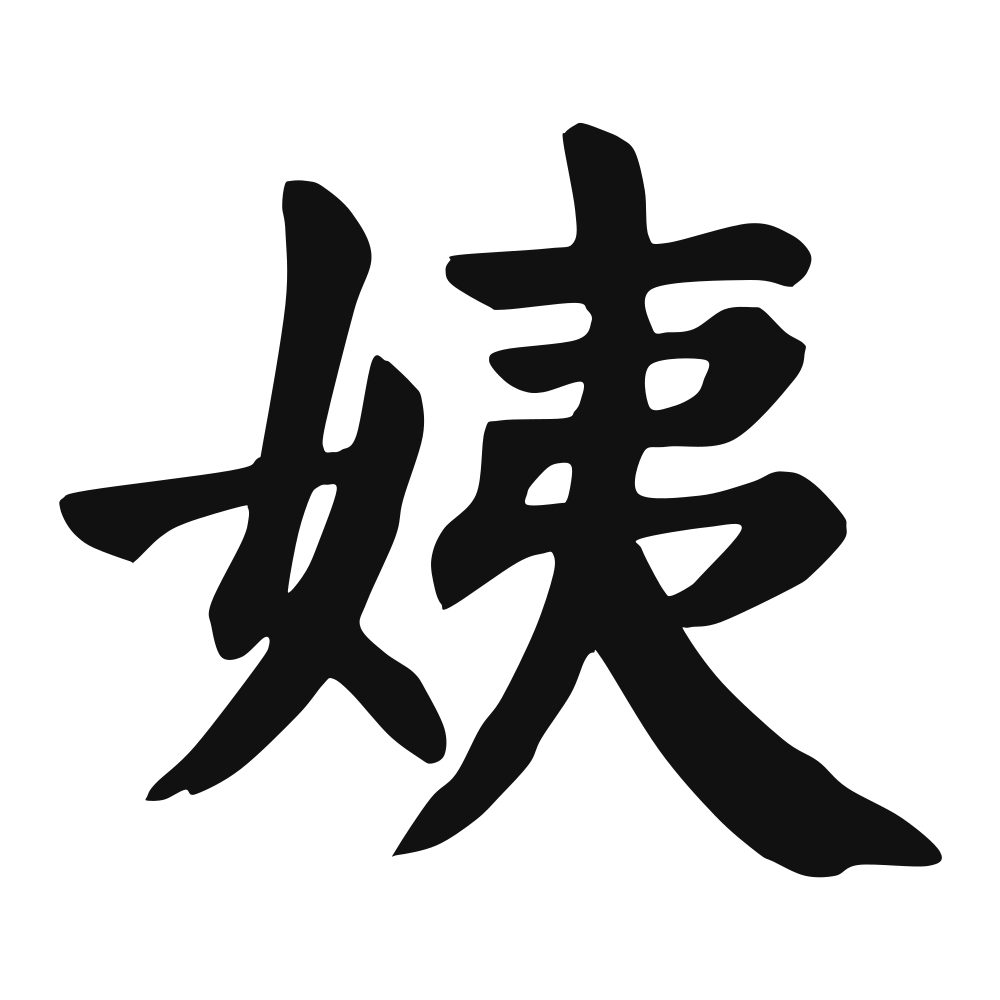
姨
mother's sister; aunt
Closest English meanings
aunt·mother's sister
The Calligrapher — Xiè Ān 谢安
Jin statesman and calligrapher famed for running script; participant in the Lanting Gathering.
Jin calligrapher (), master of running script — known for 《中郎帖》. Jin dynasty
Cultural Story
In the classical tradition 姨 named the mother's sister and, by extension, any intimate older woman of the household circle. Rites and family books tracked the 姨母 with care, and the word sat comfortably among the relatives who knit a clan across households and villages.
Common words & phrases
- 阿姨 aunt · nanny · ma'am
- 姨妈 maternal aunt
- 姨母 aunt (mother's sister)
- 姨夫 uncle (aunt's husband)
Read the story behind the character
In the modern world 姨 is everyday kinship and polite address. A child calls the mother's sister 姨妈 or simply 姨母, and hails any kind older woman as 阿姨 — the friendly "ma'am" of elevators and shops. An 姨夫 joins the holiday meal, and the word scales from blood relative to the neighbor who slips you a sweet.
Why this character belongs on skin
姨 is the aunt, the mother's sister, the woman who loves you without quite the weight of parenthood—freer, closer to a friend. The character sets the female beside a sound for proper, as if she were the relative who teaches you the world's softer rules. In every family there is the aunt who smuggles you treats, who tells the truth the parents hide, who widens the circle of belonging. To tattoo 姨 is to honor the chosen kin, the love that is given and not merely owed. It is the mark of one who knows family is larger than blood. There is a warm, conspiratorial tenderness in the aunt's laugh, the room she makes for you. Let this character lie on your skin like a hand on your shoulder from the side, a reminder you were loved widely. The ink is the aunt's generosity, kept near the heart.
Own this character
Purchase delivers the original SVG of this glyph, brushed by Xiè Ān 谢安, ready to place on skin, paper, or screen.