
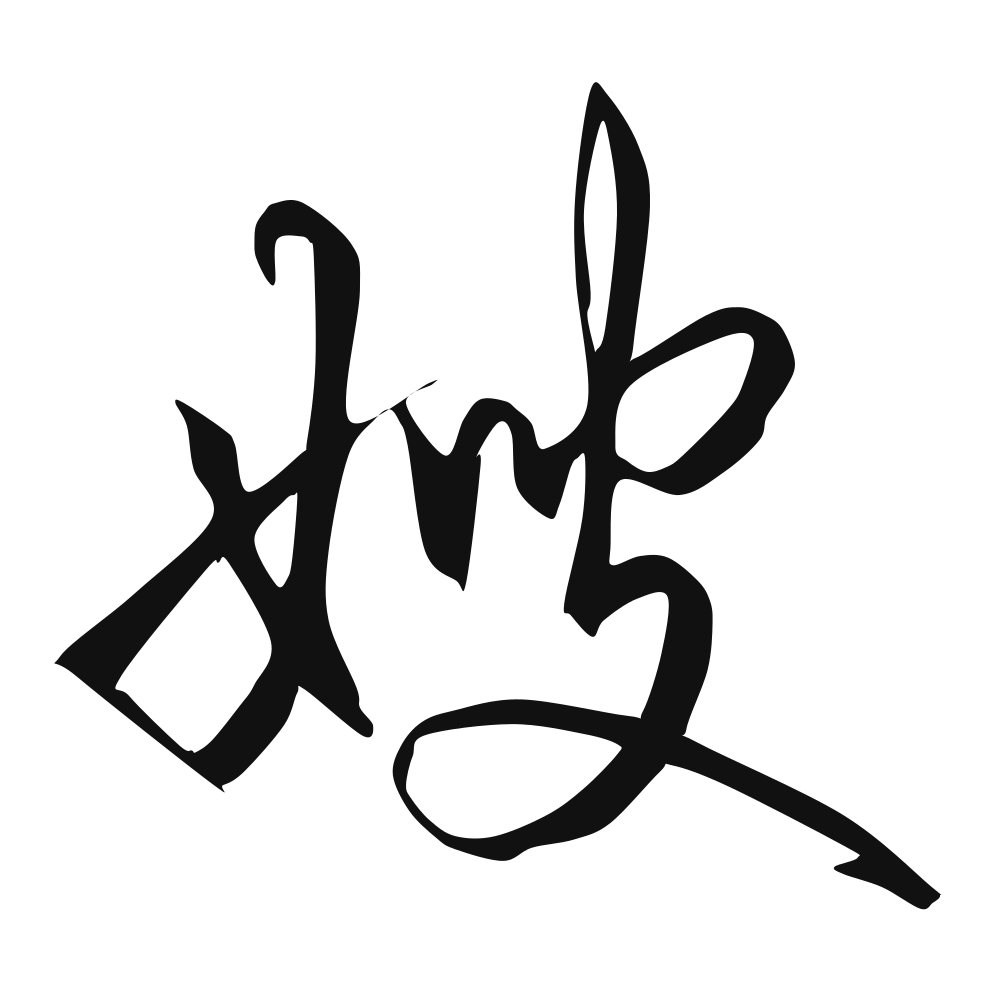
嫂
(bound form) older brother's wife; sister-in-law
Closest English meanings
sister-in-law
The Calligrapher — Xiè Ān 谢安
Jin statesman and calligrapher famed for running script; participant in the Lanting Gathering.
Jin calligrapher (), master of running script — known for 《中郎帖》. Jin dynasty
Cultural Story
In 'Water Margin' the warrior Wu Song stays with his brother and 嫂嫂 Pan Jinlian, whose betrayal drives the novel's bloodiest scene. 嫂子 names an elder brother's wife; 大嫂 the senior one in a household; 表嫂 a cousin's. The word sits at the tense edge of brotherhood, a relation more charged in fiction than in law.
Common words & phrases
- 嫂子 sister-in-law
- 大嫂 eldest sister-in-law
- 表嫂 cousin's wife
Read the story behind the character
Family WeChat groups ping 大嫂 about reunion dinners, and 表嫂 appears in wedding photos from countryside banquets. Cooking shows use 嫂子 as a friendly host persona, while true-crime podcasts retell the Wu Song story for clicks. The term still marks a woman claimed through a man's kin, now over group chat rather than hearth.
Why this character belongs on skin
Woman radical beside 叟, an elder—嫂, the sister-in-law, the wife who marries into your family's oldest stories and suddenly keeps its calendars. Chinese kinship is an architecture, and 嫂 is one of its graceful load-bearing walls: not born a sister, made one by supper tables and shared winters, by knowing which cousin sulks and which uncle lies. Folklore loves the clever 嫂—the widow Meng Jiang's devotion, sisters-in-law who held households together through famine and feuds. Chosen family, the moderns say, as if they had discovered it. Ink 嫂 as an honor to the ones who married in and stayed anyway—loyalty by decision, love by repetition. Some bonds arrive through a wedding; the truest ones are earned one meal at a time.
Own this character
Purchase delivers the original SVG of this glyph, brushed by Xiè Ān 谢安, ready to place on skin, paper, or screen.