
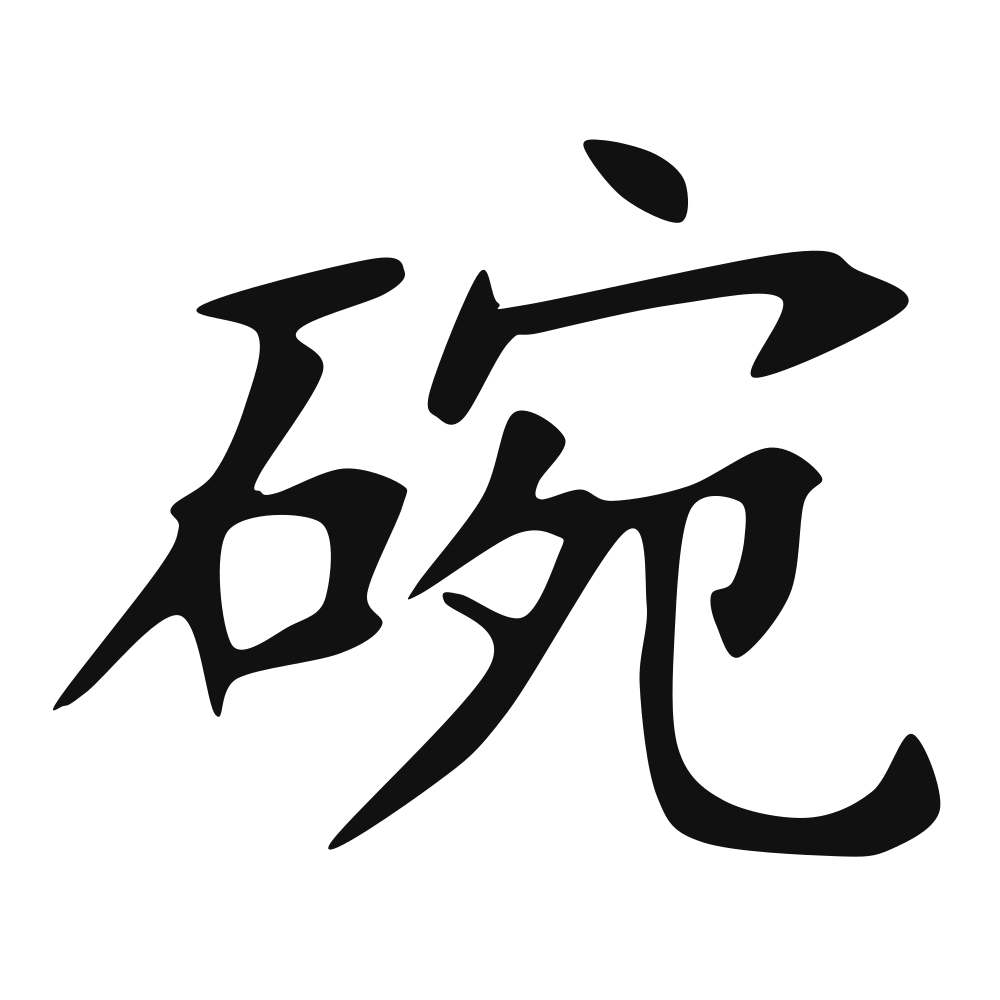
The Calligrapher — Xiè Ān 谢安
Jin statesman and calligrapher famed for running script; participant in the Lanting Gathering.
Jin calligrapher (), master of running script — known for 《中郎帖》. Jin dynasty
Cultural Story
The bowl is humbler than its elders — bronze 盂 and lacquer 盌 came first — but it won by being indispensable. Rice culture means every meal arrives in one, and folk life ringed it with meaning: the 寿碗 given at an elder's birthday feast, bowls smashed at funerals to speed the soul's journey, and the charm 碎碎平安 murmured after an accident.
Common words & phrases
- 饭碗 rice bowl · job
- 碗筷 bowls and chopsticks
- 茶碗 tea bowl
- 洗碗 wash dishes
Read the story behind the character
The bowl is employment and chore. Elders bless a stable job as a 铁饭碗 (iron rice bowl) and dread losing the 饭碗 (rice bowl, job) in a layoff round; roommates rotate 洗碗 (dishwashing) duty with a chore app; dinner means setting out 碗筷 (bowls and chopsticks) for everyone. In teahouses the 茶碗 (tea bowl) still steams on its saucer, as it has for centuries.
Why this character belongs on skin
The Zen bowl is the humblest of sacred objects: empty on purpose, so that it may be filled. 碗 curves through every Chinese meal—rice, broth, the shared dishes turned by family hands—and the character shows 石, mineral, shaped into vessel: clay from the ground holding what the ground provides. A bowl teaches without preaching. It is useful precisely because it is hollow; full of itself, it could hold nothing. Laozi pressed the point hard: cut doors for a room, and it is the emptiness you live in. Wear 碗 where you rest your hand, and let it be your daily doctrine—stay hollow toward the world, stay hungry for it, hold what you're given warmly and without gripping. The bowl is never ashamed to be empty. Neither are you.
Own this character
Purchase delivers the original SVG of this glyph, brushed by Xiè Ān 谢安, ready to place on skin, paper, or screen.