
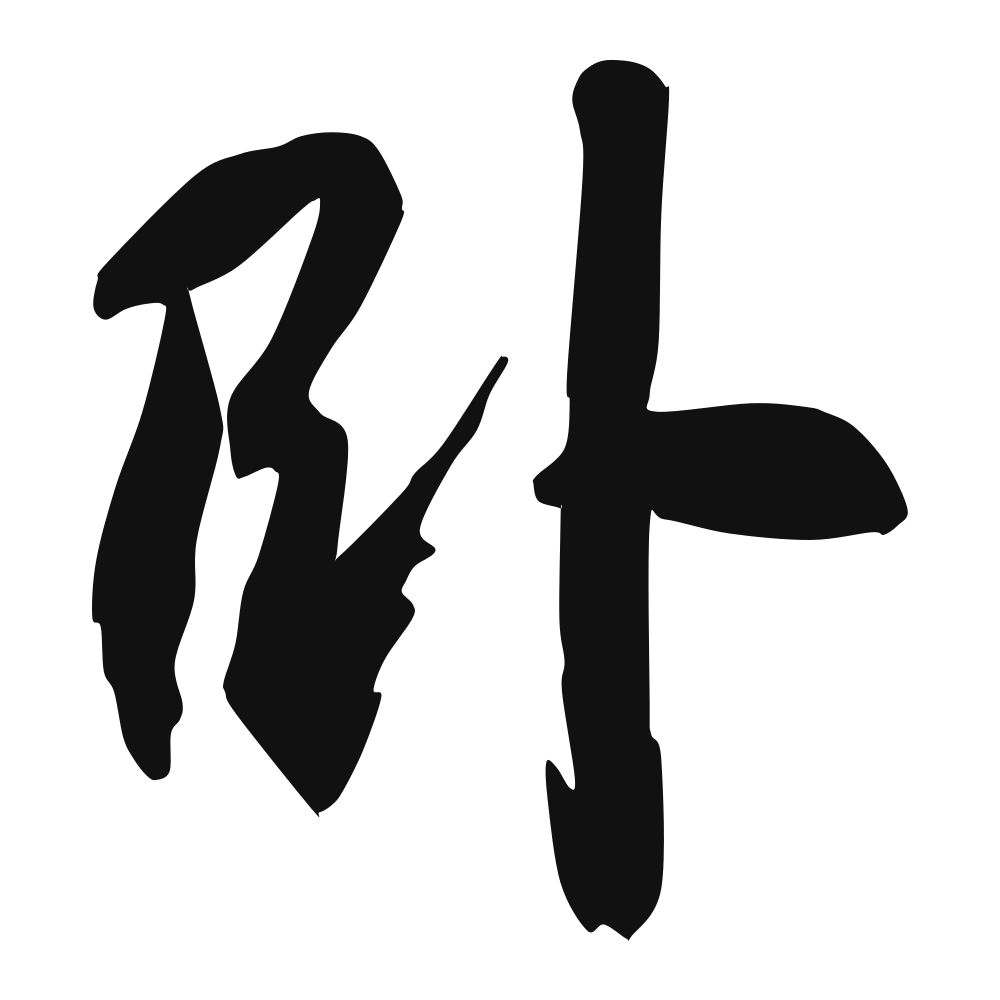
The Calligrapher — Xiè Língyùn 谢灵运
Liu Song poet-calligrapher of cursive script whose works were imperial 'two treasures'.
南朝宋 calligrapher (), master of cursive script/running script — known for 诗书兼擅. Liu Song dynasty (Southern Dynasties)
Cultural Story
King Goujian of Yue, after defeat, 卧薪尝胆 — lay on brushwood and tasted gall each dawn to keep his shame awake, then rose to break Wu. 卧 was the deliberate rest, the body laid down to wait. 卧室 is the room a household keeps for it, 卧銅 the berth a night train folds from the dark.
Common words & phrases
- 卧室 bedroom
- 卧铺 sleeping berth
- 卧倒 lie down
- 仰卧 lie on back
- 卧病 be confined to bed
Read the story behind the character
A 卧室 holds the phone a child sleeps beside; 卧銅 is the bunk a migrant rides home. 卧倒 is the drill a school runs, 仰卧 the pose a fitness video counts, and 卧病 the note a colleague sends when the flu lands. The word lies from the history book to the sickbed.
Why this character belongs on skin
The body lowers itself to the earth and suddenly the earth is a friend. To lie down, to recline against the world — this is the character for the deliberate undoing of ambition, the warrior setting down the armor to watch the ceiling beams. The old hermits lay thus for whole afternoons and called it government of the self; the Daoist knows the horizontal view reveals what the standing one misses. To wear this character is to honor rest as a discipline, not a failure — the chosen lowliness. It is a calm, almost holy mark — let it rest along the side, where the body folds to sleep — and say: I can lie down. I can stop rising, stop proving, stop winning, and still be whole. The ground will hold me. The lying-down is its own kind of victory.
Own this character
Purchase delivers the original SVG of this glyph, brushed by Xiè Língyùn 谢灵运, ready to place on skin, paper, or screen.