
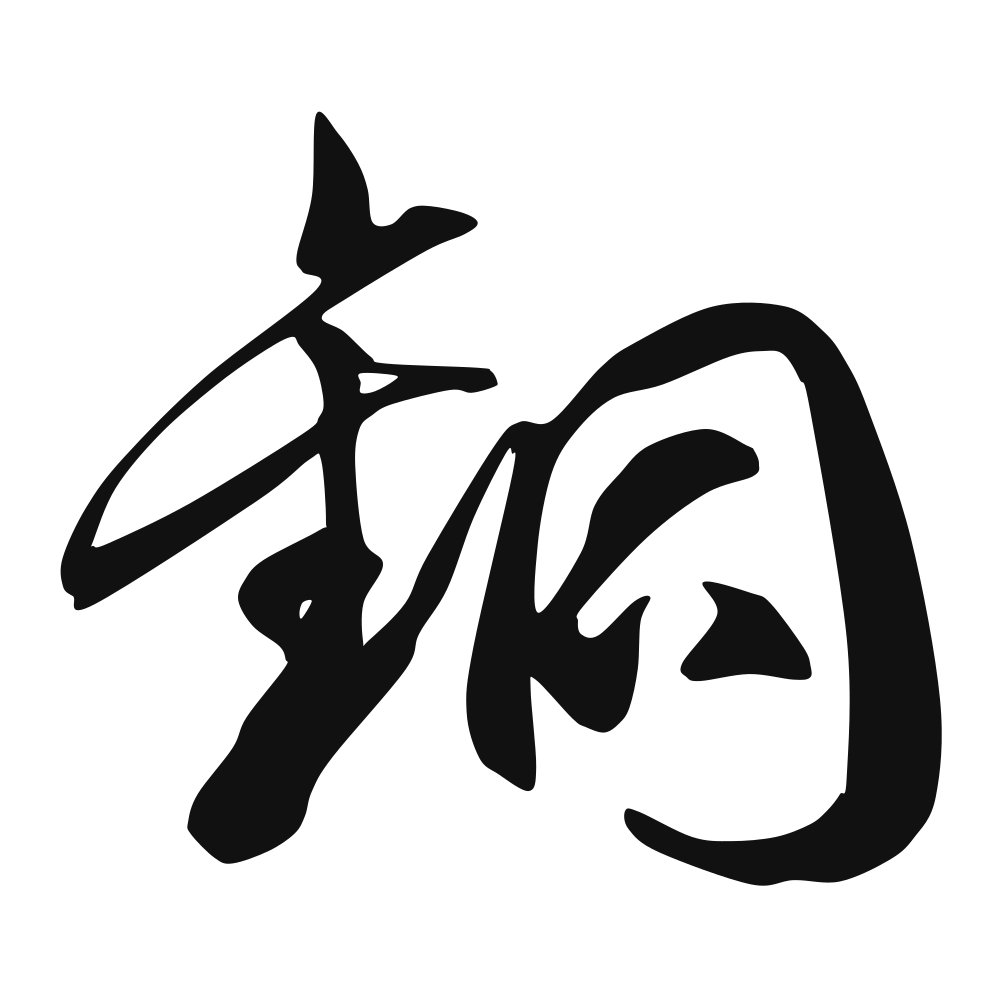
The Calligrapher — Xiè Língyùn 谢灵运
Liu Song poet-calligrapher of cursive script whose works were imperial 'two treasures'.
南朝宋 calligrapher (), master of cursive script/running script — known for 诗书兼擅. Liu Song dynasty (Southern Dynasties)
Cultural Story
Copper, 铜, joins the metal radical with 同 as its sound. From the earliest dynasties Chinese smelted it into 青铜, the bronze of ritual vessels and bells. Its warm reddish glow made it the metal of money, music and sacrifice alike.
Common words & phrases
- 铜钱 copper coin
- 青铜 bronze
- 铜器 bronze ware
- 黄铜 brass
- 铜矿 copper ore
Read the story behind the character
Today 铜 is everywhere yet unnoticed: 铜钱 once bought a meal, while 青铜 and 铜器 fill museums as ancient art. We mine 铜矿 for wire, forge 黄铜 into fixtures, and meet copper daily in cookware, coins and the green patina on old rooftops.
Why this character belongs on skin
The bell that has rung for a thousand years is bronze, and so is the mirror that first taught a face to know itself. This is the metal of memory—durable, warm, the substance of the vessels our ancestors buried with their dead so the living would not forget. A bronze inscription outlasts the empire that cut it; the patina it earns with age is not decay but honor. The Daoist speaks of the cauldron where the self is refined; the Christian of the refining fire. Both understand that what is meant to last must be tempered, not polished into nothing. To wear this character is to choose the long game. You are not the bright new coin but the bell whose voice has deepened with use. Let the ink be your bronze: a thing that weathers, that gains meaning the longer it is carried, that will still be speaking when softer metals have gone silent.
Own this character
Purchase delivers the original SVG of this glyph, brushed by Xiè Língyùn 谢灵运, ready to place on skin, paper, or screen.