
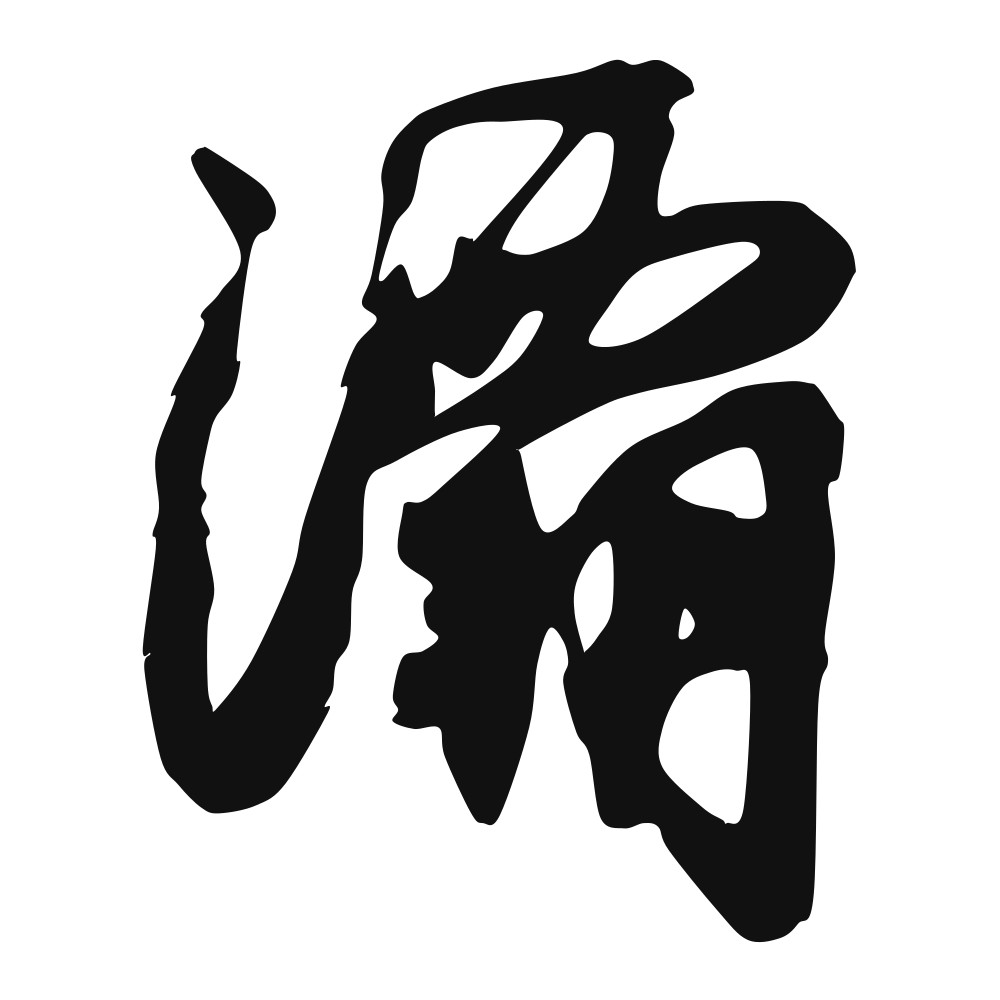
The Calligrapher — Xuē Shàopéng 薛绍彭
Northern Song calligrapher paired with Mi Fu as 'Mi-Xue'; a pure Jin-style (Wang) classicist.
Song calligrapher (生卒年不详(北宋)), master of running script/cursive script — known for 《杂书卷》. Song dynasty
Cultural Story
灞 is a river-name character, water with 霸, naming the 灞水 (Ba River) east of Chang'an, the Tang capital. Its 灞桥 (Ba Bridge) was the famous farewell point: officials and friends parted there, and the custom of breaking a willow branch to give a traveler made the 灞柳 (willows of Ba River) the most sentimental trees in Chinese poetry. Tang verses are thick with 灞, the bridge, the river, the willows, as the place where separation was enacted. A single local river became the national symbol of parting.
Common words & phrases
- 灞水 Ba River
- 灞桥 Ba Bridge
- 灞柳 willows of Ba River
Read the story behind the character
灞 is a name soaked in farewell. History tours in Xi'an walk the 灞桥 (Ba Bridge) and point out the 灞柳 (willows of Ba River) that once saw every Tang goodbye. The 灞水 (Ba River) still runs through the eastern suburbs, now lined with parks rather than weeping poets. You will not say 灞 in casual talk, but it anchors one of China's oldest emotional landscapes, the river where, for a thousand years, friends broke a willow and turned away, and someone always watched them go.
Own this character
Purchase delivers the original SVG of this glyph, brushed by Xuē Shàopéng 薛绍彭, ready to place on skin, paper, or screen.