
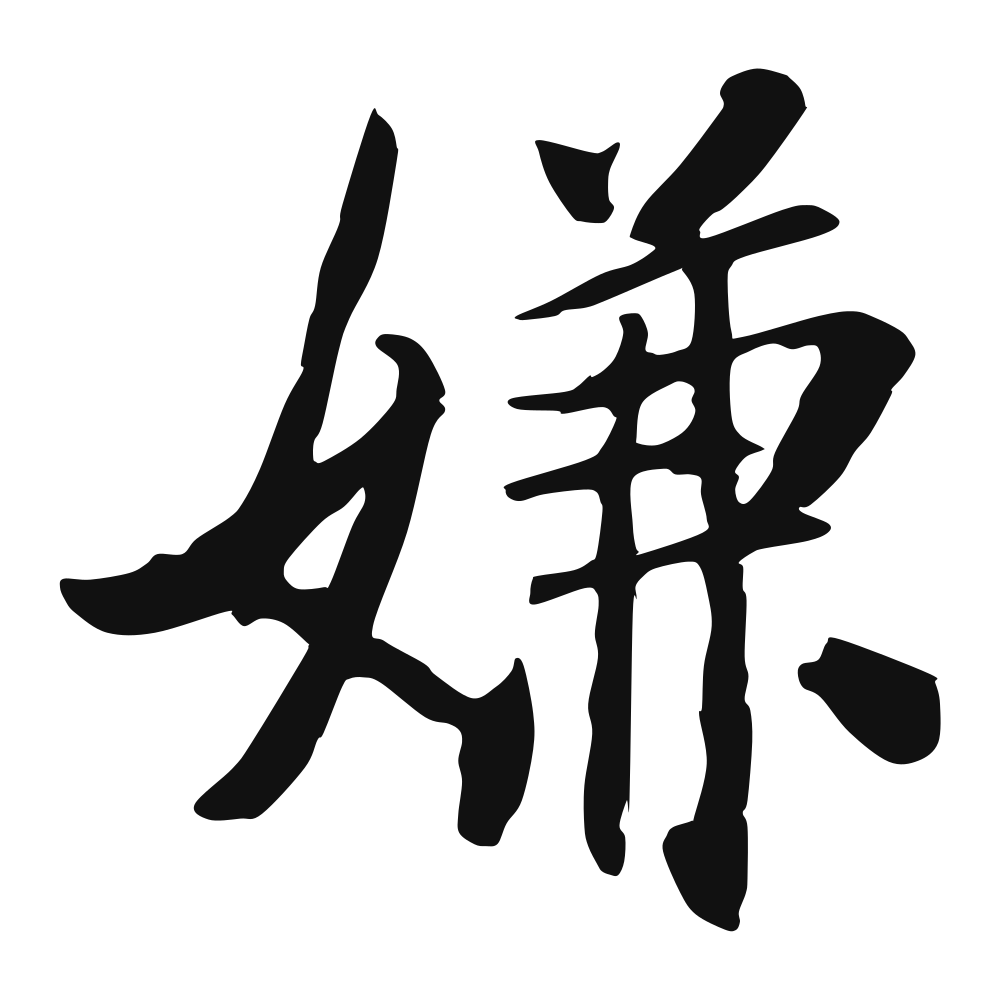
嫌
to dislike; suspicion; resentment; enmity
Closest English meanings
dislike·suspicion·grudge
The Calligrapher — Yà Qī 亚栖
Tang monk calligrapher of cursive script, heir to Zhang Xu's manner.
Tang calligrapher (), master of cursive script — known for 禅僧书家. Tang dynasty
Cultural Story
Imperial examination halls enforced 避嫌, recusing graders from papers by kin or home district to block favoritism — the recusal written into the 回避 rules. 嫌疑 meant suspicion of guilt; a cleared man escaped the 嫌. The character weighs doubt before blame, a caution built into old administration.
Common words & phrases
- 嫌疑 suspicion · suspected
- 嫌疑犯 suspect · suspected criminal
- 嫌弃 dislike · detest · reject
- 避嫌 avoid suspicion
Read the story behind the character
Police bulletins name a 嫌疑犯, and families 嫌弃 a relative's choices at the dinner table. Companies train managers in 避嫌 so a supervisor never reviews a spouse's bonus. The word runs through court reports, group-chat grievances, and compliance slides — doubt managed before it becomes accusation.
Why this character belongs on skin
Between people, the smallest things curdle: a tone, a delay, a glance held a beat too long. 嫌 is the character for that sourness—suspicion, resentment, the gap of distrust that opens without announcement. Its woman radical paired with 兼, to hold two things, suggests a heart trying to carry both love and doubt at once. Everyone knows the weight. To ink 嫌 is an act of honesty rare as a scar shown in daylight: I have felt this coldness, in others and in myself, and I choose to keep the memory where I can see it. Not to feed it. To outgrow it. The old novels trace it with terrible precision—how a household falls not from betrayal but from a hundred small 嫌s, unspoken, compounding like interest in the dark. Some tattoos are confessions; this one is a treaty with yourself.
Own this character
Purchase delivers the original SVG of this glyph, brushed by Yà Qī 亚栖, ready to place on skin, paper, or screen.