
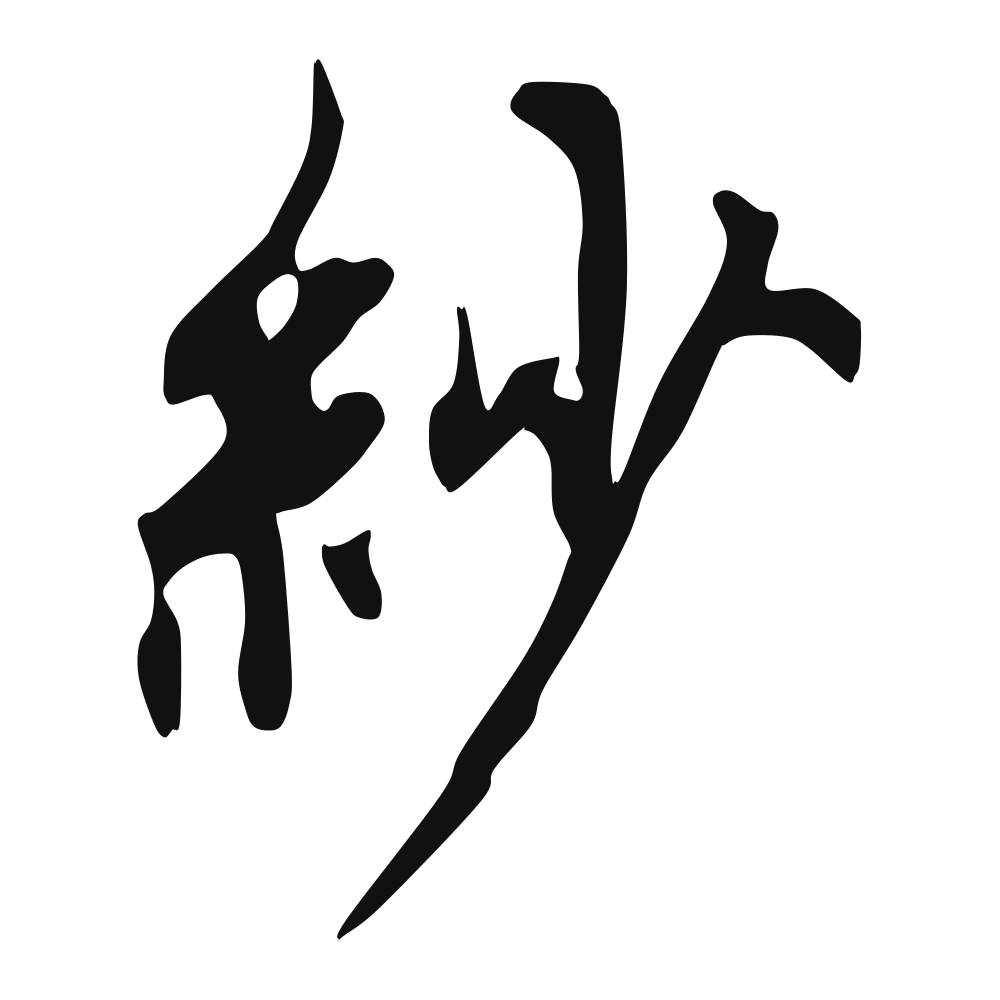
The Calligrapher — Yà Qī 亚栖
Tang monk calligrapher of cursive script, heir to Zhang Xu's manner.
Tang calligrapher (), master of cursive script — known for 禅僧书家. Tang dynasty
Cultural Story
纱 was silk spun so fine it barely existed: the famous plain-gauze robe from Mawangdui weighs less than fifty grams, a window of fabric. Tang poems dress dancers in light 纱 against summer heat and seat moonlit lovers behind a 纱窗, a gauze lattice that softened lamplight and gossip alike. To wear gauze was to afford air itself as clothing.
Common words & phrases
- 纱布 gauze
- 纱巾 gauze scarf
- 纱线 yarn
- 纱窗 screen window
- 面纱 veil
Read the story behind the character
Gauze went practical and democratic. A scraped knee gets 纱布, sterile gauze, from the medicine box; every apartment fights mosquitoes with 纱窗, the screen window. In autumn a light 纱巾, gauze scarf, protects the neck from wind, bakers buy 纱线-strong bags of flour, and a wedding photo might show a bride lifting her 面纱, veil.
Why this character belongs on skin
Hold a length of gauze to the window and watch the world soften — edges kept, outlines blurred, the hard light made tender. This is the oldest flirtation: to reveal by hiding, to let the form breathe through a thing so thin it is almost air. In the classical tongue the word is silk drawn fine enough to disappear, and yet it is the silk that makes the body beneath it a secret worth wanting. There is power in the veil; the Dao teaches that the nameless is the mother of ten thousand things, and gauze is the nameless made visible. To wear 纱 is to refuse the full exposure the age demands, to keep a curtain at the border of yourself. Desire grows in the gap between seen and unseen. Let the mark lie light on your skin, a whisper of cloth, a promise that not everything in you is offered.
Own this character
Purchase delivers the original SVG of this glyph, brushed by Yà Qī 亚栖, ready to place on skin, paper, or screen.