
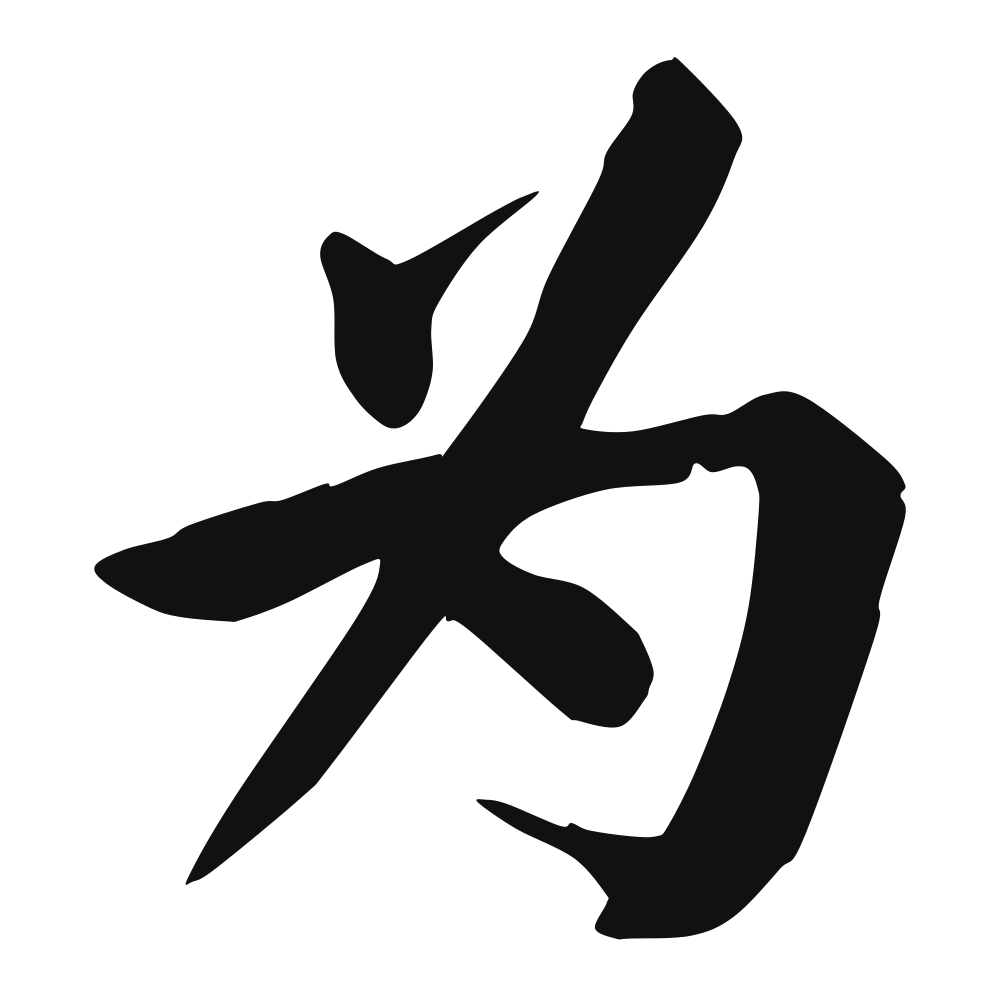
为
为 (wéi) — to do, to become, as. Pictograph of a hand leading a beast (originally 爲). Classical life: 无为 — 'non-action' (Daoism); 为 means to act or become. Grammar: verb (often needs context) — also: as (in the capacity of); to take sth as; to act as; to serve as; to behave as; to become; to be; to do; by (in the passive voice); because of; for; to
Closest English meanings
for·to be·do·act as·become
The Calligrapher — Yán Zhēnqīng 颜真卿
Tang master of robust regular script; co-creator of the enduring 'Yan style'.
Tang calligrapher (709–784), master of regular script/running script — the Tang moral paragon whose upright, muscular regular script became the model of Chinese integrity in writing. Tang dynasty
Cultural Story
為 showed a hand leading an elephant, to act, to make, to be. The 論語 asks 為政, how to govern; the 道德經 answers 無為, do nothing and nothing is left undone. 為 is the busiest verb in the classical tongue, the hinge between intention and deed. A hand on the great beast became the word for every kind of doing, from ruling a state to boiling rice.
Energy Reading
Earth (土)
Comparative symbology, not fortune-telling.
Common words & phrases
- 为了 for · for the sake of · in order to
- 因为 because · since · as · for
- 成为 become · turn into · grow into
- 作为 as · as a · regard as · act as
- 行为 behavior · conduct · action · deed
- 为人 conduct · behavior · as a person
Read the story behind the character
为了 the kids, 因为 the rain, 成为 the thing you did not plan. 作为 is the title on your badge; 行为 the word the shrink and the judge use; 为人 what the eulogy quietly assesses. The character is pure function, cause, purpose, transformation. You speak it constantly without seeing the elephant anymore; it has worn smooth into the connective tissue of every sentence that explains why or what something became.
Own this character
Purchase delivers the original SVG of this glyph, brushed by Yán Zhēnqīng 颜真卿, ready to place on skin, paper, or screen.