
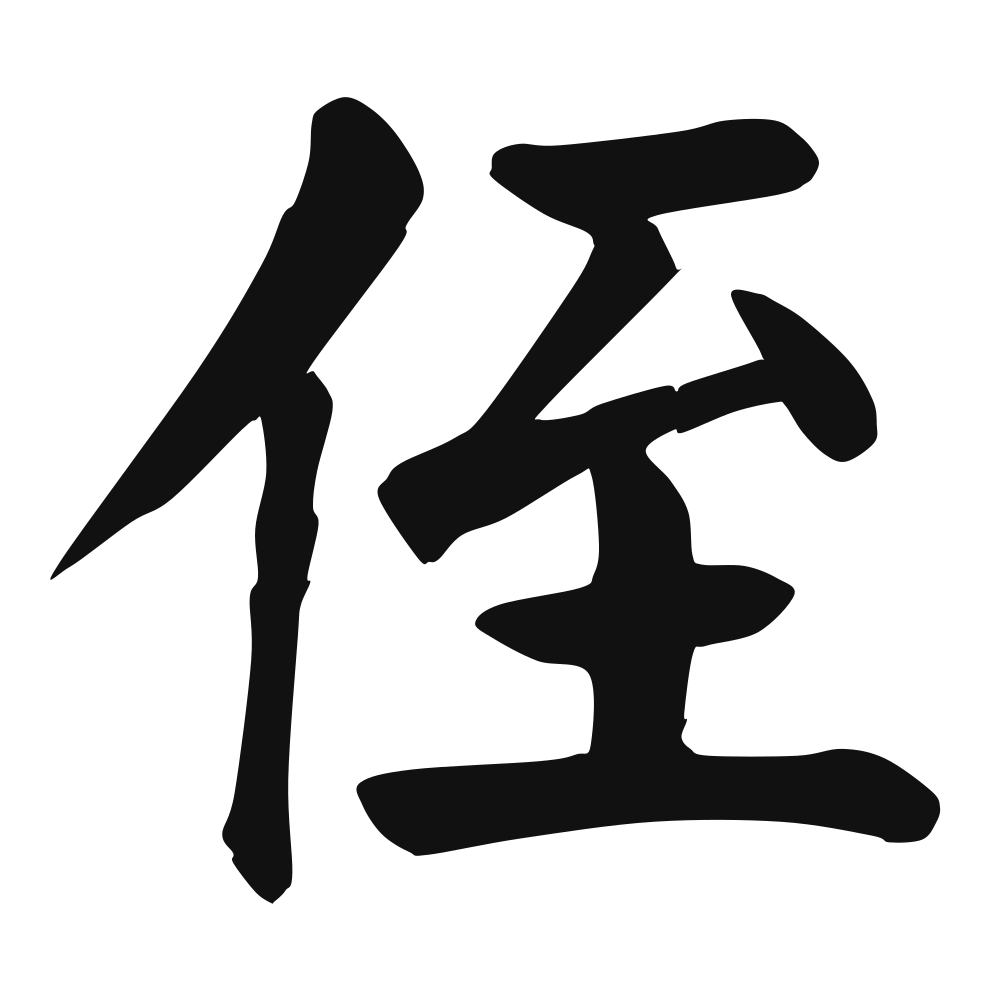
The Calligrapher — Yán Zhēnqīng 颜真卿
Tang master of robust regular script; co-creator of the enduring 'Yan style'.
Tang calligrapher (709–784), master of regular script/running script — the Tang moral paragon whose upright, muscular regular script became the model of Chinese integrity in writing. Tang dynasty
Cultural Story
侄 is the brother's son. In the 礼记 the 侄 joins the family rites; a letter from the Tang speaks of an uncle teaching his 侄女 to write. The bond of 叔侄 ran through the clan's heirs. To name a 侄 is to place a child inside the long line of the family.
Common words & phrases
- 侄子 nephew
- 侄女 niece
- 叔侄 uncle and nephew
Read the story behind the character
An uncle messages his 侄子 about the exam; a 侄女 visits for the holiday. The 叔侄 share a joke at dinner. Family duty still runs this way — a boy or girl named by their father's brother, called, taught, and remembered every year across the years.
Why this character belongs on skin
He is your brother's son, the small continuation of a bloodline you did not choose but would die for — this is 侄, the nephew, the boy who carries your surname into rooms you will never enter. In the old households he was also a charge, a second son you helped raise, proof that family was a contract larger than the self. There is a particular love in the nephew: he is yours and not yours, a mirror tilted one generation down. The Confucian knew the weight of this — to teach him, to leave him more than money. If you have ever watched a child of your own blood become a stranger and then a friend, you know this mark. Wear 侄 where the hand rests on a younger head, a quiet lineage in skin. The nephew is the future tense of the family. Ink it as a promise that whatever you build, some of it was always meant for him.
Own this character
Purchase delivers the original SVG of this glyph, brushed by Yán Zhēnqīng 颜真卿, ready to place on skin, paper, or screen.