
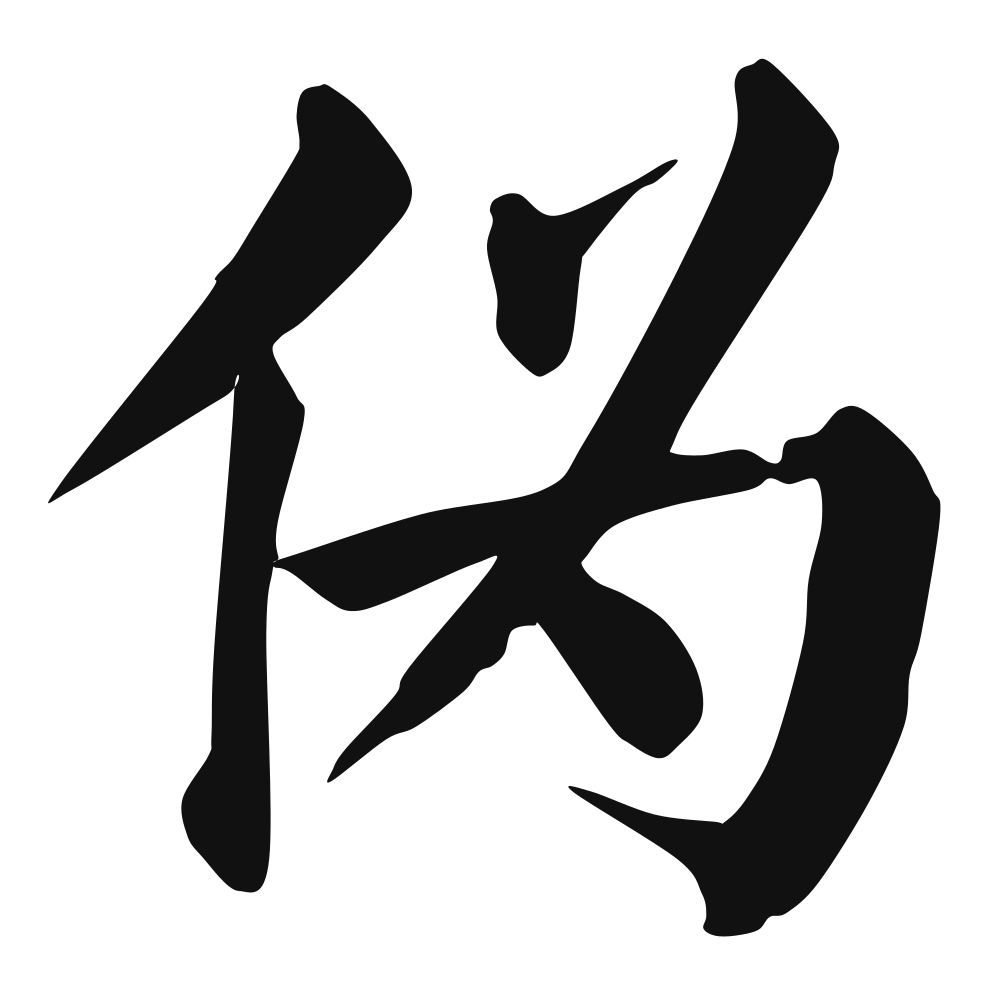
偽
false; fake; forged; bogus; (prefix) pseudo-; Taiwan pr. [wei4]
Closest English meanings
false·fake·bogus
The Calligrapher — Yán Zhēnqīng 颜真卿
Tang master of robust regular script; co-creator of the enduring 'Yan style'.
Tang calligrapher (709–784), master of regular script/running script — the Tang moral paragon whose upright, muscular regular script became the model of Chinese integrity in writing. Tang dynasty
Cultural Story
When the short-lived Xin dynasty of Wang Mang fell, later historians branded it the 伪朝, the false regime, and rewrote his reforms as 伪. The word 偽 carried the verdict of illegitimacy — a claim to the throne that posterity refused. To call a thing 伪 was to strike it from the roll of the rightful, a historian's quiet execution.
Common words & phrases
- 伪装 disguise · camouflage
- 伪劣 fake and inferior
- 伪善 hypocritical
- 伪造 forge · falsify
Read the story behind the character
A shop sells 伪劣 phone chargers that melt; a suspect 伪造 a signature on the form. The diplomat's 伪装 hides the microphone, and the priest's 伪善 is exposed online. The word still tags the fake and the feigned — a forged note, a hollow smile — the counterfeits that markets and courts spend every day trying to unmask.
Own this character
Purchase delivers the original SVG of this glyph, brushed by Yán Zhēnqīng 颜真卿, ready to place on skin, paper, or screen.