
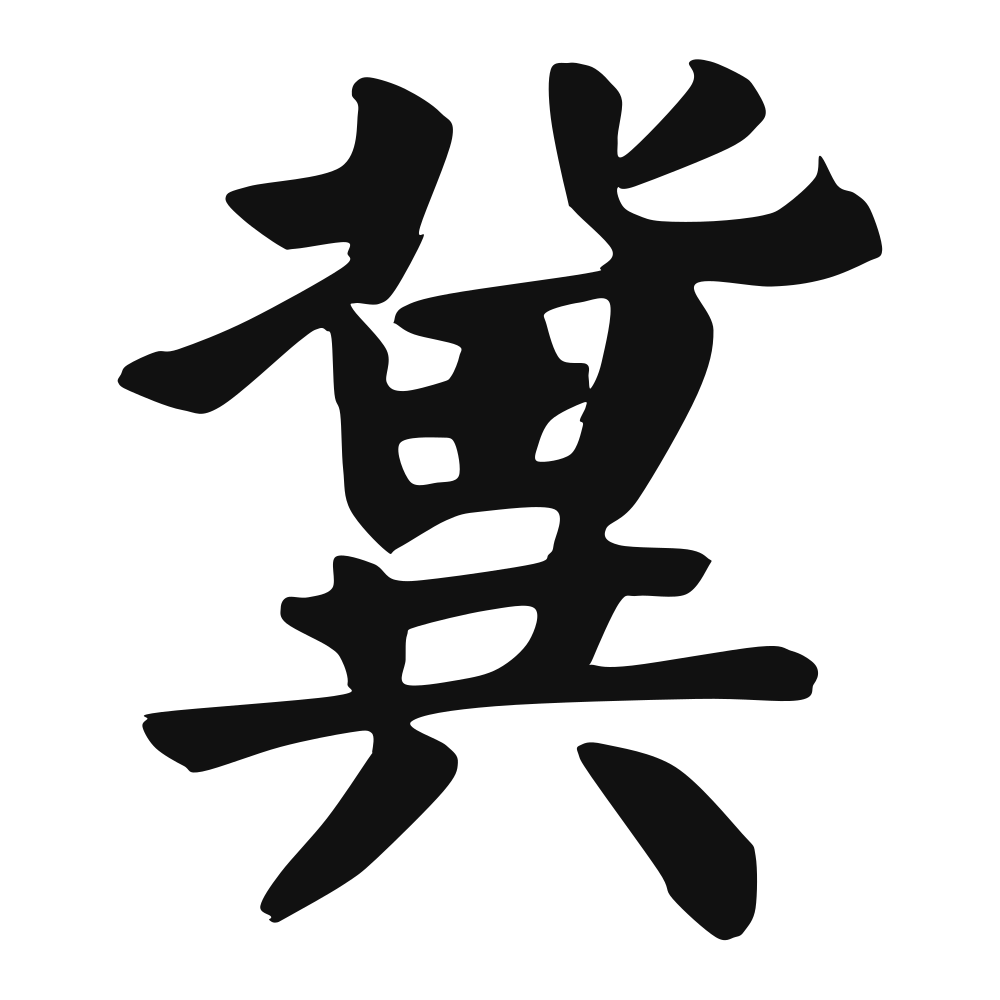
冀
short name for Hebei 河北[He2 bei3]; surname Ji; (literary) to hope for
Closest English meanings
hope·Ji (Hebei)
The Calligrapher — Yán Zhēnqīng 颜真卿
Tang master of robust regular script; co-creator of the enduring 'Yan style'.
Tang calligrapher (709–784), master of regular script/running script — the Tang moral paragon whose upright, muscular regular script became the model of Chinese integrity in writing. Tang dynasty
Cultural Story
The realm was split into nine provinces, and 冀州 was the northern one, seat of the legendary sovereigns, where the court stood. The histories call it 冀, hope of the realm. Later the name shrank to a corner of Hebei. To 冀 was to look north and wish the throne would hold.
Common words & phrases
- 希冀 hope · wish
- 冀望 hope · expect
- 冀州 Jizhou (ancient region)
Read the story behind the character
The plate reads 冀 for Hebei, one of thirty-one provincial tags. A writer signs 希冀 for a better year. The elder 冀望 the son returns for the festival. The 冀州 of old is now fields and a county town; the character on the map is the same one the chronicles carved into bone.
Why this character belongs on skin
The character 冀 is hope drawn from the body upward—a person below, strange and dignified above, the whole form once meaning the raised head of expectation, then widening to mean the act of hoping itself. It also became the old name for the northern plains of Hebei, flat country under enormous sky, so the word carries geography inside it: hope as a wide open field you can walk into. Hope in the stoic sense, not the wishful one—Confucius kept traveling through states that would not hire him, and that was hope too, the kind that walks. There is nothing naïve in this character. It knows the odds. It raises the head anyway. Ink it at the wrist or over the heart where the pulse can be felt, and let it mean what it has always meant: the road north is long, and still we go.
Own this character
Purchase delivers the original SVG of this glyph, brushed by Yán Zhēnqīng 颜真卿, ready to place on skin, paper, or screen.