
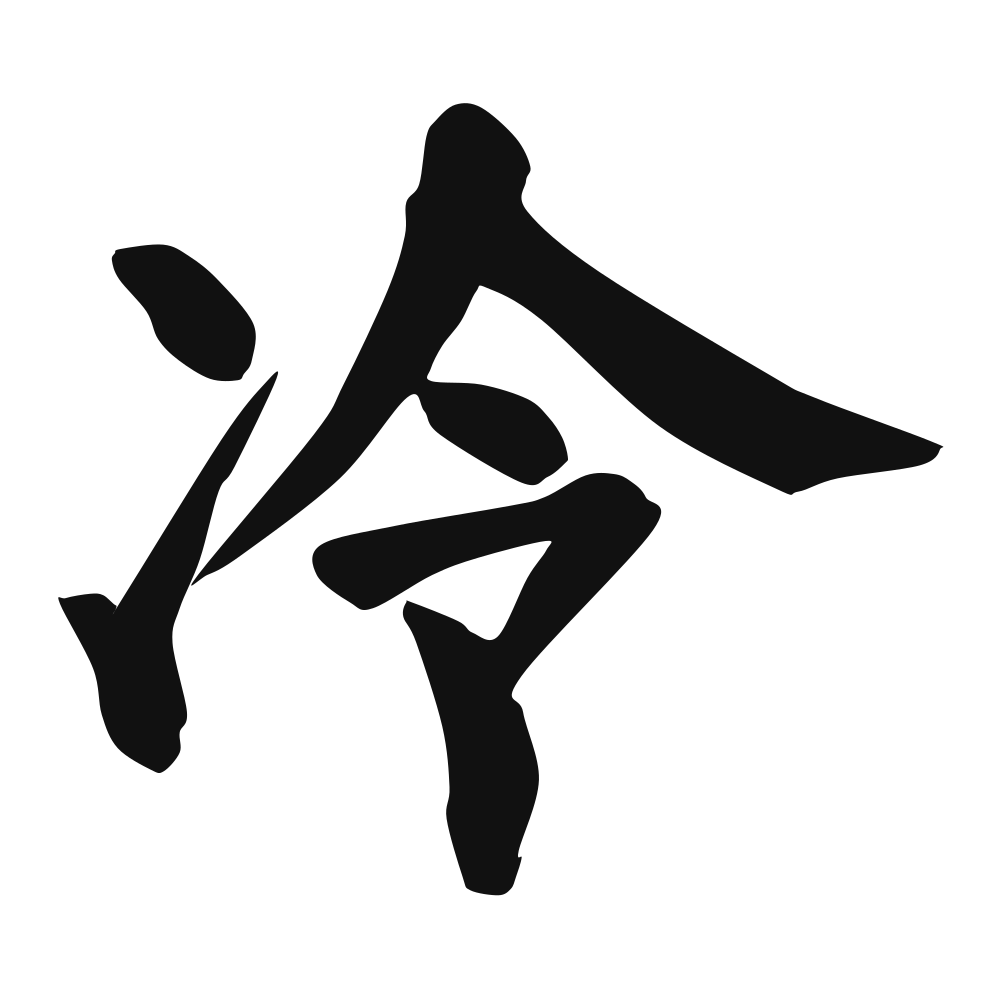
The Calligrapher — Yán Zhēnqīng 颜真卿
Tang master of robust regular script; co-creator of the enduring 'Yan style'.
Tang calligrapher (709–784), master of regular script/running script — the Tang moral paragon whose upright, muscular regular script became the model of Chinese integrity in writing. Tang dynasty
Cultural Story
The form set ice at the side, 冷, the feel of deep cold. The Odes shiver through a 冷 night. A prince given a 冷 reception was shown the door without wine. The histories note a 冷淡 court where favour turned and no cup was poured. The word held the body's shrink and the room's silence.
Common words & phrases
- 冷水 cold water
- 冷静 calm · cool-headed
- 寒冷 cold · freezing
- 冷淡 cold · indifferent
- 冷气 air conditioning · cold air
Read the story behind the character
A glass of 冷水 after the run; a mind kept 冷静 in the crisis. The 寒冷 keeps the old in bed. A guest meets a 冷淡 host and leaves. The 冷气 hums in the bus. The word means chill, calm, and a slight — three things the body reads before the tongue does.
Why this character belongs on skin
The fire has gone out and the room remembers it was stone before it was home. Lěng is the absence left when warmth withdraws — the wind off the river, the side of the bed no longer occupied, the reception a stranger meets at a closed door. The Daoists found freedom in cold: it strips the illusion of comfort and leaves the bare, honest self. A warrior trains in it, learning that the body can be cold and the will remain a furnace. There is a Christian ache in it too — to be cold is to know you are not yet home, and to let that longing sharpen you. To carry this character is to make peace with the chill, to wear it as proof you endured the season others fled. Let it rest along the forearm, the part that reaches into the weather, a quiet mark that the cold found you, and did not break you.
Own this character
Purchase delivers the original SVG of this glyph, brushed by Yán Zhēnqīng 颜真卿, ready to place on skin, paper, or screen.