
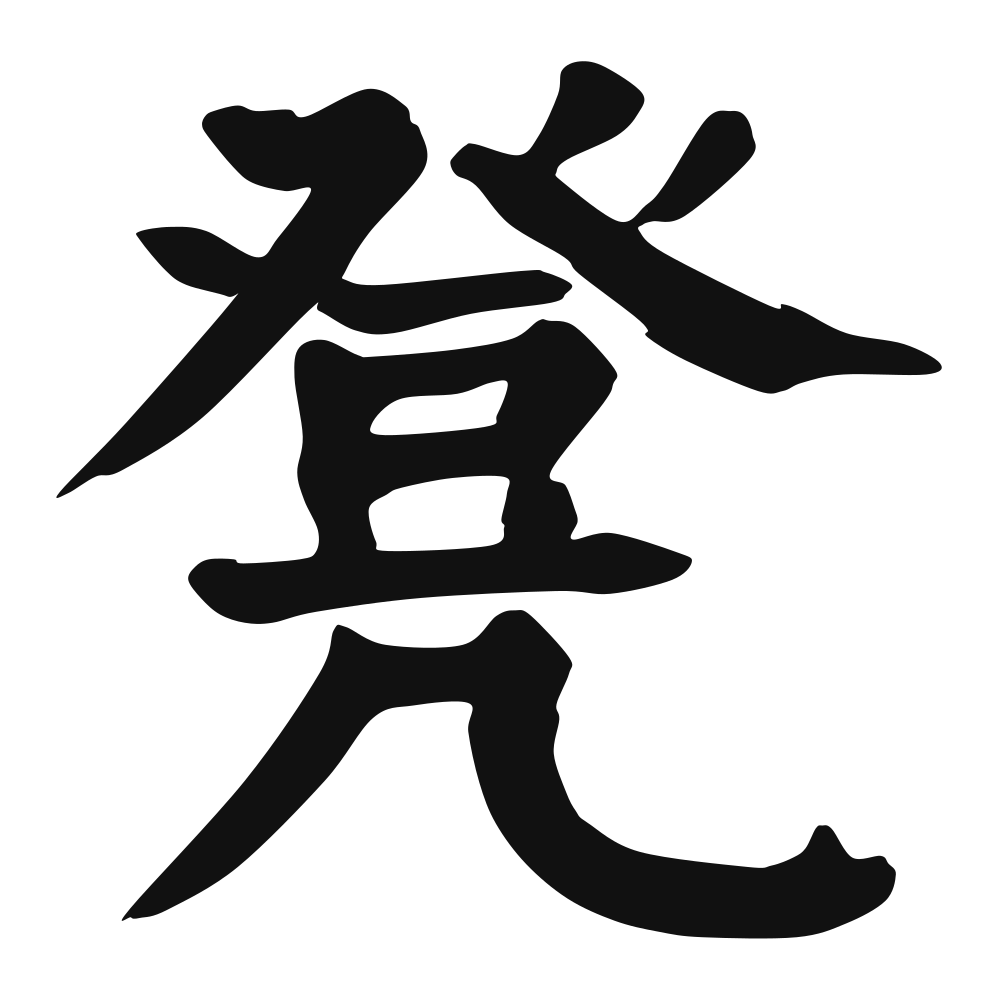
The Calligrapher — Yán Zhēnqīng 颜真卿
Tang master of robust regular script; co-creator of the enduring 'Yan style'.
Tang calligrapher (709–784), master of regular script/running script — the Tang moral paragon whose upright, muscular regular script became the model of Chinese integrity in writing. Tang dynasty
Cultural Story
The form set a stool and a step, 凳, the low seat without a back. The Tang hall set 板凳 along the wall for those who waited. A 圆凳 turned at the chess table. The word was the plain seat of the house, the one a guest took and a servant cleared without a thought.
Common words & phrases
- 凳子 stool · bench
- 板凳 wooden bench · stool
- 圆凳 round stool
Read the story behind the character
A 凳子 by the door holds the keys; the 板凳 in the park is worn smooth. A 圆凳 spins at the kitchen island. The child stands on a 凳 to reach the shelf. The word means a seat and a step — both things we stand or sit on, low and plain, every day.
Why this character belongs on skin
Four legs and a seat: the humblest furniture ever made, and therefore the most honest. 凳 is the stool or bench—the no-backrest, no-pretense object every kitchen, temple, and barbershop in China runs on. A chair declares status; a stool simply offers rest. Zen loved such objects for exactly this. Sit on a 凳 and your spine learns its own lesson: nothing to lean on, so you sit up—not from etiquette but from agreement with gravity. Everyone should own one thing that asks nothing of them and holds them anyway. The character is a small philosophy: be useful, be simple, be there when someone needs to sit. Put the little bench under your skin. Rest is a discipline. Keep a place for it.
Own this character
Purchase delivers the original SVG of this glyph, brushed by Yán Zhēnqīng 颜真卿, ready to place on skin, paper, or screen.