
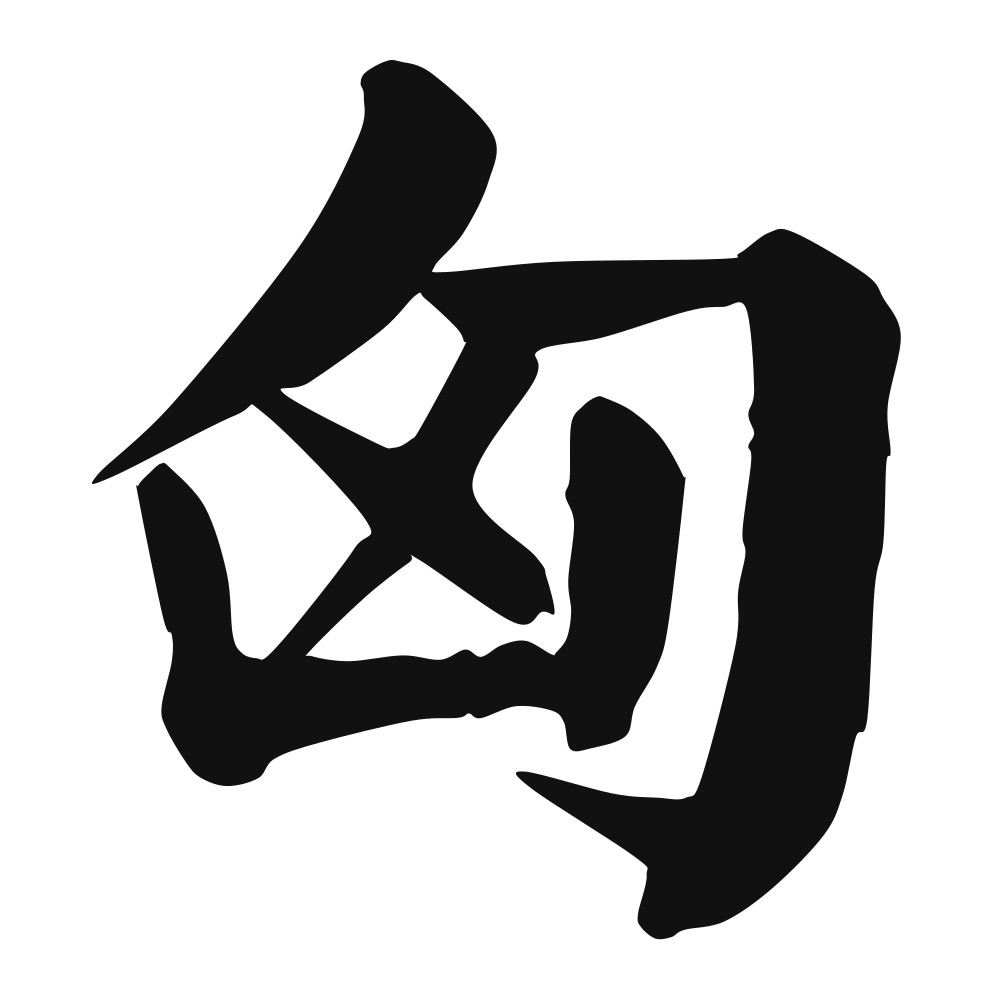
匈
Hungary; Hungarian
Closest English meanings
chest·breast·Xiongnu
The Calligrapher — Yán Zhēnqīng 颜真卿
Tang master of robust regular script; co-creator of the enduring 'Yan style'.
Tang calligrapher (709–784), master of regular script/running script — the Tang moral paragon whose upright, muscular regular script became the model of Chinese integrity in writing. Tang dynasty
Cultural Story
匈奴 names the Xiongnu, the confederation of the steppe that pressed the Han for two centuries and forced Empress Lu to swallow a humiliating letter. The graph 包 is the older shape of 胸, the breast; to lay a grievance “in the 包” was to carry it in the chest. History and anatomy share one bone.
Common words & phrases
- 匈奴 Xiongnu · Huns
- 匈臆 chest · breast
Read the story behind the character
A history documentary narrates the 包崴 raids; the word 包膺 survives only in classical quotes a subtitler must footnote. On a phone the character almost never appears alone — it is the fossil in 包崴, the one place most readers still meet it, a steppe people reduced to two syllables of a textbook map.
Why this character belongs on skin
Before it narrowed to a mere anatomical name, this character opened outward as the whole cavity of feeling — the breast where breath and courage and fear are kept. The chest is the body's altar; we strike it in grief, puff it in pride, lay our loved ones' heads against it to hear the one honest sound we make. To wear 匈 is to claim that cavern as sacred ground. A tattoo here sits over the engine, the place that rises and falls while you sleep and races when she walks in. It is a mark of vulnerability worn deliberately, the way a knight bore his crest on the shield over his heart. Let it name the seat of everything you feel too much to say. The chest keeps the truth even when the mouth lies; ink it there, and the truth is the first thing you meet each morning.
Own this character
Purchase delivers the original SVG of this glyph, brushed by Yán Zhēnqīng 颜真卿, ready to place on skin, paper, or screen.