
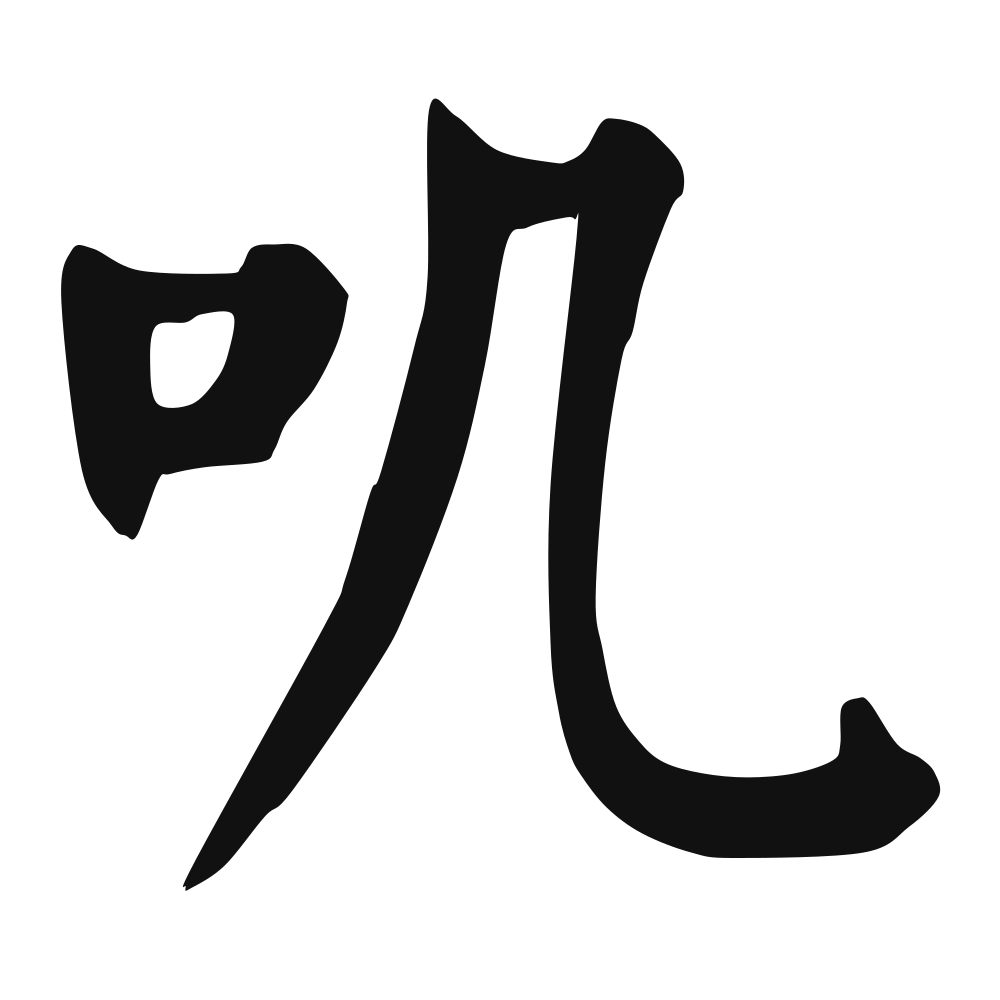
The Calligrapher — Yán Zhēnqīng 颜真卿
Tang master of robust regular script; co-creator of the enduring 'Yan style'.
Tang calligrapher (709–784), master of regular script/running script — the Tang moral paragon whose upright, muscular regular script became the model of Chinese integrity in writing. Tang dynasty
Cultural Story
叽 was an onomatopoeic char, the small chirp and the muffled grumble. The vernacular novels -- 西游记, 红楼梦 -- used it for birds twittering in the eaves and servants muttering in the corner. 叽叽 was the nest; 叽咕 the complaint half-spoken. The word was sound shaped into strokes, the least weighty of noises given a written body.
Common words & phrases
- 叽叽 chirping · cheeping
- 叽喳 chatter · twitter
- 叽咕 to mutter · to whisper
- 叽里咕噜 gabble · to mutter (foreign speech)
Read the story behind the character
Sparrows 叽叽 at the feeder; two clerks 叽咕 over the schedule. A tourist hears 叽里咕噜 and knows the language is not his. The word fills the day's small noises -- the chirp, the mutter, the foreign gabble. It names sound without sense, the twitter and the whisper and the speech one cannot follow, heard at the window and across the cafe table.
Why this character belongs on skin
Small voices, multiplied. 叽 is the sound sparrows make at dawn, the scatter of little talk that fills a room before anyone says anything true. It is the chatter of women at a well, of friends who have not seen each other, of the world waking up and refusing to be solemn. The character puts the mouth radical beside a click, a noise with no weight and all the life. To wear 叽 is to honor the unimportant hour — the gossip, the laughter, the nonsense that is, in the end, the actual texture of being alive. Not every mark must be grave. Some should be light, should twitter against your skin like the first birds, a reminder that joy is often just small noise, gladly made, gladly heard.
Own this character
Purchase delivers the original SVG of this glyph, brushed by Yán Zhēnqīng 颜真卿, ready to place on skin, paper, or screen.