
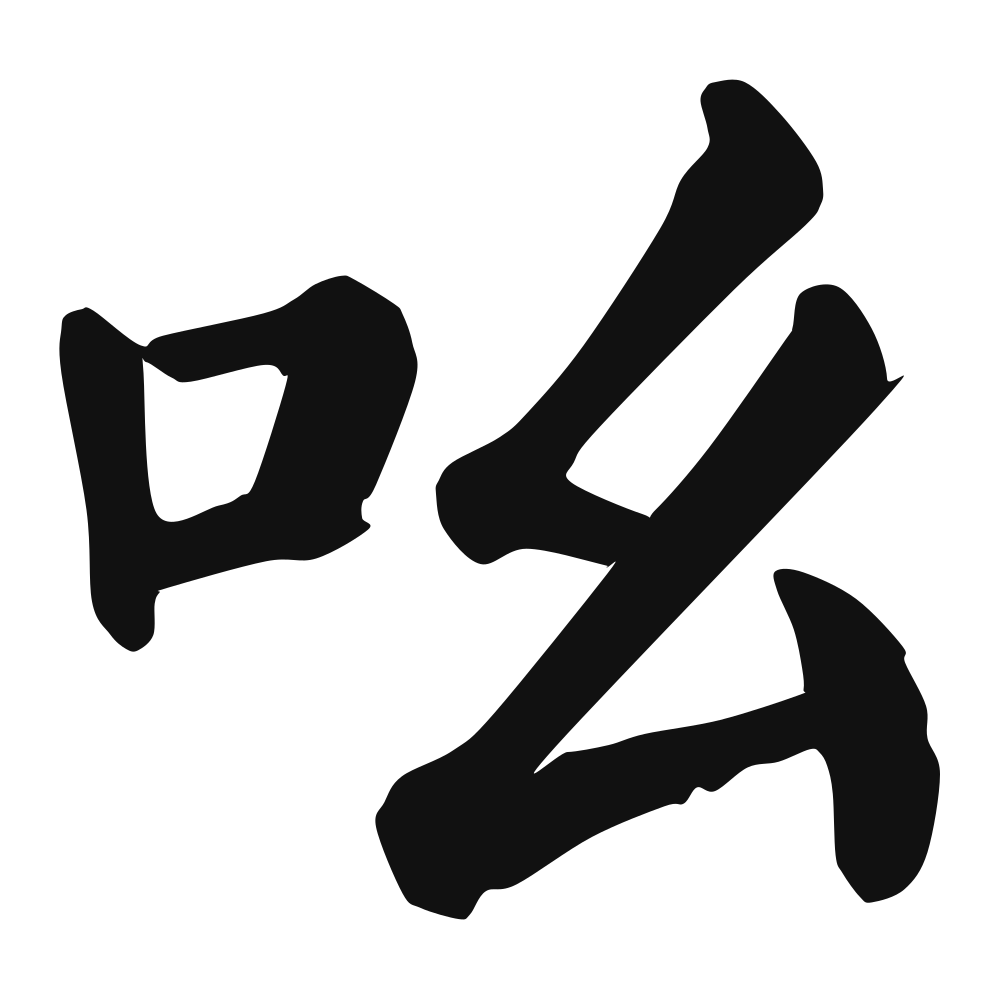
吆
to shout; to bawl; to yell (to urge on an animal); to hawk (one's wares)
Closest English meanings
call out·cry out
The Calligrapher — Yán Zhēnqīng 颜真卿
Tang master of robust regular script; co-creator of the enduring 'Yan style'.
Tang calligrapher (709–784), master of regular script/running script — the Tang moral paragon whose upright, muscular regular script became the model of Chinese integrity in writing. Tang dynasty
Cultural Story
吆 was the call to draw attention, the vendor's cry. In Zhang Zeduan's 清明上河图 the Bianjing street throngs with traders 吆喝 their wares -- cloth, fish, medicine -- each voice raised to be heard above the next. The word was the sound of the market itself, the human auction of goods. It carried the city's noise onto the painted scroll.
Common words & phrases
- 吆喝 cry out · call
- 吆五喝六 shout and wrangle
Read the story behind the character
A stallholder 吆喝 the price of the peaches; a parent 吆喝 the child across the lot. The word does the day's calling-out -- the sell, the summon, the scold raised to carry. It names the loud human voice in the open, from the market row to the playground, the cry meant to reach a buyer or a wandering son above the general noise.
Why this character belongs on skin
Long before the brand and the billboard, there was the human voice cutting through a market at dawn. 吆 is that cry — the vendor's call, the hail thrown across a crowded street to say I am here, I have something, come look. It is the mouth thrown open not in prayer or in pain but in proclamation. We have grown shy in the West, trained to whisper our wants, to let the algorithm speak for us. But there is a courage in the loud, unashamed call. To wear 吆 is to refuse the small voice. It is the ink for the person who would rather be heard than safe, who understands that every life worth living begins with someone daring to announce themselves to the morning. Let it sit on your skin like a shout you are finally unafraid to mean.
Own this character
Purchase delivers the original SVG of this glyph, brushed by Yán Zhēnqīng 颜真卿, ready to place on skin, paper, or screen.