
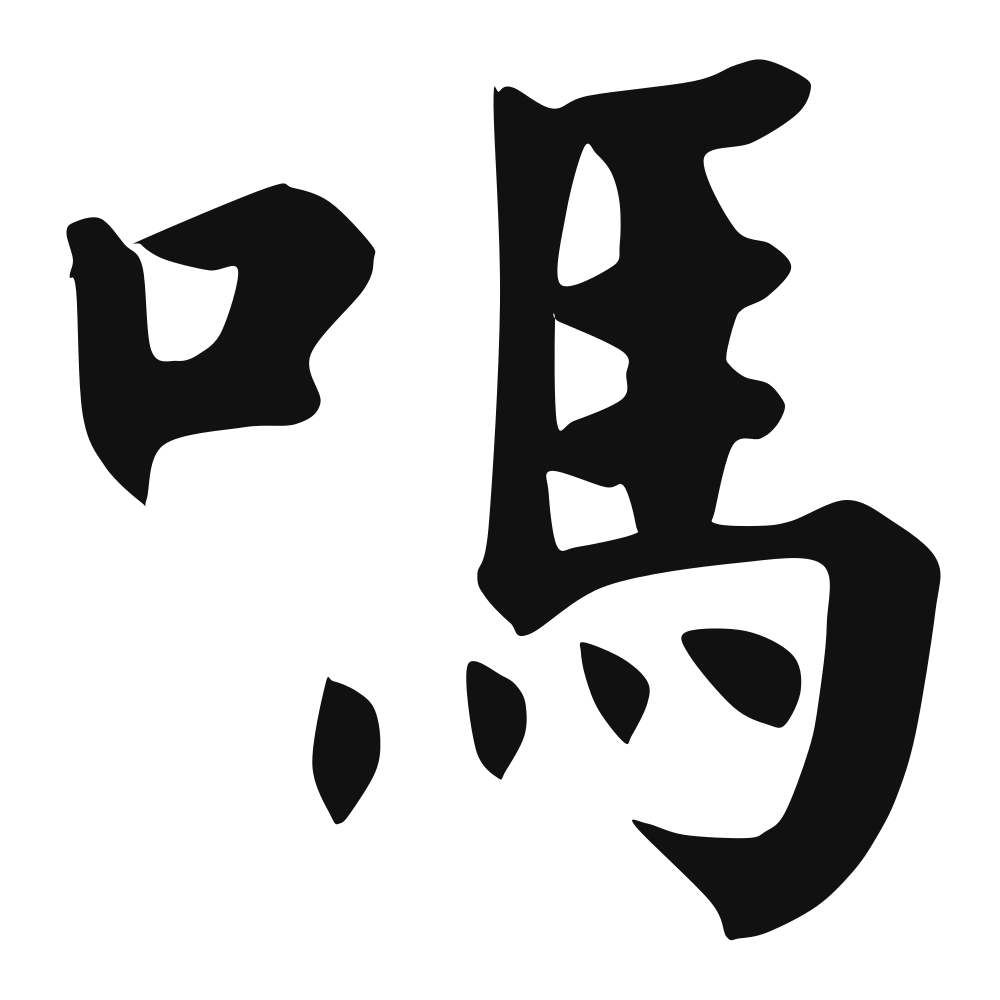
吗
(coll.) what?; (question particle for "yes-no" questions)
Closest English meanings
(question particle)·morphine·what for
The Calligrapher — Yán Zhēnqīng 颜真卿
Tang master of robust regular script; co-creator of the enduring 'Yan style'.
Tang calligrapher (709–784), master of regular script/running script — the Tang moral paragon whose upright, muscular regular script became the model of Chinese integrity in writing. Tang dynasty
Cultural Story
吗 is a modern question particle with no role in the classical canon, where questions were formed without it. Its phonetic half 馬 (horse) supplies the sound while the mouth radical 口 marks speech. The character crystallized as northern vernacular grammar replaced literary Chinese in the late imperial and Republican eras; older texts used 乎, 耶, or 哉 at sentence end to mark inquiry. So its root is not ancient myth but the living sound of everyday questioning, the small hook that turns a statement into a question in spoken Mandarin.
Common words & phrases
- 吗啡 morphine
- 干吗 what for · why
Read the story behind the character
吗 appears in almost every spoken Chinese question: a friend texts 干吗 (what for, why) are you late, and you answer with a trailing 吗. At the hospital a doctor mentions 吗啡 (morphine) to ease a patient's pain, and the word still carries that same mouth radical, a sound shaped by the lips. Teenagers add 吗 to tease—"你傻吗?"—while grandparents use it gently to check on you. It is the tiny syllable of curiosity threading markets, classrooms, and late-night chats.
Own this character
Purchase delivers the original SVG of this glyph, brushed by Yán Zhēnqīng 颜真卿, ready to place on skin, paper, or screen.