
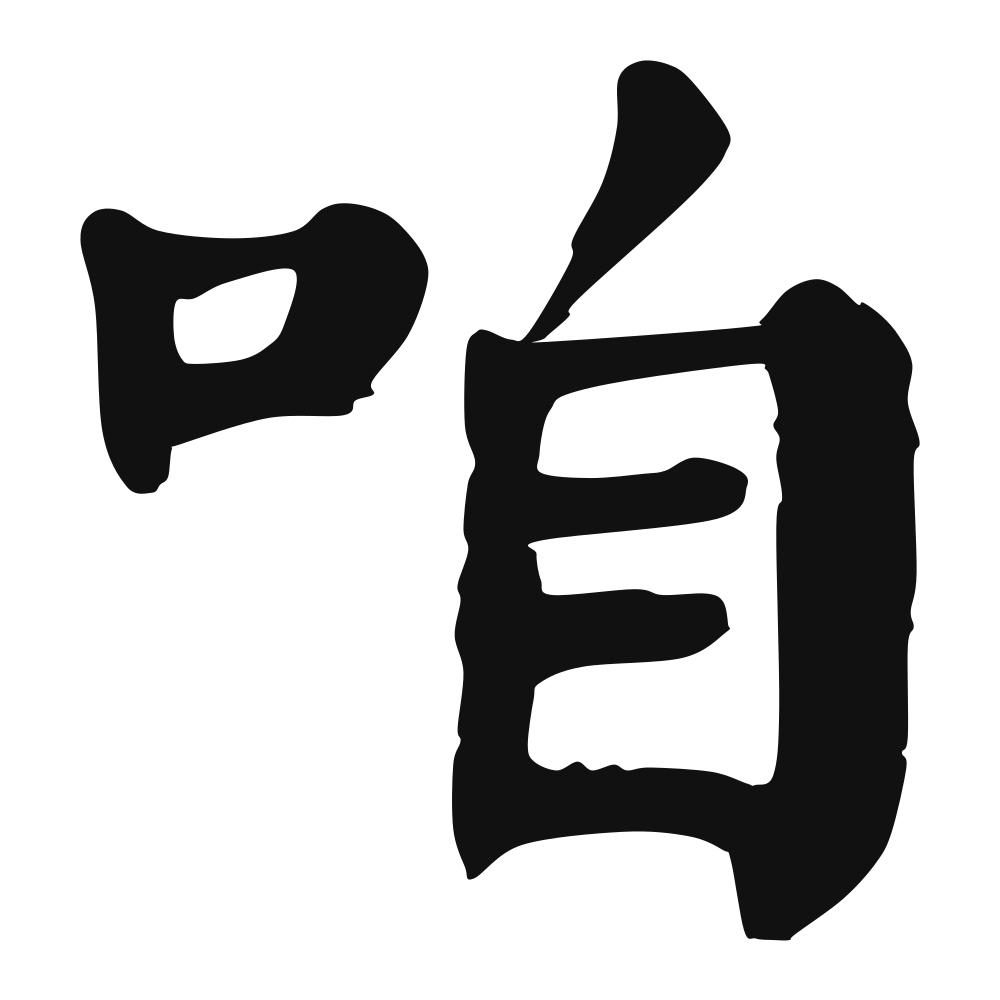
咱
I or me; we (including both the speaker and the person spoken to)
Closest English meanings
we·us·I
The Calligrapher — Yán Zhēnqīng 颜真卿
Tang master of robust regular script; co-creator of the enduring 'Yan style'.
Tang calligrapher (709–784), master of regular script/running script — the Tang moral paragon whose upright, muscular regular script became the model of Chinese integrity in writing. Tang dynasty
Cultural Story
In the classical tradition: 咱 combines 口 with 自, suggesting speech that includes oneself, and in northern vernacular grew from 自家, 'own self,' into a warm first-person plural. Classical texts favored 我 and 吾, but 咱 belongs to the lively speech of the marketplace and the stage, where a soldier or a lover says 咱 to pull the listener into the same boat. It carries none of the courtly distance of 朕.
Common words & phrases
- 咱们 we · us
- 咱俩 the two of us
Read the story behind the character
In the modern world: On a winter night two roommates share a hotpot and one says 咱们 — we — should split the bill, while the other laughs that 咱俩 — the two of us — already finished the last slice. At work a boss rallies the team: 咱们一起加油, we can do this together. It is the everyday 'us' of friendship, family, and shared struggle across northern China.
Own this character
Purchase delivers the original SVG of this glyph, brushed by Yán Zhēnqīng 颜真卿, ready to place on skin, paper, or screen.