
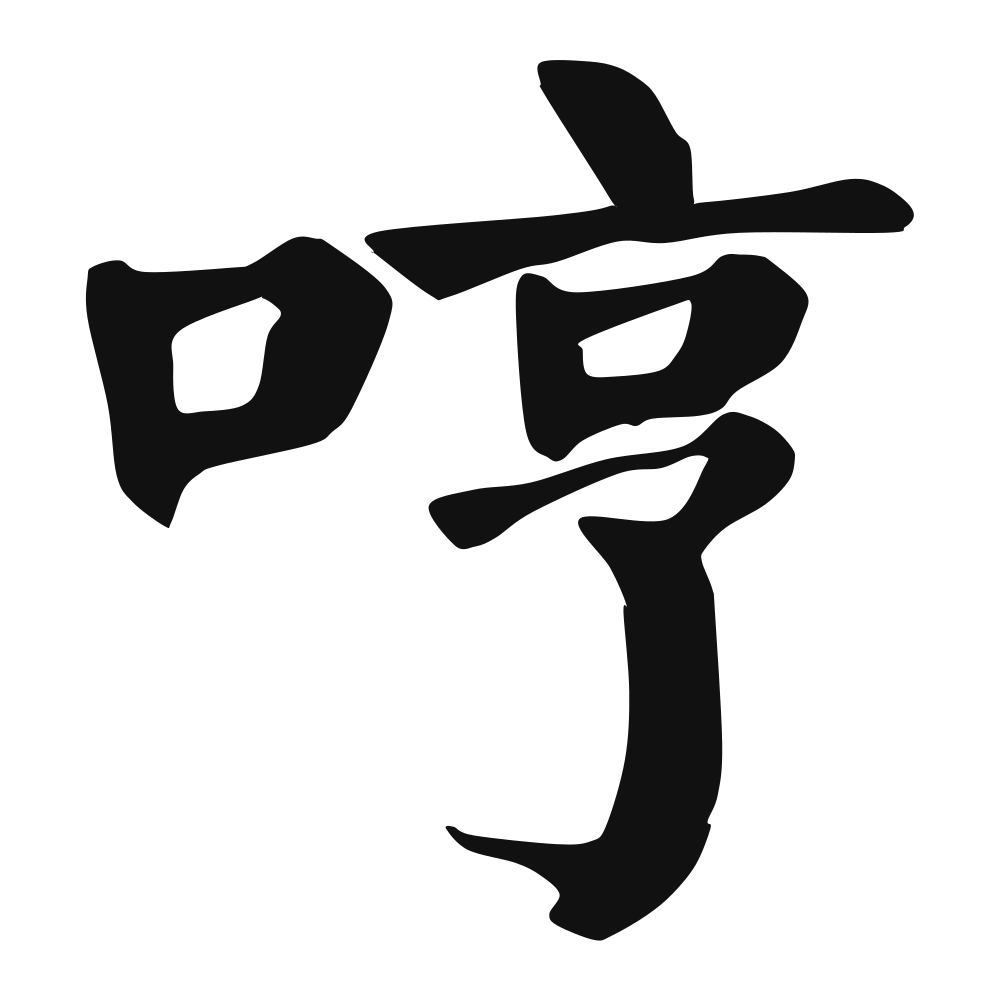
哼
to groan; to snort; to hum; to croon; humph!; interjection expressing dissatisfaction or suspicion
Closest English meanings
to hum·to groan·to snort
The Calligrapher — Yán Zhēnqīng 颜真卿
Tang master of robust regular script; co-creator of the enduring 'Yan style'.
Tang calligrapher (709–784), master of regular script/running script — the Tang moral paragon whose upright, muscular regular script became the model of Chinese integrity in writing. Tang dynasty
Cultural Story
In the classical tradition: 哼 is a mouth character for humming, groaning, and snorting, not in the Shuowen. It is the body's involuntary music: a worker 哼唱, hums a tune, at his loom, a sick man 哼唧, mutters and groans, in fever, and a skeptic 哼哈, grunts, at flattery. The 哼哈二將 at temple gates show two generals who 哼 and 哈 — the comic, scornful voices guarding the sacred threshold.
Common words & phrases
- 哼唱 hum a tune
- 哼唧 mutter · groan
- 哼哈 grunt (sound)
Read the story behind the character
In the modern world: You 哼唱 — hum a tune — while cooking, and a sick roommate 哼唧, mutters and groans, for water at night. The 哼哈, grunt, of two uncles argues over chess, and a teen 哼s instead of answering mom. At the gym someone 哼s through the last rep; 哼 is the small sound of effort, annoyance, and the tunes we keep to ourselves.
Own this character
Purchase delivers the original SVG of this glyph, brushed by Yán Zhēnqīng 颜真卿, ready to place on skin, paper, or screen.