
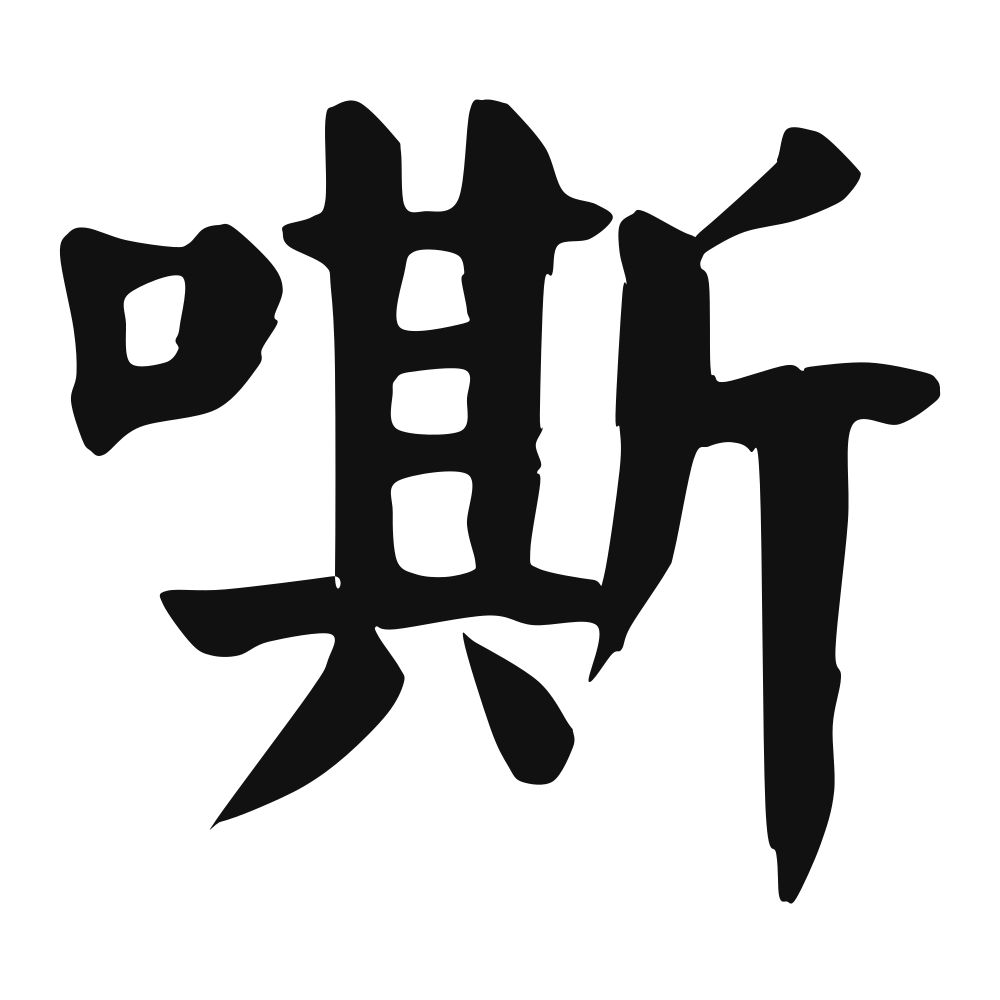
嘶
hiss; neigh; Ss! (sound of air sucked between the teeth, indicating hesitation or thinking over)
Closest English meanings
to neigh·hoarse
The Calligrapher — Yán Zhēnqīng 颜真卿
Tang master of robust regular script; co-creator of the enduring 'Yan style'.
Tang calligrapher (709–784), master of regular script/running script — the Tang moral paragon whose upright, muscular regular script became the model of Chinese integrity in writing. Tang dynasty
Cultural Story
The Shuowen gives 嘶 as the broken voice of a horse — 馬鳴 — and by extension any hoarse cry. The border poets of the Tang heard warhorses 嘶 on the cold steppe and made it the sound of departure and longing; a steed 嘶 as its rider rode off to the campaign. The word also named the human voice worn raw, so that 聲嘶 became the throat's defeat. Small and sharp, 嘶 carried the grief of the stable and the battlefield alike.
Common words & phrases
- 嘶哑 hoarse · husky
- 嘶叫 neigh · shriek
- 声嘶力竭 hoarse and exhausted (shouting)
Read the story behind the character
A singer's voice goes 嘶啞 (hoarse, husky) after the concert; a wounded horse 嘶叫 (neighs, shrieks) in the film. A protester shouts 聲嘶力竭 (hoarse and exhausted) for his cause, and a coach 嘶叫 across the field at the players. 嘶 is the modern word for any voice stretched past its limit — the husky note of illness, the animal cry, and the raw shout of someone who has given everything to be heard.
Why this character belongs on skin
The sound of a horse at full gallop, crying into the wind—a neigh raw at the edges, or a human voice pushed past its silk until it frays. The character puts the mouth radical beside a phonetic of silk threads splitting, and that is exactly what you hear: the voice tearing evenly along the grain. There is something magnificent in the hoarse cry. It is what remains when volume has been spent, when a singer works the third encore on shredded cords, when a protestor shouts past the point where shouting is possible, when a warrior calls out with a throat full of dust and battle. The stallion does not soften its cry to protect its voice; the neigh is effort itself, made audible. We spend our lives keeping our voices pretty, and something starves in the keeping. This character is for the person who has been loud when it mattered—who has spent their voice on something and worn the rasp like a medal. Ink it along the throat, that vulnerable column, and let it honor every raw sound you ever made on purpose: the cry was worth the crack.
Own this character
Purchase delivers the original SVG of this glyph, brushed by Yán Zhēnqīng 颜真卿, ready to place on skin, paper, or screen.