
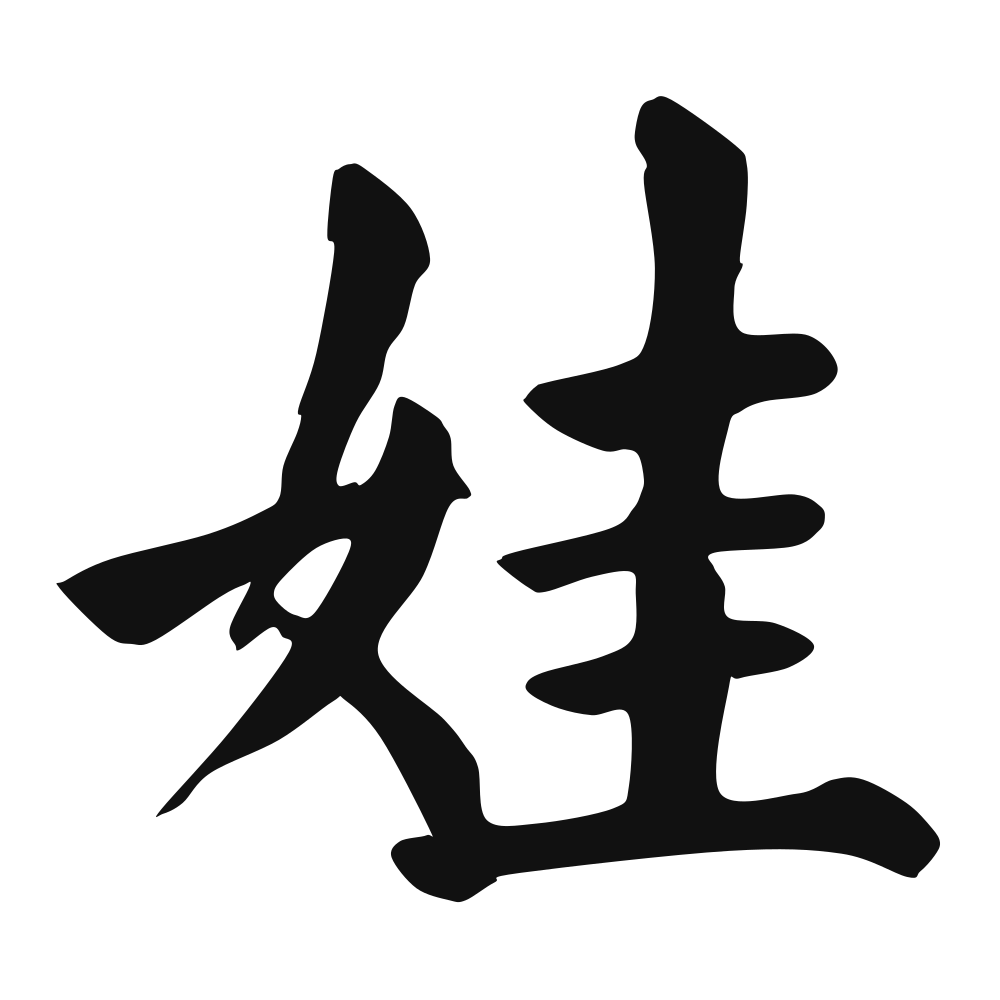
娃
baby; doll
Closest English meanings
baby·doll·child·kid·little one
The Calligrapher — Yán Zhēnqīng 颜真卿
Tang master of robust regular script; co-creator of the enduring 'Yan style'.
Tang calligrapher (709–784), master of regular script/running script — the Tang moral paragon whose upright, muscular regular script became the model of Chinese integrity in writing. Tang dynasty
Cultural Story
In the classical tradition 娃 first meant beautiful in the southern 楚辭 songs, a word for lovely young things by the river. Only later did it slide toward "child" and "doll," the soft, round sound suiting a small person. Its roots are poetic before they become playful and familial.
Common words & phrases
- 娃娃 baby · doll · child
- 女娃 girl · little girl
- 男娃 boy · little boy
- 布娃娃 doll · cloth doll · rag doll
- 娃儿 child · baby · kid
Read the story behind the character
In the modern world 娃 is the sound of childhood. A 娃娃 cries for its mother; a 女娃 and a 男娃 tumble in the park while a 布娃娃 lies forgotten nearby. Grandparents call a toddler 娃儿 with a laugh, and toy shops stack rows of 娃娃 for every holiday. The old 'beautiful' has become 'little one.'
Why this character belongs on skin
娃 is the little one, the baby or the doll, a character of pure smallness and charm. It pairs woman with a sound for the tiny, as if girlhood itself were a delicate thing to be cradled. In the old villages a 娃 was the cherished child, the future carried in small arms; the heart softens at the word the way it softens at any helpless, beloved thing. To wear 娃 is to honor the tender, the playful, the part of love that wants to protect. It is the tattoo of one who has held something precious and felt the terror of that tenderness. There is a gentle sensuality in smallness, the round cheek, the sleep-heavy weight. Let this character rest where your hand falls in comfort, a small charm against a hard world. The ink is the little one you keep, the softness you refused to lose.
Own this character
Purchase delivers the original SVG of this glyph, brushed by Yán Zhēnqīng 颜真卿, ready to place on skin, paper, or screen.