
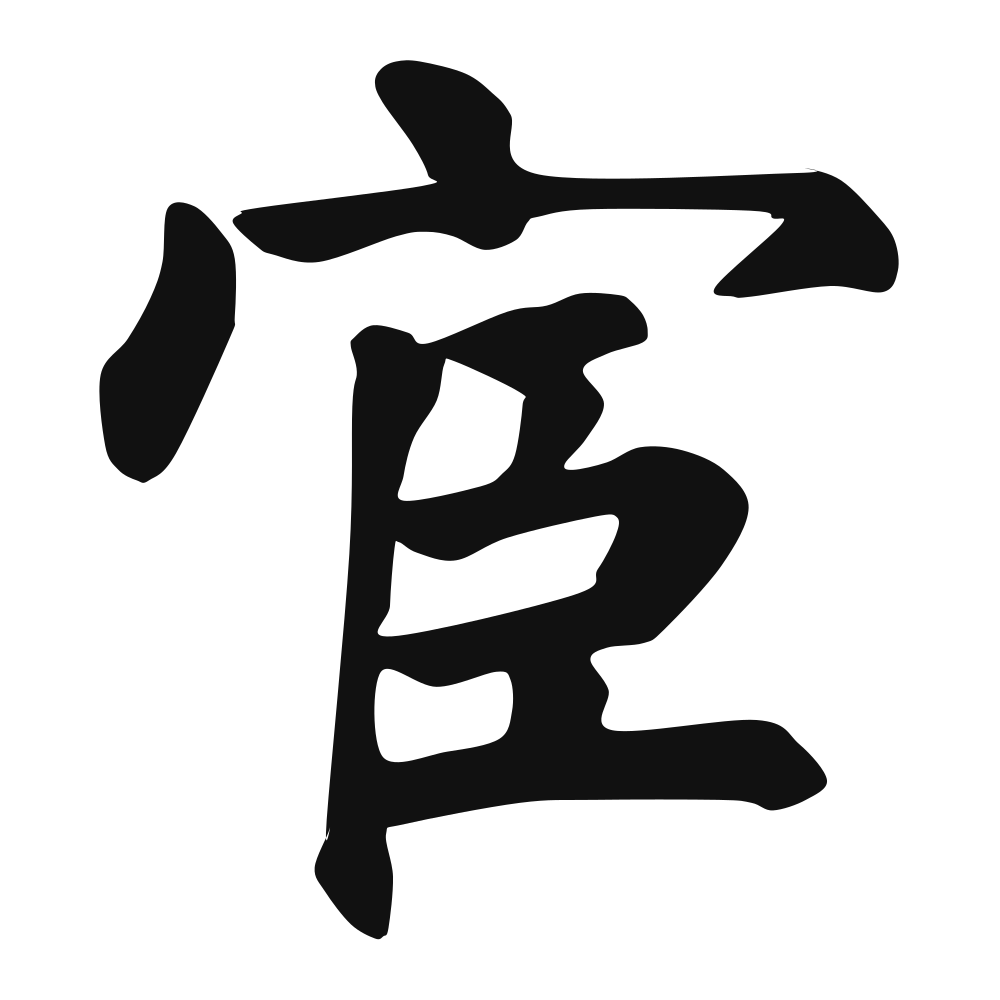
宦
surname Huan; imperial official; court eunuch
Closest English meanings
official·eunuch·serve in office
The Calligrapher — Yán Zhēnqīng 颜真卿
Tang master of robust regular script; co-creator of the enduring 'Yan style'.
Tang calligrapher (709–784), master of regular script/running script — the Tang moral paragon whose upright, muscular regular script became the model of Chinese integrity in writing. Tang dynasty
Cultural Story
Zheng He, a 宦官, commanded the treasure fleets of 1405, and Wei Zhongxian ran the late-Ming court. 宦途 was the career of office, often entered through the castration that unlocked the palace. The graph sets a roof over a servant — power accessed only by surrender of the self.
Common words & phrases
- 宦官 eunuch
- 宦途 official career
- 仕宦 hold office
Read the story behind the character
History docs file 宦官 among the palace's strange powers, and career essays use 宦途 for a climb through bureaucracy. The castrated admiral now headlines exhibits on the maritime voyages, his 宦 life a cautionary and a marvel — ambition that entered power by its narrowest, costliest door.
Why this character belongs on skin
Behind every throne stands a man who traded the open road for a gilded cage. 宦 is the one who enters the ruler's house to serve — an official, sometimes a eunuch, always a life bent toward power. The histories are full of them: clever, contained, watching the emperor's mood like weather. To wear 宦 is not to glorify submission but to mark the cost of belonging. We have all served something — a company, a family, a story we did not write. The character remembers the bargain: safety for freedom, position for the self. Let it sit as a quiet reckoning, the part of you that knows the price of the room you stand in. The ink asks only that you see the cage and name it, then decide, finally, whether to stay or walk.
Own this character
Purchase delivers the original SVG of this glyph, brushed by Yán Zhēnqīng 颜真卿, ready to place on skin, paper, or screen.