
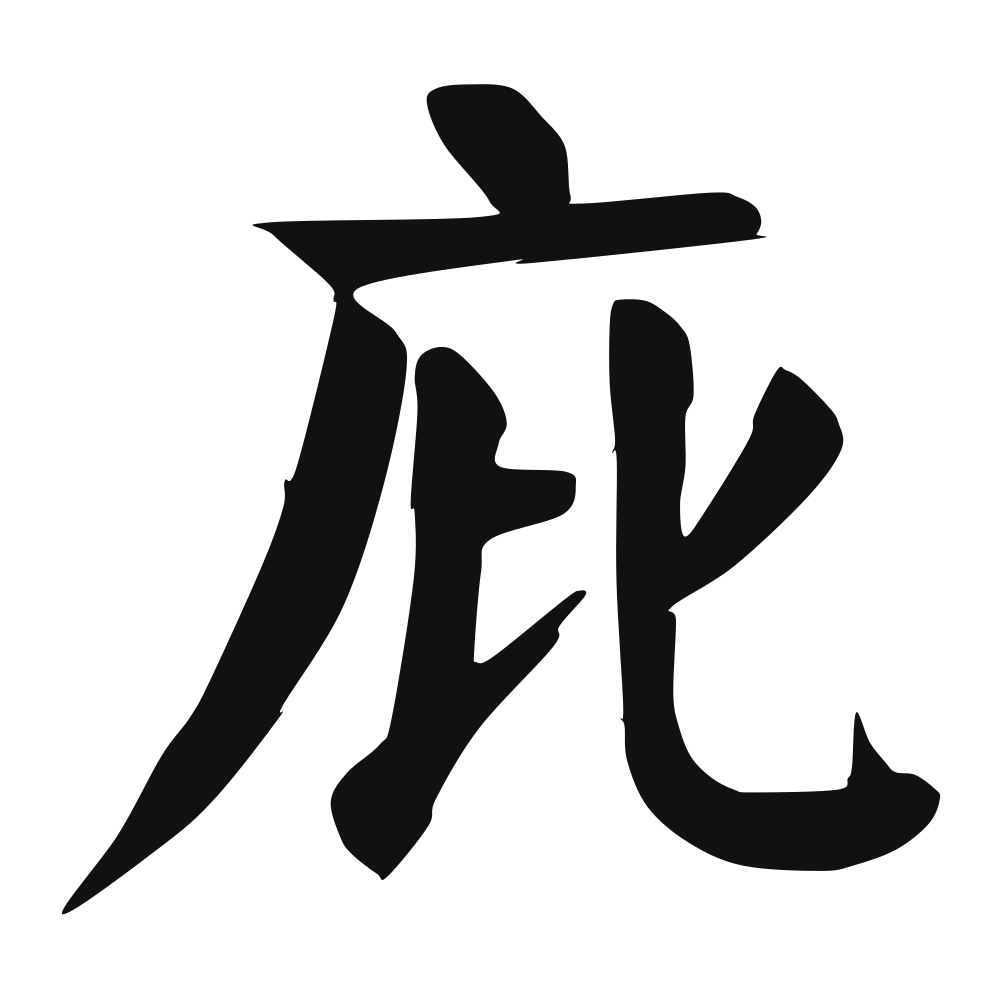
庇
to protect; cover; shelter; hide or harbor
Closest English meanings
shelter·protect·shield
The Calligrapher — Yán Zhēnqīng 颜真卿
Tang master of robust regular script; co-creator of the enduring 'Yan style'.
Tang calligrapher (709–784), master of regular script/running script — the Tang moral paragon whose upright, muscular regular script became the model of Chinese integrity in writing. Tang dynasty
Cultural Story
庇 is the eave that keeps the rain off your neck. The 詩經 sings of a shady tree under which travelers rest, and the word grew to mean any sheltering power — a patron, a tutelary god. 庇佑 is the blessing a temple promises the devotee who lights the right incense.
Common words & phrases
- 庇护 shelter · protect · shield
- 包庇 shield · harbor · cover up
- 庇佑 bless and protect
Read the story behind the character
庇护 is the asylum a state grants a dissident, and 包庇 the cover a manager throws over a thieving clerk — here the shelter turns shady, a roof used to hide the wrong thing. The same eave that shields the cold can also hide the crime; the character knows both uses intimately.
Why this character belongs on skin
The storm comes and the tree does not move aside; it simply opens its arms and takes the beating so something smaller can stand dry beneath. Bì is that shelter — the roof thrown over another life, the protection given without condition or receipt. The ancients spoke of 庇护 as the grace of the strong toward the weak, the emperor's canopy, a mother's body over the child in the rubble. There is a Christian echo in it too: to cover another is to stand where the rain would fall on them. To carry this character is to swear you will be the roof someone finds in their worst weather, that your strength is a thing you spend on others. Let it rest across the shoulder, the part that bears and shields, a quiet mark that you have sheltered, and that you will.
Own this character
Purchase delivers the original SVG of this glyph, brushed by Yán Zhēnqīng 颜真卿, ready to place on skin, paper, or screen.