
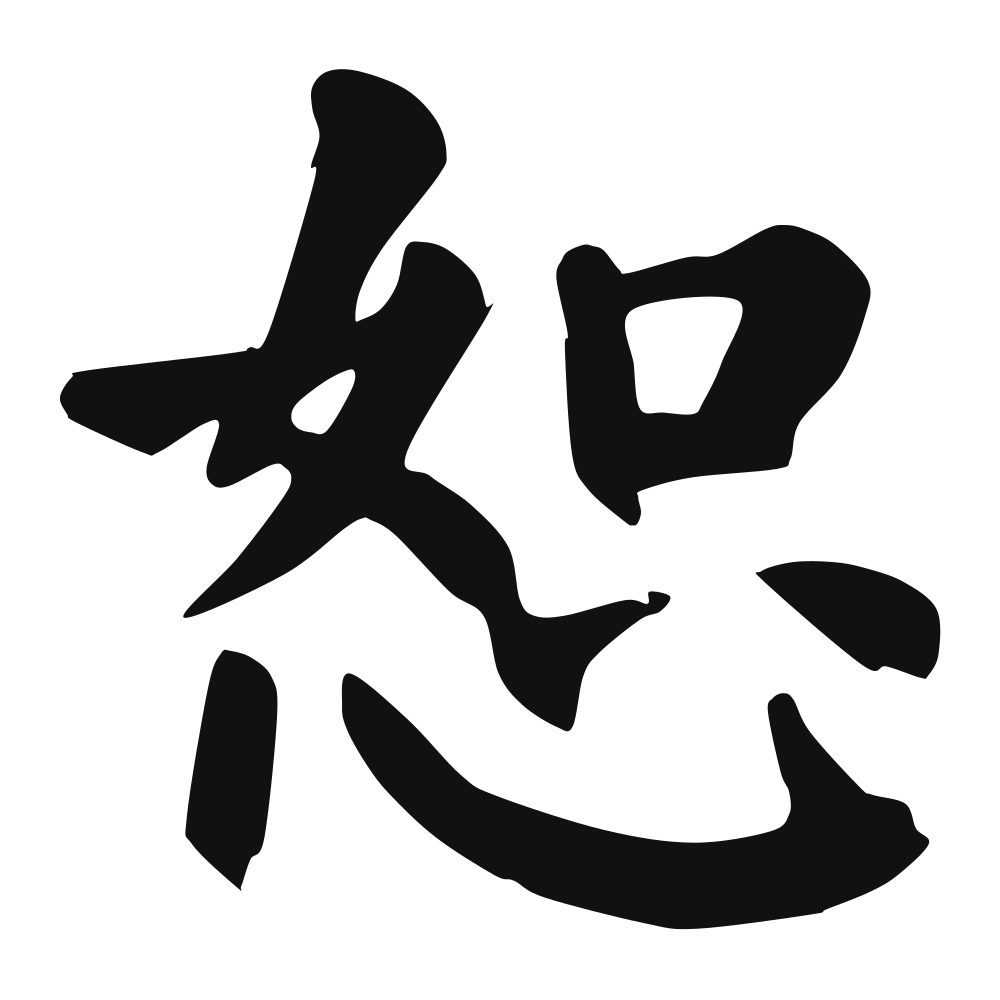
The Calligrapher — Yán Zhēnqīng 颜真卿
Tang master of robust regular script; co-creator of the enduring 'Yan style'.
Tang calligrapher (709–784), master of regular script/running script — the Tang moral paragon whose upright, muscular regular script became the model of Chinese integrity in writing. Tang dynasty
Cultural Story
恕 is the letting pass — 論語 gives it as 己所不欲勿施于人, the measure by which to spare another. The word was the stretch from your own skin to theirs, the pardon that begins with imagination. Not pardon from the law but from the person who might have struck back and did not.
Common words & phrases
- 宽恕 forgive · pardon
- 饶恕 forgive · spare
- 恕罪 forgive offense
Read the story behind the character
宽恕 is the word a victim is told to find, 饶恕 the mercy a sentence asks, 恕罪 the apology a formal letter offers. The law is a court now; the stretch is the same. We still spare when we can imagine the other, and call it grace, which the old line already made a habit, not a feeling.
Why this character belongs on skin
Before there was theology, there was this: do not do to another what would break you. The character joins like and heart, to feel as the other feels, the Confucian root of all mercy. It is not softness; it is the hardest arithmetic of being human, the moment you trade your right to wrath for the larger room of understanding. Christ spoke of the plank and the speck; the sage of Lu spoke of the self as measure. Both asked the same: can you stand inside the other's skin? To carry this word is to refuse the cheap victory of grudge. It is freedom, actually, the lighter chest, the unclenched hand. Mark it where your heart beats, and let it be the vow you make to everyone you love: I will try to understand before I condemn.
Own this character
Purchase delivers the original SVG of this glyph, brushed by Yán Zhēnqīng 颜真卿, ready to place on skin, paper, or screen.